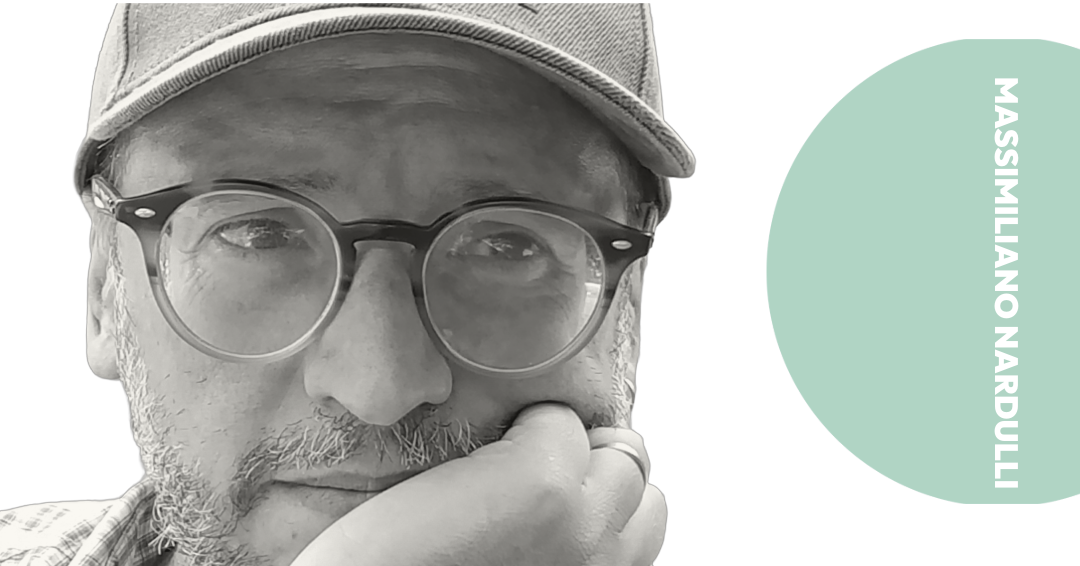
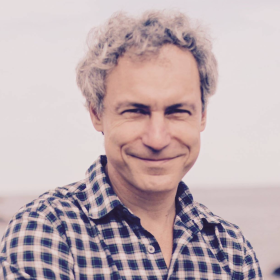
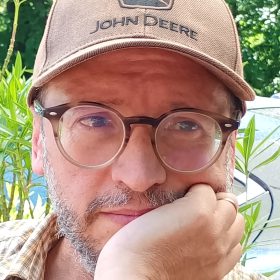
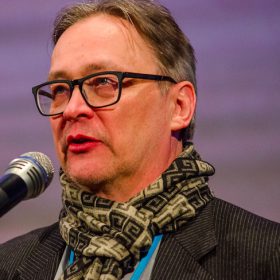
Born in Rome, Italy in 1976, Massimiliano is a scriptwriter, composer, film programmer and creative producer based in Romania. Since 2007, he has been working for film festivals in France, Italy, Romania, Switzerland, and Turkey. He has mostly worked as a script advisor, as well as being one of the creators of the European Talent Lab Less is More, overseeing artistic direction, as well as several other script development programs, including Fulgor Lab, TGF What’s the Story?, Word-Frame, and ShorTS Development Training. In 2019, he won the Gopo Award and the UCIN award in Romania for the original soundtrack of the movie CHARLESTON. He co-created the alternative production company Tabarro.
T-Blog: Hi Massi! You have worked in the film industry in a series of varying roles, from composer to script supervisor. Could you tell us a bit about how you found your way into the industry and what led you to each step into a new role?
Massimiliano Nardulli: I have always tried to keep two things/principles in my practice, it doesn’t matter the position… 1)Make it with my own personal radar for ethics, 2) Having fun in what I am doing without taking things too seriously, I try to self impose a rule, the more important something is, the more I try to keep it light.
T-B: What is one thing that you think upcoming filmmakers could do to make their path into the film industry easier for themselves?
MN: I would say that there are a couple of things to never forget, it needs time, so take it easy and enjoy the process instead of stressing to reach your goals, and try to always follow your own obsessions, your own personal voice.
T-B: What’s your number one tip for networking in the film industry?
MN: I am totally convinced I have a good suggestion for this… Be yourself no matter what, no need to wear a mask or pretending to be different from what and who you really are… Because making a film, a career, or a collaboration requires time, trust and love, so how can you pretend to be different from who you are?
T-B: Have you ever felt like giving up on a project? How do you know when to keep going, or when to move on to something else?
MN: Of course several times, it’s a normal part of the process… Sometimes projects need their time, need a break, sometimes you drop them and they come back knocking after you…
T-B: The film industry is changing rapidly right now due to so many social and technological factors, how do you see the future of the industry?
MN: Thanks for this question… It pushes me to share my position that I know sometimes seems a bit “radical”… I really believe that the industry is a bit rotten.
T-B: What are you proudest of from your career so far?
MN: Probably the fact that I have been able to be an example that there’s always another way to create cinema. I have worked with people totally ready to give up on their dreams, because of the difficulties of the industry, because of the lack of empathy they found, because of the ‘fear to expose themselves… Every time I managed to give more hope to those people it’s been a great source of joy and pride.