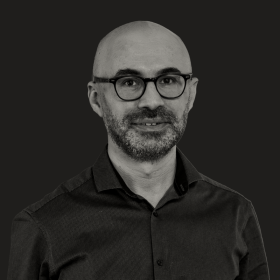
Sönke Kirchhof
on a future for filmmakers in VR and immersive mediaDate: November 4, 2026
Posted by: Jess Sweetman
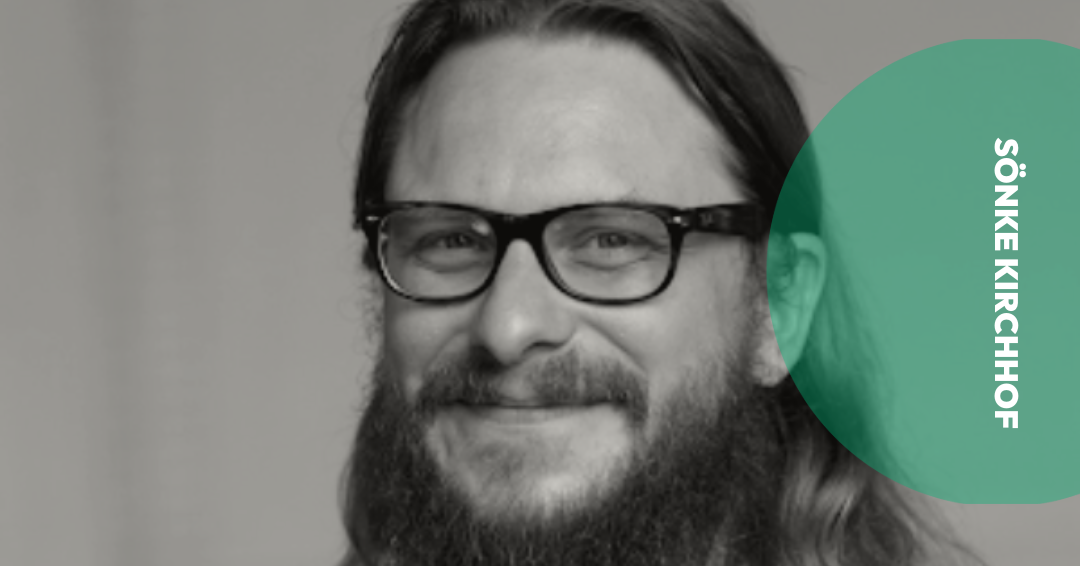
You can hear more from Sönke, who will be leading part of our Career Development and New Opportunities workshop on Nov 25th (alongside Alessandra Pastore). Find out more on our website.
Hi Sönke! Could you tell us about your career trajectory to date – which opportunities did you take to get you to where you are now? What advice would you share for filmmakers who are starting their careers?
I started in the film industry in 2000, so about 26 years ago. I left the industry partially to study political science and other classes – but worked in the industry on the site to make a living and be able to finance my studies.
In the end I started to study film production in Babelsberg on a second run but decided to not follow outworn paths and make films as most film students do – but dive deeper into digitalisation, VFX, CGI, stereoscopic 3D – but not for the sake of tech, rather for the reason of having new tools to make creative visions a reality – and pickup audiences that do not watch TV any more.
That was about 20 years ago and somehow proven right with the developments of linear broadcast, VOD and the role games took in entertainment since it went much more online and multiplayer than in the 90s and “before the internet”. So I always took the opportunities to be curious about what new technologies can bring us – but not jumping on hypes.
We did 3D Films before Avatar came to cinemas – and we worked with AI long before this bubble started to kick in. But again, not for the hype and to deal with technologies, but to execute projects the way we envisioned and to use each tool as it existed.
We have always been in R&D Projects, for example with Fraunhofer Institutes or Technical Universities – as a creative partner who can test and implement new technologies in existing workflows and pipelines. We do this to enhance creative output and gain a much higher appreciation of the audience for something they have never seen before, one that doesn’t follow outworn paths that nobody wants to follow anymore, which are only offered because it’s cheaper to produce, and the only known forms of how to tell a story.
This said, I always took opportunities to further develop storytelling for new formats and genres, to develop new technologies to be able to do so, and last but definitely not least: to partner as much with people, companies and institutions to not walk alone on that way, but to contribute jointly with shared expertise.
Your working background is in VR and immersive media, what interests you about working in this part of the film world, and what benefits do you find it brings the film industry in general?
There are several aspects that are all of the same relevance:
First of all it’s a new medium (still) and so it allows the development of new genres and formats – something that is much more complicated once a medium like TV or cinema is established and people expect something they have known for decades or centuries. We can see new formats in XR as well as mobile, but little to not at all in TV and cinema.
At the same time we all grew up with computers or consoles – but gaming was always something considered a waste of time, or connected to ego shooters (killer game debate) and so even worse. In VR we can work in the intersection of games and linear media and establish new genres and formats, such as “for impact” or “social VR” projects that overlap with documentaries, but are also educational interactive games (serious games).
For me, the benefit for the established film industry can be to develop formats that work in both mediums (transmedia or multimedia) and address multiple audiences: the lean backwards and the lean forward audience – and, depending on how a project is executed, everybody in between. It’s often the case that games that are based on a film – or the other way around – don’t work well for the other audience. In VR this can definitely be different and a benefit for all three genres, film, games and VR.
You specialise in alternative formats like VR, 360-degree film, and immersive media. Since the traditional film market is changing fast, how would you suggest filmmakers begin to extend their repertoire of skills to include growing technologies and alternative formats?
In the end it’s all about the willingness of changing habits and learning new tools and work routines. On one hand, telling a story interactive is not something a director from the film world can do per se by applying the same techniques as in a film. This also applies to 360 video and linear works, as you have the element or swivelling around – but also not having a frame and different framings like establishing shots or close-ups.
A close up would mean a person super close to the camera – and so “in the face” of the viewer in VR. So, first of all, a director would need to watch dozens of projects and learn – but also talk to and later collaborate with – those that already have experience.
And don’t forget – it’s not a “film by” any more, or even less than in modern and industrial films. The IP might belong to a writer / author, but also a unity developer who is adding game design, as well as UX and UI. Just one example out of many for those who are new in this field, when coming from film and knowing how to work creatively in that field – or what team members are needed to produce a film: An XR project will probably need different team members and different creative approaches and you should be aware of that, and open minded as well.
Because VR and high-tech film production require so much technical planning, how early should a filmmaker start thinking about the logistics of using such technology before they actually start shooting?
In the end, it’s not that much more than for a 16:9 film when you think about 360° video productions. It’s just different in other terms, like the time needed for changing the camera position – which most likely happens less than before, as you cover all directions when shooting 360°. You also wouldn’t move the camera closer, or change lenses to more wide angles.
At the same time you need to spend more time checking the whole environment before you start shooting, and you need to think more about where to place lights and microphones without having them inside the image – or being forced to replace them in post.
So here as well, it’s more important to involve people who know how to deal with this instead of scheduling more time to figure it out on your own, as you wouldn’t do in a commercial project in linear film: you would only do this if you are experienced enough, otherwise you should hire the team that brings experience, or get hired by a production company who knows how to – and allows you to do the job you are experienced enough, or maybe need to assist once or twice before taking the lead in a department.
It’s also not the case in film that “the filmmaker” has to think about all of this as a single individual. It’s about finding the right people and companies to collaborate with and share the work based on expertise, rather than scheduling more time to execute and schedule all this without any previous knowledge.
One of our workshop topics is resilience. What is your go-to advice for filmmakers when a complex tech project gets rejected or falls apart?
Hard to say. I don’t think there is any difference than with any other project.
It’s all about right planning, involving the right people, spending the budget on the essential and important things – and still a bit of luck and fortune. Of course in XR you have to be a bit more resilient as there is less funding – and at the same time the funding that exists is shared between several types of projects like linear 360° video, VR Games – and everything in between, as mentioned above.
So you have to be aware that it’s less likely to collect as much money as you could for a cinema movie and at the same time you deal with more uncertainties, new technologies, non-existing or changing markets at a pace TV and Cinema have never seen.
So of course you need to be resilient enough to still be passionate to execute your project and develop creative ideas to make it work, even under the constraints described – but rejection and falling apart was always a fact in our industry and when dealing with funds, or having tech intensive aspects to execute that you are not specialised in.
Perhaps in XR you have to be a bit more per se involved due to the new technologies needed – so maybe a bit more resilience needed to trust others and to give away credits that you would have claimed for you only in making films. But perhaps that’s not resilience, but rather a more social approach and a “sharing is caring” one that implies that the others care as well and take away risks.
Sign up now via our online form
Co-funded by:


Filmmaker? Upload your short film to T-Port or sign up for our newsletter to get regular updates on the current trends and exciting innovations in the short film universe.