on loving ‘stories of failure and absurdity’, funeral rites, and John Waters
Date: September 2, 2026
Posted by: Jess Sweetman
AG Kurzfilm
Drama
German Cinema
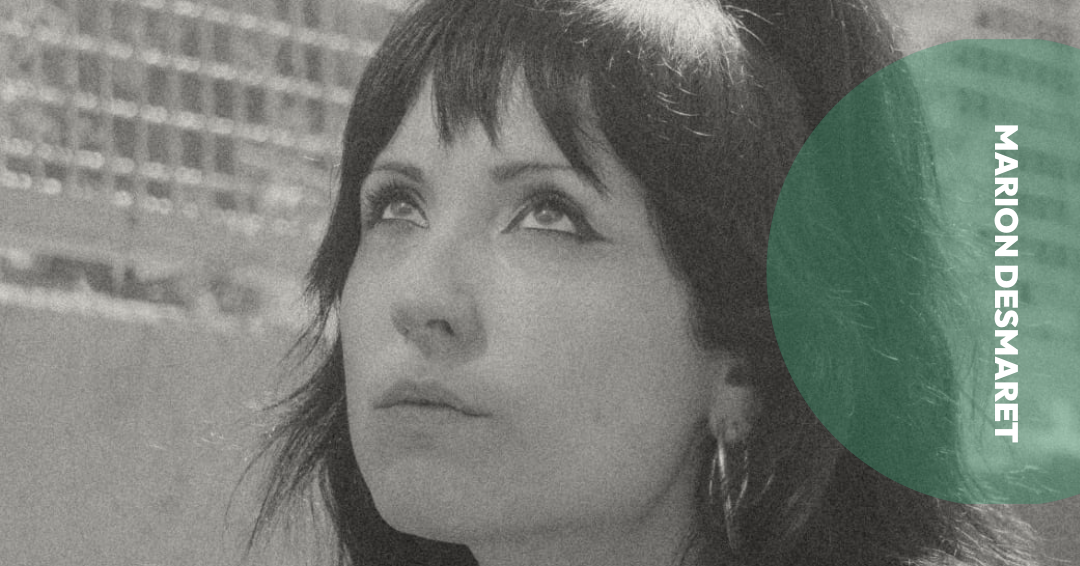
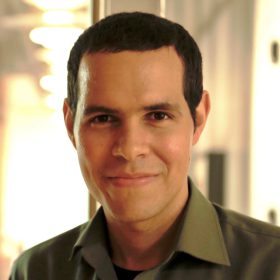
"French filmmaker Marion Desmaret (she/her) has spent her career based between Berlin and East Africa. Following an international career in TV production and reportage on Pan-African music and arts, her experimental documentary FORGET THE DIRECTOR, THIS IS EMMY’S CUT! explores the life of legendary Ugandan video joker, the cowboy of Kampala, VJ Emmy.
"
We caught up to chat about filmmaking, stories, and how her day-job as a funeral celebrant helps shape the stories she tells. FORGET THE DIRECTOR, THIS IS EMMY’S CUT appears on T-Port courtesy of our partners at AG Kurzfilm and is available for Professional Subscribers to watch.
Hi Marion! Welcome to the T-Blog. Could you please introduce yourself in a few lines?
I am a French filmmaker based between Berlin and East Africa. I started my career 15 years ago working as a reporter and documentarian for the TV show Tracks along with other programs broadcast on the European network ARTE. I directed over a hundred reports for the channel, including 52″ special episodes such as “Are Hackers the Heroes of our Times?” exploring the gray zones of modern digital resistance and global surveillance.
In 2022 in Uganda, I made a documentary about the Nyege Nyege Festival, the biggest festival for alternative music in East Africa and currently collaborates with their Kampala-based collective and record label to promote the Pan-African music and arts scene.
For the media Pan African Music, I directed the short ONE MAN RAVE IN KAMPALA: THE STORY OF DJ DECIMAL in 2024, the story of a captivating street artist with difficult beginnings, boundless creativity and dreams of superstardom.
In 2025 in Uganda, I embarked on a journey to create my first independent, non-commissioned film. I produced, directed, and edited the experimental hybrid short FORGET THE DIRECTOR, THIS IS EMMY’S CUT!, which was selected for its world premiere at the International Film Festival Rotterdam (IFFR) in 2026. The film was also selected by AG Kurzfilm (the German Short Film Association) and included in their 2026 German Short Film Catalogue.
Following this recognition, AG Kurzfilm sponsored my attendance at the Cannes Film Festival, where the film was showcased in the Short Film Corner. The film was also selected for the official competition at the Lago Film Festival and the Concorto Film Festival.
Why did you choose film as your medium? Is it your only artistic outlet or do you have others?
I love film because I love stories and the humans connected to them. My favorite humans are full of contradictions, and my favorite stories celebrate failure and absurdity.
I’m also a funeral celebrant, and this has become a source of inspiration as I move into fiction. The bizarre, intimate, and wonderful human encounters I have through this work are feeding the fiction projects I’m developing now.
Film isn’t my only outlet. I also write. I’ve just finished an autofiction book based on my funeral work, which I’m now working on adapting into a series. Writing and filmmaking constantly feed into each other, and I like to juggle the two.
Do you have a philosophy behind your filmmaking? Or do you feel like you belong to a particular artistic movement from the present day or past?
In my work as a film director, I aim to flatten the hierarchy between the sacred and the mundane. I approach the extremes of human behaviour with a gaze that observes rather than judges.
As I transition into fiction, I want to continue developing this kind of observant, non-moralistic cinema. I like to call it “grotesque nonchalant”: looking at the darkest and most absurd parts of human behaviour without treating them as exceptional. John Waters’ camp cinema is also a big influence on me.
Nothing is too sacred to be touched by life, and I want my films to ask a simple question: what happens when we stop being respectful and start being alive?
If you could watch one film on a loop forever, what would it be?
Love Exposure by Sion Sono
Tell us about your film that’s on T-Port. What is it about? How did you choose to tell its story?
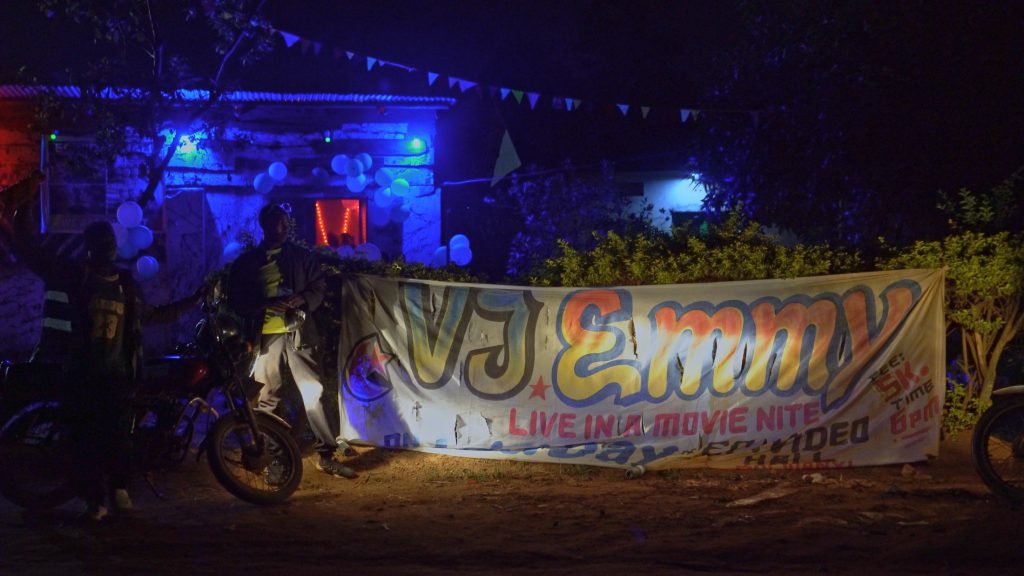
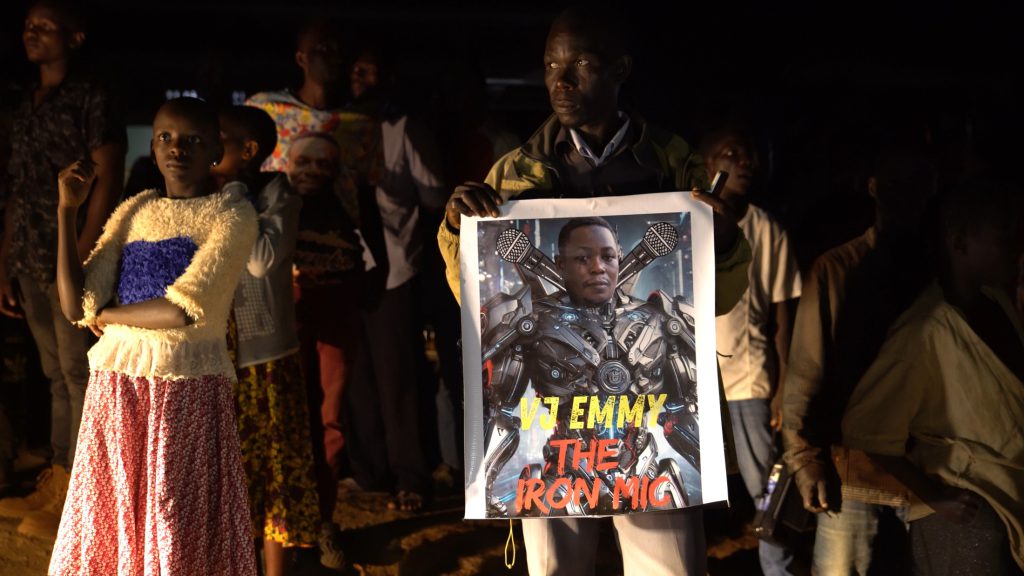
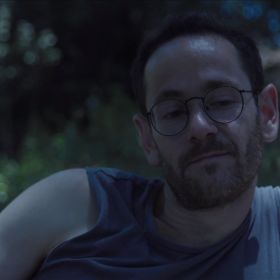
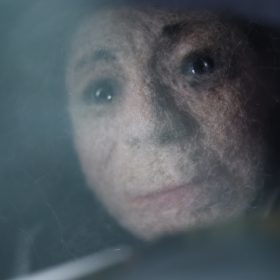
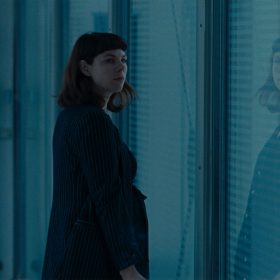
FORGET THE DIRECTOR, THIS IS EMMY’S CUT is a film about VJ Emmy, one of Uganda’s most famous Video Jokers. The Video Jokers or VJs are narrators who dub and reinterpret films live, adding jokes, political commentary, and their own perspective. They don’t just translate a film; they completely rewrite it, often becoming more important than the actors themselves.
It is also a meta-experiment. I decided to ask Emmy to do to the film what Emmy does to other people’s films: I gave him my film and asked him to VJ it, to dub it, and disrupt it. So the film becomes a collaboration between my voice and his, and a reflection on who gets to tell a story, and who gets to rewrite it.
I discovered this world by chance, when I heard laughter coming from a makeshift cinema in a Ugandan village. I walked into a small kibanda: a few wooden walls, a screen, and a packed audience reacting and commenting throughout the film. I was struck by how alive and collective the experience was.
Through Emmy and the VJ tradition, I became interested in cinema as something that can be disrupted, destroyed and reclaimed, but also as a social experience that is slowly disappearing as popular cinemas are replaced by television and the internet.
What challenges have you encountered while embarking on your film project? How did you seek to overcome them?
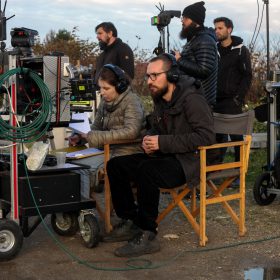
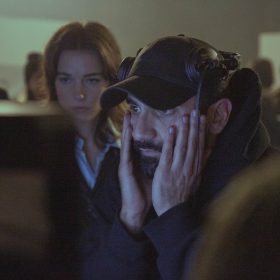
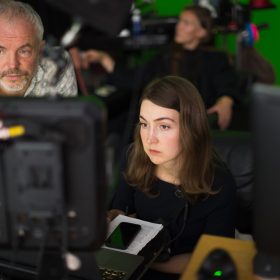
Self-producing a film with virtually no budget isn’t exactly a walk in the park, and every little obstacle can feel like a massive challenge at times. But DIY doesn’t mean “lonely”. It means the opposite. It means gathering friends and community around the same goal, the same passion.
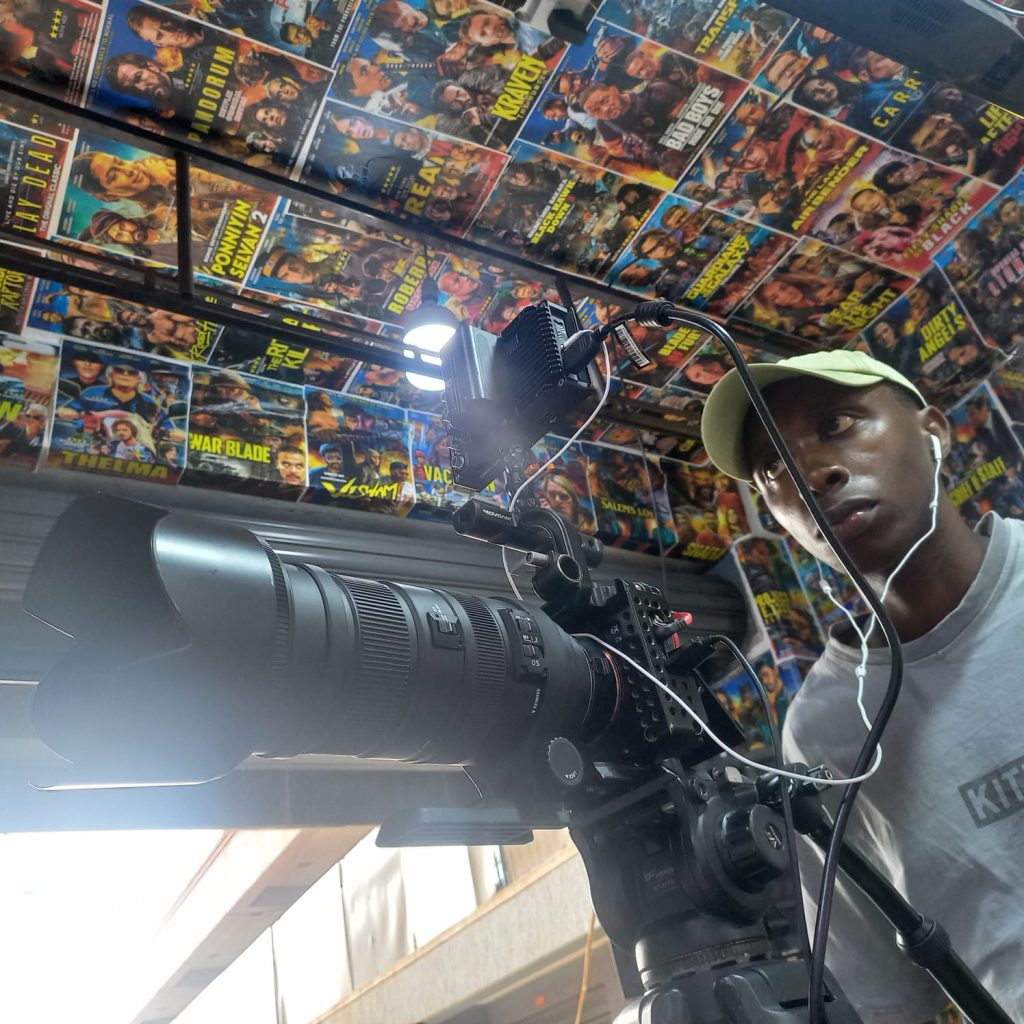
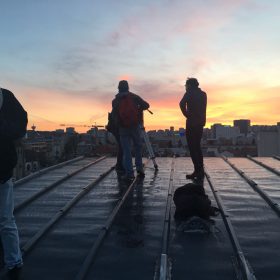
I was working closely with Ian Nnyanzi, the DoP, who helped me overcome every little thing that came our way. There was also Peter, our boda boda driver—the local moto-taxi, and an all-around friend and guardian angel—who drove us back and forth while scouting locations and negotiating filming permits.
Together with the locals, we drilled holes, set up lights, and chatted about life. It takes a village. The beauty of the journey overshadowed any obstacle that came our way.
Can you share the most important lessons you learned through the process of making your film?
I have learned that carrying a project on your own doesn’t need to feel lonely.
If you could go back in time to pre-production and give yourself one piece of advice, what would it be?
I would tell myself to trust the process.
“Self-producing a film with virtually no budget isn't exactly a walk in the park, and every little obstacle can feel like a massive challenge at times. But DIY doesn't mean "lonely". It means the opposite. It means gathering friends and community around the same goal, the same passion.
“
Take Your First Steps Into The Film Industry With The T-Port TalentBridge
T-Port films are only accessible to professionals, so your premiere status will not be affected.Stake your place in the next generation of filmmakers waiting to be discovered for only 15 Euros / year. Find out more on our website and get started with T-Port today.
Or sign up for our newsletter to get regular updates on the current trends and exciting innovations in the short film universe.
"Through Emmy and the VJ tradition, I became interested in cinema as something that can be disrupted, destroyed and reclaimed, but also as a social experience that is slowly disappearing as popular cinemas are replaced by television and the internet."
We use cookies to ensure that we give you the best experience on our website. If you continue to use this site we will assume that you are happy with it.