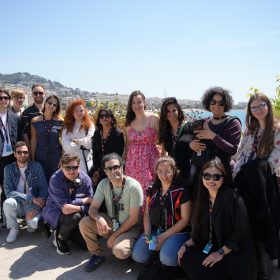
Emerging Baltic Film Producers’
State of the IndustryDate: October 1, 2026
Posted by: Jess Sweetman
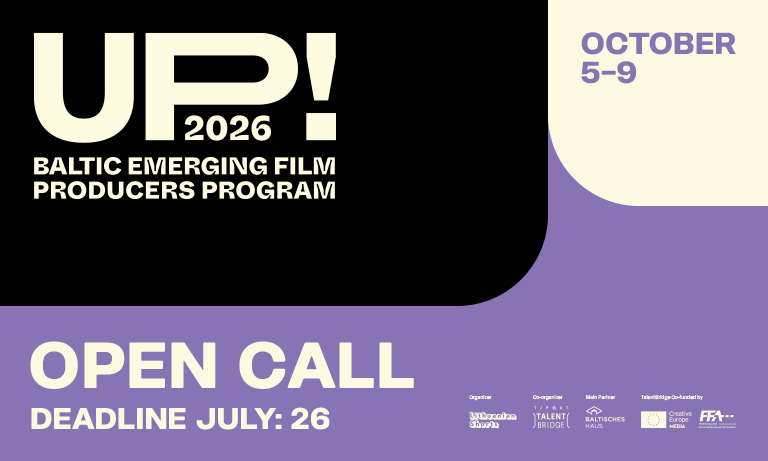
Next week, we will be joining our partners at Lithuanian Shorts, organisers of Baltic Pitching Forum, to host this year’s Up! Training programme. The five-day training programme aims to develop skills and give a grounding in the short film ecosystem.
Together with our partners at Lithuanian Shorts, organisers of the UP! training programme within the Baltic Pitching Forum, we have been lucky enough to select a cohort of visionary new Baltic producers from Lithuania, Latvia and Estonia. Since we had them, we thought that it would be interesting to find out more about how some of them see the world of film production right now, what would they change? And what are their visions for the future?
Below we present an array of answers from producers Grēta Grebže (Latvia), Uku Pärtel Rand (Estonia), Grēta Štrausa (Latvia), Robin Marten Leppik (Estonia), Grete Kaio (Estonia), and Marija Stonyte (Lithuania), about what they want to see on the screen, how they find the current funding landscape, and what they’d change. We also took the opportunity to ask them their advice for other upcoming producers – so read to the end for a jolt of inspiration.
We started with an easy question:
What sort of stories would you like to see more of on cinema screens and beyond?

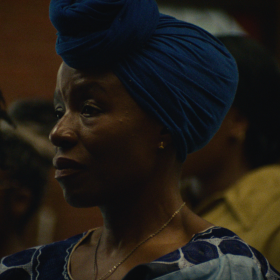
Grete Kaio
“I’d like to see more stories that are deeply human, intimate and a little unexpected. Stories that find something extraordinary in ordinary lives, especially when they explore identity, relationships, belonging and the small contradictions that make people who they are,” says Estonian freelance producer, journalist, and writer Grete Kaio (she/her). Kaio has already produced several short films and worked across film and television, including the TV series Alo (2025, Elisa Huub) and Kalamaja Blues (YLE x ERR x Moondustfilms).
She continues: “I’d also love to see more female perspectives that aren’t reduced to familiar narratives, and more stories that are allowed to be strange, tender, funny or uncomfortable without needing to explain themselves. Above all, I want stories that leave you feeling that you’ve genuinely met someone, rather than simply watched a story happen to them.”
The human aspect of storytelling echoes throughout several of the Up! participants’ responses. For example, according to Uku Pärtel Rand (he/him), an emerging producer from Estonia with a background in narrative short filmmaking:

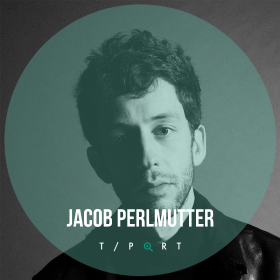
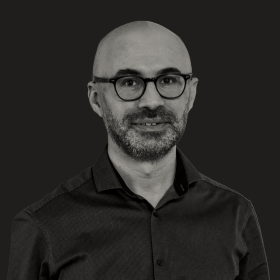
Uku Pärtel Rand
“I am fascinated by the complexity of human experience, emotions, and choices that shape a life. I want to explore what it means to be human – the good, the bad, and the moral contradictions within us. ”
And alongside a focus on personal, human stories, is a repeated pattern of producers who are interested in sharing original stories about places that seem to break the stereotypes afforded them by the wider media:
Grēta Grebže (she/her), an emerging Latvian film producer based in Riga says: “I would like to see more space given to contemporary stories from smaller European countries that are allowed to be specific without always having to explain themselves through history, war or national trauma. Those stories are important, especially in our region, but I would like contemporary Baltic stories to have a stronger presence as well – stories about how people live here now, their relationships, social issues, work, families, ambitions, loneliness and the pressures of contemporary society. I would also like to see more queer stories closer to home!”
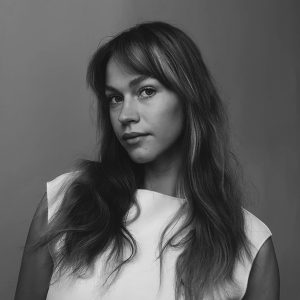
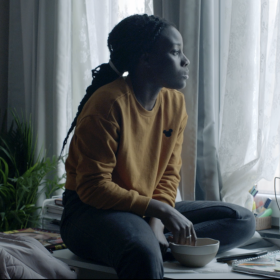
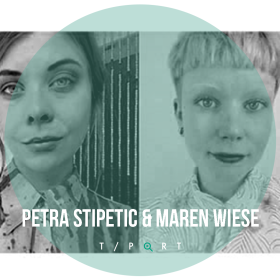
Grēta Štrausa
Meanwhile, Rēzija Grēta Štrausa (she/her), also a Latvian film producer based in Riga, expresses a desire for local filmmaking that doesn’t pander to international tastes: “I’d love to see more small, specific, local stories that aren’t afraid of being local. Stories that don’t try to sand down their edges to feel more “internationally palatable.”
The current use of AI and short-form across the board also makes a cameo in the opinion of Robin Marten Leppik (he/him), who has been working in the industry since 2022, and predicts that AI shifts will be met with cultural pushback:
“In a time largely defined by AI discoveries and a leaning towards shorter formats, what draws me most are very simple authentic stories that capture what it’s like to be human in its subtlest of nuances. Stories that encourage us to linger on a feeling, an atmosphere, a thought – to take time off and see if something new can be found in the process.”
And lastly, Marija Stonytė (she/her), Lithuanian producer, director, and co-owner of UKU Films, with over a decade of experience in documentary cinema, adds more commentary on allowing stories to be what they are, without the influence of wider cultural forces:
“I would like to see more space for distinctive, author-driven films that are not shaped primarily by trends, formats or market expectations.
There is understandably a strong focus today on urgent global realities — war, political division, social and environmental crises — and those stories are necessary. At the same time, I hope the industry continues to make room for films that look closely at human nature and at seemingly ordinary lives, and that find something universal within them.
I think cinema is at its strongest when it allows us to experience another person’s inner world in a very specific, authentic way. I would love to see more films that take creative risks, trust the filmmaker’s individual voice, and aim to remain meaningful beyond the particular moment in which they were made.”
How have you experienced the European film funding landscape so far in your career? What challenges have you encountered?
Since these producers are at the beginning of their careers, none have expressed having extensive experience in the European film funding landscape. That said, several of them have experienced the more local elements of the funding landscape in the Baltics, as well as learning about experiences from their peers.
Grete Kaio: “What I’ve found most challenging is understanding how fragmented the landscape can feel at the beginning of a career. I’ve also experienced how much of the process depends not only on having a strong creative idea, but on being able to communicate its potential within a very specific funding language.”
Rēzija Grēta Štrausa: “Most of what I know comes secondhand, from colleagues who run companies and have gone through the process, and from what I’ve read. But the frustration comes through clearly every time. The competition for these funds is enormous, and writing a competitive application has almost become its own specialised skill, separate from filmmaking itself. Companies with money can afford to hire people whose whole job is writing these applications, and that gives them a real edge over smaller or newer companies. It’s less about the strength of the idea and more about who has the resources to present it the “right” way.”
Robin Marten Leppik: “In Estonia there are two main funding sources – the Estonian film institute and the cultural endowment of Estonia, alongside regional funds. As the funds therein are limited and we have been tackling with the same funding budgets all throughout inflation, then the competition is evidently tight and often especially short film creators eventually go into self-financing, which is not a sustainable solution in any way, but you always have to also acknowledge the energy lifespan of a project.”
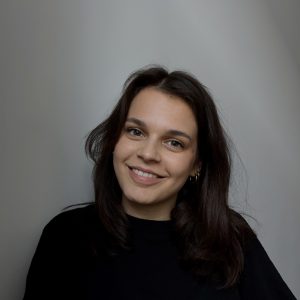
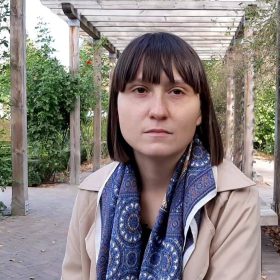
Grēta Grebže
Grēta Grebže: “In Latvia, public funding is often not simply one financing source among many – it is the foundation that makes a project possible. Projects are therefore very dependent on public financing and can spend years moving between national funding, MEDIA, minority co-production schemes, Eurimages and regional funds, all with different deadlines and requirements. I think one of the biggest challenges is simply how much coordination and administrative work is required to align all of these sources within one project.”
Marija Stonytė: “My experience so far has been largely shaped by Lithuania, and I feel fortunate to work within a relatively supportive film environment. We are a small country, but there is meaningful public funding for cinema, as well as a useful tax incentive system that makes both national productions and international collaborations possible.
As a producer, I am now moving more actively into European financing and international co-production. My direct experience of applying to international funds is still growing, while some of my co-production partners have already successfully financed our projects in their own countries.
At this stage, one of the biggest challenges for me is understanding how all the different funding systems, broadcasters, deadlines and production timelines can work together — without allowing the financing strategy to become more important than the film itself. I am very interested in learning how to navigate that balance better.”
What would you change about the funding landscape if you could?
Accessibility, transparency, and opening more opportunities for emerging talents are popular answers for this question. As well as co-production financing opportunities.
Grete Kaio: “If I could change something, I would make the funding landscape more accessible to emerging filmmakers and producers, particularly those who are still building their track record. There is often a difficult paradox: you need previous experience and successful projects to access funding, but you need funding to gain that experience in the first place.”
Uku Pärtel Rand: “I would create a minority co-production grant application for short films in Estonia, as I feel that nowadays European film funding is more and more dependent on international co-productions.”
Rēzija Grēta Štrausa: “I’d want real support for people who don’t have an established company or a specialist writer on hand. Something like mentorship or shared access to that application-writing expertise, so it’s not only available to whoever can afford to buy it. I’d also want more openness about what actually makes an application succeed, beyond the official criteria on paper. A lot of what gives bigger companies their advantage is just experience and having done this many times before, and that kind of knowledge shouldn’t stay locked inside a handful of companies.”
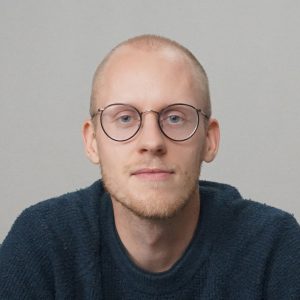
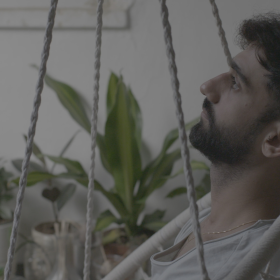
Robin Marten Leppik
Robin Marten Leppik: “As an emerging producer without an established international network, the system of European-wide financing and co-production seems quite intimidating and hard to enter into, since the whole point of reaching out is to widen your potential funding sources, yet to attract these partners you’d already need to prove some existing funding.
The shift towards tax rebates has been greatly welcomed to attract international bigger scale projects that already have money to spend, but if we are at the same time losing out on direct public funding, then how can smaller scale projects actually get their feet off the ground?”
Grēta Grebže: “Following from my previous answer, I think there is room for more compatibility between funding systems – in application formats, requirements and timelines, so that producers spend less time adapting the same project to different frameworks. Of course, public funding needs clear rules and accountability, but I think the process could be more coordinated without losing that.”
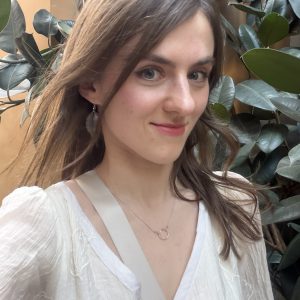
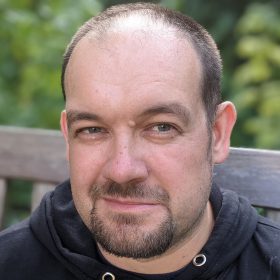
Marija Stonyte
Marija Stonytė: “I would create more space for risk. Funding systems naturally ask filmmakers to explain very clearly what a film will be, why it matters and how it will work. But some of the most exciting films begin with uncertainty, intuition or something unexpected. I think it is important that there are places within the system where those projects can also be trusted.
I would especially like to see more support for bold, author-driven projects that do not immediately fit an obvious trend, genre or market expectation.”
How do you see the international co-production landscape from where you stand? What challenges do you see in making international co-productions and how would you improve international relations?
The responses to this question brought a mixture of excitement from our producers, for some the co-production landscape offers more chances to make their films a reality.
Grete Kaio: “From where I stand, international co-production feels both incredibly promising and quite complex. Coming from a small film industry like Estonia, international collaboration can open doors to stories, skills, audiences and resources that would be difficult to access within one country alone. At the same time, I think the biggest challenge is making sure that collaboration grows from a genuine creative connection rather than simply from the need to assemble financing.
For emerging producers, another challenge is simply finding the right people. There are many talented filmmakers across Europe, but building trust takes time, and co-production requires much more than finding someone whose project fits the same funding scheme. You need to understand each other’s working cultures, ambitions and ways of communicating.”
Uku Pärtel Rand: “I see that the international co-production landscape is rather fruitful. I think that the main challenge in making international co-productions is getting the right people together. Go to events where producers from around the world come together and exchange ideas. I support making these kinds of international events, film markets, and workshops more accessible, so there would be more options to find a partner suitable for your production. Lastly, I believe the best improvement we can make for international relations is to be sincere towards each other. Otherwise, we’re just wasting each other’s time and money.”
Marija Stonytė: “I am still relatively new to producing international co-productions, so my experience so far has actually been more encouraging than difficult. I have found partners quite naturally, mostly through genuine creative connection and mutual trust.
Because of that, I believe the best co-productions should begin with people rather than financing structures. Of course funding matters, but ideally you choose a partner because you want that person and their perspective to become part of the film — not simply because their country completes a financing plan.
I think international collaboration benefits from more transparency, long-term relationships and opportunities to actually spend time together. For me, a good co-production should give a film allies, not just territories.”
Aside from embracing the promise of co-production markets, there is, however, a lingering question about the practical and cultural factors in creating a working inter-country collaboration, as well as the need to ensure that everyone is aligned creatively:
Rēzija Grēta Štrausa: “The practical challenge is just how much coordination it takes. Every country has different deadlines, forms, rules, and it usually takes an experienced producer to hold all of that together. If I could change one thing, I’d want more harmonisation between the different funds, so producers aren’t juggling five different systems at once. And I’d love to see more informal spaces, labs or mentorships where people without a company yet can start building real relationships with future partners before there’s even money on the table. That kind of trust is what makes co-productions actually work, and it needs more room to grow than a funding deadline usually allows.”
Robin Marten Leppik: “Thus far I haven’t reached out much outside my own borders when in search of financing for my own projects, but having been part of many international co-productions on bigger-scale projects, the main thing that keeps on coming up is the question of alignment. Both in terms of crew workflows and cultural differences in the workplace, but also purely in how the financing decisions are made, how big of a waiting time difference there might be and how big a timing difference there might also be when it comes to eventually receiving the money as well, which complicates planning.
Additionally, reaching out into unknown markets and collaborators might easily lead you into co-productions that suddenly lack a collaborative creative drive and are driven purely by the money, often leading to unnecessarily complicated obligations and administrative requirements.
That’s why any and all possibilities to network, to learn together, to debate together, to dream together are so vital to keep this constant dialogue alive and thriving.§
Grēta Grebže: “From Latvia, international co-production feels less like an optional expansion and more like a natural and sometimes the only way of making ambitious films. And it is great when it brings not only financing, but also new creative perspectives, expertise, audiences and long-term professional relationships.
However, I think that the problem starts when the co-production is designed backwards from available funding. Partners, crew positions and territorial spending requirements can sometimes become boxes to tick rather than meaningful contributions to the film. At the same time, I understand why these requirements exist, as public funding also has a responsibility to support local talent, infrastructure and industry. I think the strongest co-productions are built when each partner has a clear reason to be part of the project beyond access to a funding scheme. A good co-production should make the film stronger, not simply more financeable.”
What creative advice would you give to a fellow producer when it comes to getting your film funded?
Well, this wouldn’t be the T-Blog if we weren’t after a little sprinkle of inspiration from a group of producers who are on their way to the next step of their careers!
Grete Kaio: “I think the first step is to understand what makes your film impossible to confuse with someone else’s. Before thinking about funding, I would try to find the emotional and creative core of the project and learn how to communicate it simply. A funding application can have all the right elements, but if you can’t make someone feel why this particular film needs to exist, it becomes much harder to stand out.”
Uku Pärtel Rand: “I think that you have to check these three boxes to get your film funded: first, have a unique story or a unique way of telling an already known story; second, believe in your story and be sincere when pitching it to others; and third, do your homework when applying for funding, know who to approach and how to approach them. But mostly, just be a decent human being and a trustworthy partner.”
Rēzija Grēta Štrausa: “What I can share is what I’ve picked up from watching colleagues go through it and from paying close attention before I’m in that position myself. The thing that comes up again and again is to not start with the big international funds. Build up through smaller, national-level support first, use development labs and co-production markets to shape the project and meet people, and treat the early stage as relationship-building as much as writing.
That’s actually where I am right now — I’m freelance, without a company of my own yet, so the advice I’m taking for myself is that finding the right producing partner is often step one, not a side detail. So much of this system assumes you already have a company and a track record behind you, and for someone starting out, building that partnership and that foundation is really the first project, before there’s even a script on the table to fund.”
Robin Marten Leppik: “Try stuff out, apply everywhere and ask everyone, but also don’t let the creative energy of the project die out. There are always ways of minimising the story and making the same central theme/question work just as powerfully in a tighter and cheaper context. It’s the producer’s job to also be a creative collaborator and to decide where therein lie the red lines and where we can be flexible.”
Grēta Grebže: “Even though a producer’s job is to get a film financed, it is equally important not to lose sight, at any step of the process, of what made the project worth making in the first place. I think it is about being very clear about what is essential to the film and what can remain flexible.
Financing a film often means adapting its scale, structure or timeline, and sometimes simply accepting that there is not enough money to make everything as originally imagined. Creative cuts may have to be made, but I think the producer’s responsibility is to understand which compromises the film can absorb and which ones would fundamentally change it. The financing strategy should be built around protecting that core, rather than slowly reshaping the project into something else.”
Marija Stonytė: “Stay persistent, but don’t rush. You will hear many no’s, so you have to believe in the film yourself — but persistence does not necessarily mean applying everywhere as quickly as possible. Sometimes it is better to strengthen the project, clarify the creative vision and submit only when you genuinely believe in what you are presenting.
Find partners you trust and deeply respect. And don’t shrink the film in your imagination before you know what is possible. First, dare to imagine the film you really want to make; if the ideal financing does not materialise, then creativity becomes part of producing too.”