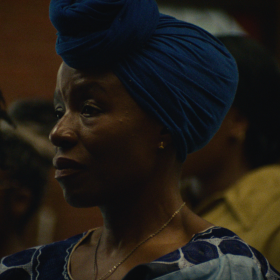
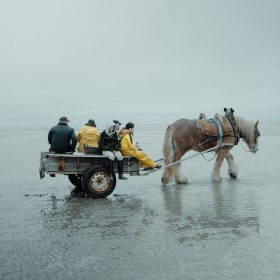
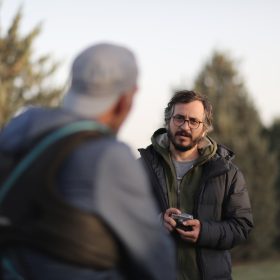
 Polish-British filmmaker Tomasz Frymorgen was awarded as a runner up in the Claims Conference Emerging Filmmaker Contest for his evocative short “Wallpaper,” a poignant meditation on memory, loss, and legacy.
 With a background in documentaries and a current focus on fiction at the National Film and Television School (NFTS), Frymorgen draws deeply from his personal ties to Jewish history and Polish identity. He describes his film as: “An attempt to make sense of being from a world that no longer exists.”
We caught up with Tomasz to find out more about the production process behind his film, one that may seem familiar to many filmmakers, calling upon ingenuity and resilience in the face of budgetary restrictions.
Hi Tomasz, could you tell us a bit about yourself?
I’m a Polish – British filmmaker from the UK. Currently I’m studying the Directing Fiction MA at the National Film and Television School.
Tell us about your filmmaking career up to the film you made for the Claims Conference Emerging Filmmaker Contest:
Prior to studying at the NFTS, I worked on documentaries for UK broadcasters and international streamers for the last seven years or so, initially as a producer and then as a director.
When the pandemic hit and the industry shut down, I went to work in a supermarket warehouse. Whilst there, I decided it was now or never and made my first scripted short film, “Thank You So Much.” That short got me onto a development scheme called Flex, run by Screen Yorkshire, and I’ve since also made a second short, “Wallpaper,” which was a finalist in the Claims Conference Emerging Filmmaker Contest, and also in the Pears Short Film Fund, run by UK Jewish Film.
Could you share the name and a synopsis of the film you made with winnings from the contest?
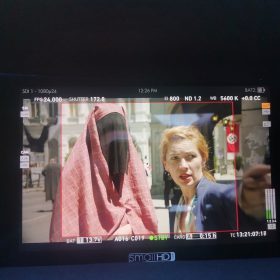
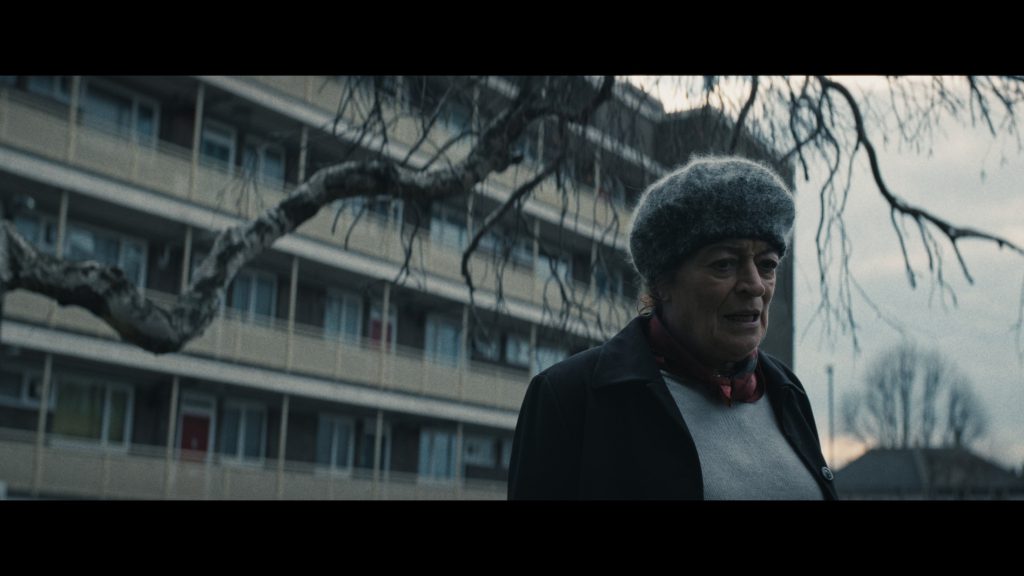
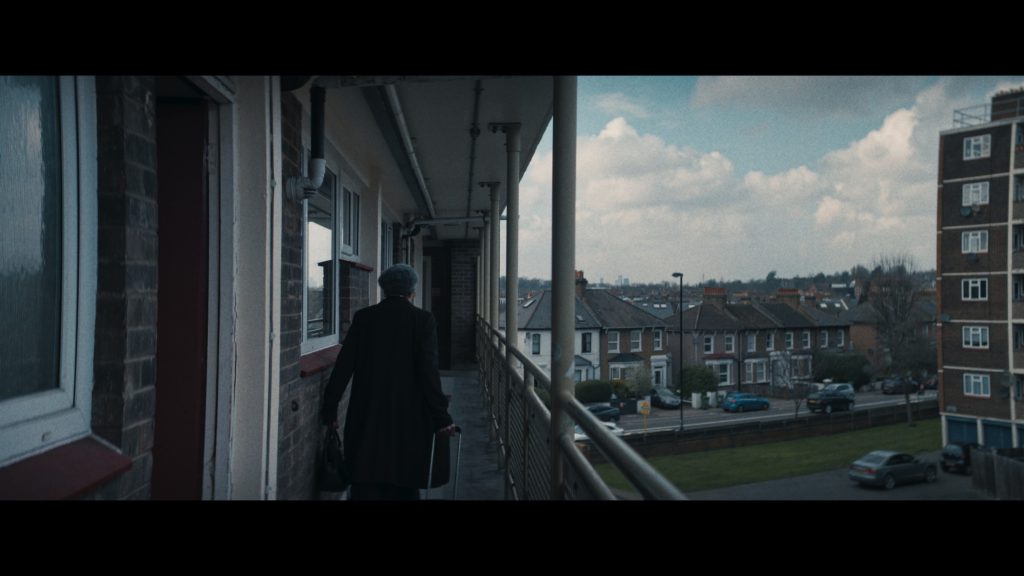
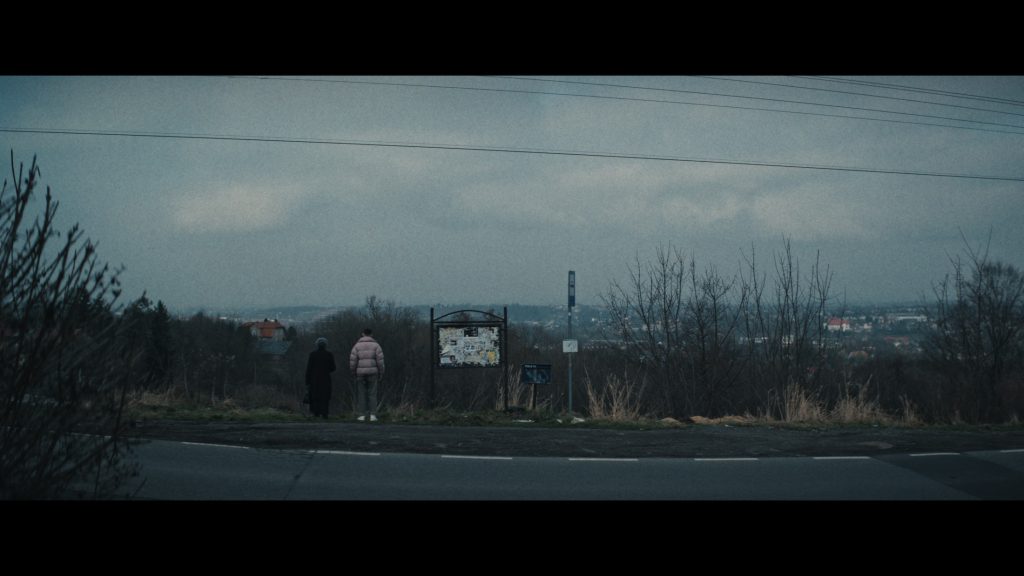
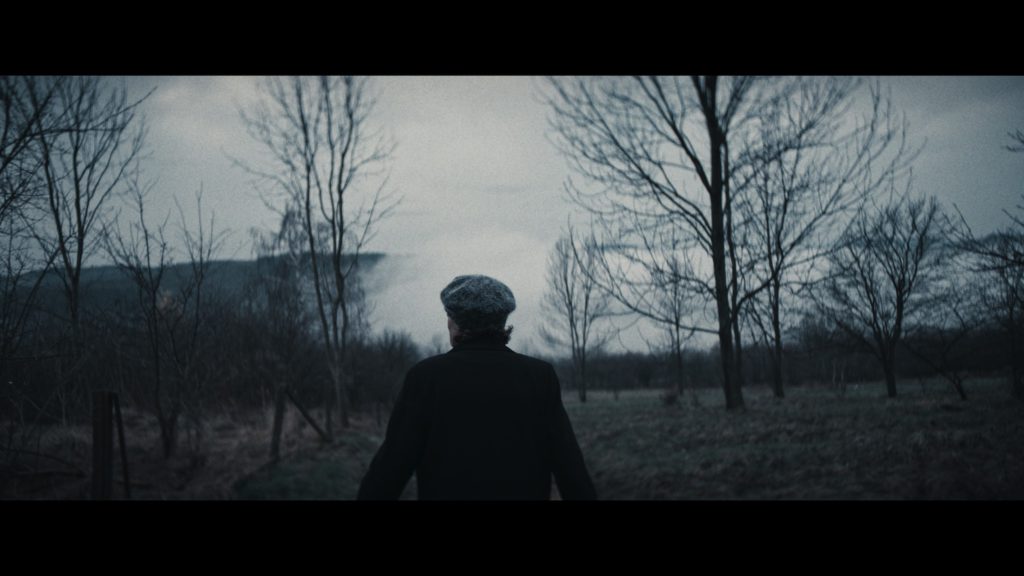
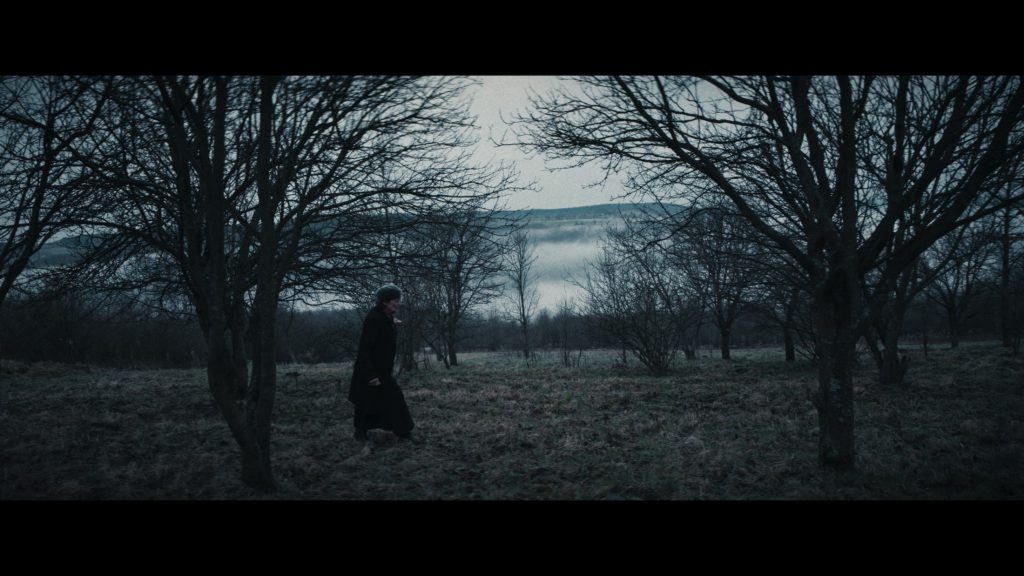
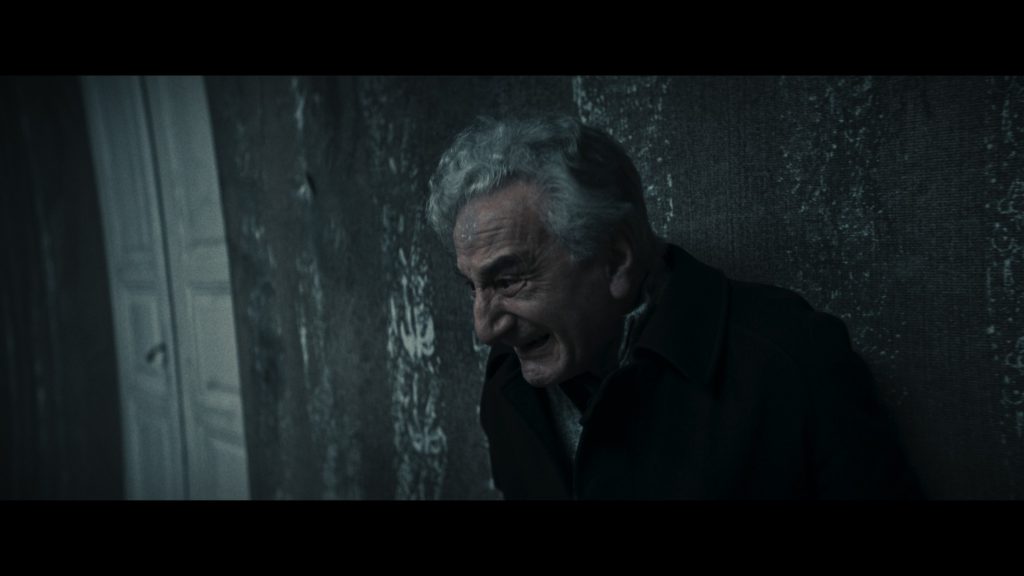
My project was called “Wallpaper,” and it was a finalist in the competition, receiving a runner-up stipend. The film tells the story of two elderly British-Jews who return to their places of birth in Poland with their respective families. It’s a story about the transfer of memory of the Holocaust between generations.
Where did the idea for the film come from?
The idea was an amalgamation of multiple sources and experiences. Having been born in London and raised separately to the Polish post-war community, my relationship to Poland was always slightly alienated.
Throughout the 90s and 2000s, Poland was changing rapidly, and didn’t resemble the Poland of my parents that I had been brought up on. At the same time, it was a period when the country was beginning to reexamine its Jewish past, and my visits to Poland, primarily Krakow, were intimately tied up with the cultural excavation that was taking place there – especially around the Galicia Jewish Museum, which was founded by a family friend, Chris Schwarz.
How did it feel to know that your pitch got to the finals of the contest?
Great! It was important to know that my script, which is quite a nuanced subject matter, was speaking to people – both at the Claims Conference and at UK Jewish Film.
How much was your prize, and how did you spend it?
The runner up prize was $1,000. It went towards our overall budget which was a complex beast that was cobbled together through multiple sources, many kind and enthusiastic people, and through a lot of work and saving.
Aside from the cash prize, how did it feel to be a runner up in the contest? Did winning contribute in non-financial ways to your film?
It certainly gave me the determination to see the project through. There was something there that people were understanding, and I couldn’t allow that to go unfinished, even if ultimately I didn’t win the prize.
What was the most difficult part of film production for you? What did it teach you?`
Our 40 seater prop bus broke down three hours into day one. That was a difficult event, as there is no Plan B on an independent short like this. There was a moment there where years of work could have gone down the drain. Fortunately, we managed to find a replacement in a very short time, and with the understanding and dedication of the cast and crew, we got through the day. Many lessons in there, approach each film like it could be your last…
What would you like the audience to take away from your film?
The film is an attempt to make sense of being from a world that no longer exists. It’s a very symbolic film, and I hope I manage to show it to those who will get where I’m coming from.
What are you up to now?
I’m currently prepping for my next short at the National Film and Television School, where I recently started a two-year masters course. In the future I’m hoping to develop my practice both in the UK and Poland.
Applications for this year’s Claims Conference Emerging Filmmaker Contest are now open!
This is a global contest for emerging filmmakers focused on short films about the Holocaust. It is open to filmmakers worldwide and one winner will receive $60,000 to fully fund a short documentary or narrative film. Entries will be judged by a panel of film industry professionals.
If you’d like more info – you can check out last year’s informational webinar for filmmakers to find out about the contest. Apply before the deadline of June 16th, 2025.
Submit Your Short To T-Port Today
T-Port films are only accessible to professionals, so your premiere status will not be affected.
Stake your place in the next generation of filmmakers waiting to be discovered for only 15 Euros / year. Find out more on our website and get started with T-Port today.
Or sign up for our newsletter to get regular updates on the current trends and exciting innovations in the short film universe.