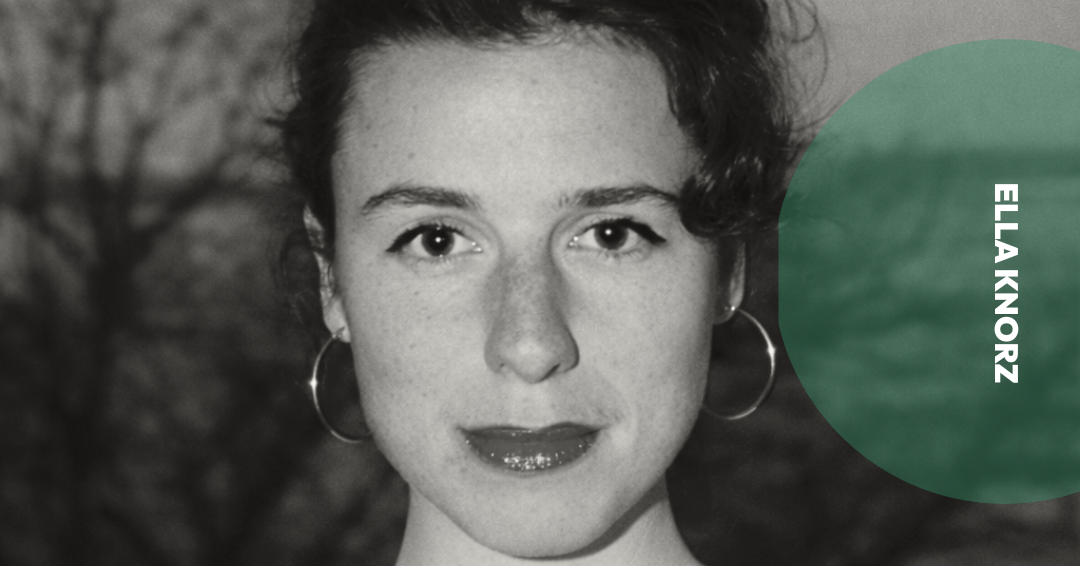
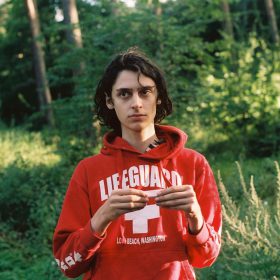
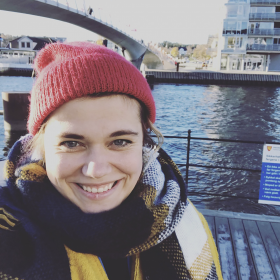
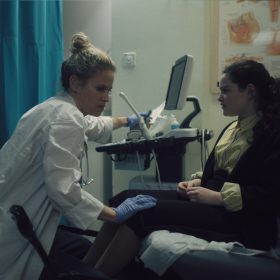
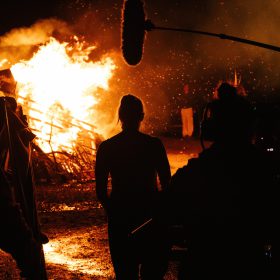
German-Australian filmmaker Ella Knorz grew up in Heidelberg and experimented with filmmaking from a young age. The creativity has paid off because her short film NINE DAYS IN AUGUST has made its way to film festivals including Drama International Film Festival, Interfilm Berlin, and Clermont-Ferrand Short Film Festival.
We caught up with the filmmaker, whose work appears on T-Port courtesy of our partners at HFF München, to chat about inspiration, the process, and intuitive filmmaking.

Hi Ella! Could you please introduce yourself in a few lines?
I was born into a German-Australian family, growing up in the picturesque town of Heidelberg, yet always feeling torn between continents. The filmmaking virus hit me when my best high school friend and I started experimenting with her iPod touch – a brand-new little device with endless creative possibilities. She later went into the music business.
I’ve stuck with movies until today. What I love about the cinematic language is that it combines so many art forms I deeply love: Writing, photography, performance, design, sound art, music and many more…
So in the time between being a ten-year-old and receiving my film school diploma I’ve made not less than 100 short films.
Why did you choose film as your medium? Is it your only artistic outlet or do you have others?
I think I can really count myself among the first generation of digital natives – I don’t know the world without the internet, without being surrounded by images, or without a digital camera pointing somewhere towards me. So to me, film always felt like the closest medium to express my emotional experience of being human in the 21st century. Moreover, I love how it has the strength to describe the world without having to explain it.
I also feel this freedom in photography and writing, but nonetheless film has the strongest impact and depth for me.

Do you have a philosophy behind your filmmaking? Or do you feel like you belong to a particular artistic movement from the present day or past?
I love shooting intuitively and quickly, without having too much time to get stuck in my head.
Using minimal means can maybe create an even bigger artistic freedom: Often I use authentic settings from my daily life for a fictional storyline.
I believe in human connection and kindness – which is central for my filmmaking process, inside the story and also behind the camera.

If you could watch one film on a loop forever, what would it be?
“Call me by your name”
Tell us about your film that’s on T-Port. What is it about? How did you choose to tell its story?
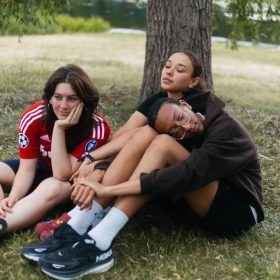
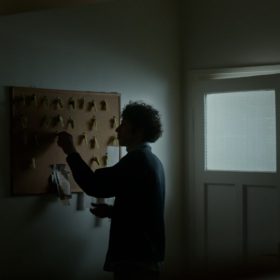
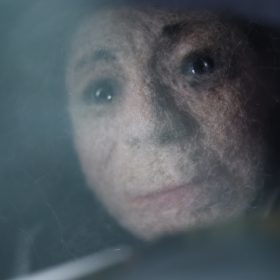
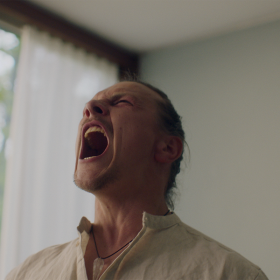
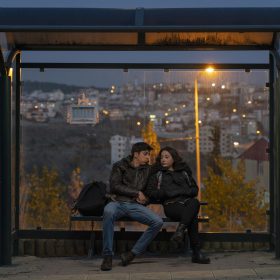
NINE DAYS IN AUGUST was written in one day and shot within four days with a two-women crew and three actors. The film deals with many topics subtly layered on top of each other, where I always tried to focus as much as possible on the main character’s view, feelings and connections to her best friend and father.
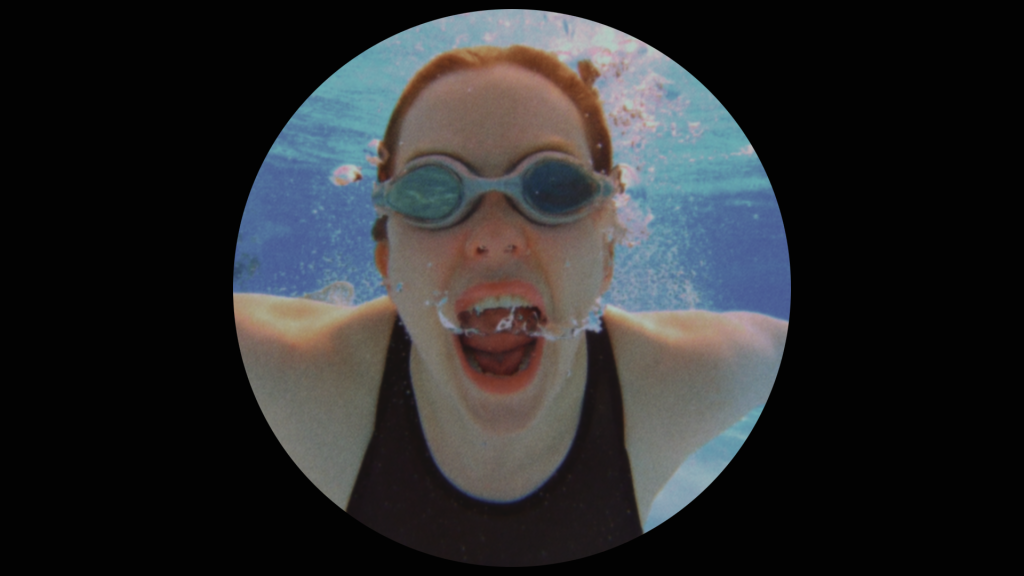
Also deeply connected to the theme, I decided to frame almost the entire film in a circle. This really limited us on set, but helped me a lot being more courageous with aesthetic decisions (… and at the same time hiding that we had no budget for the production design and extras!).

Tell us about the production process on that film, what did you learn? Which parts did you enjoy?
I learned how much can be possible with so little, as long you have a great group of people and creative courage.

What challenges have you encountered while embarking on your film project? How did you seek to overcome them?
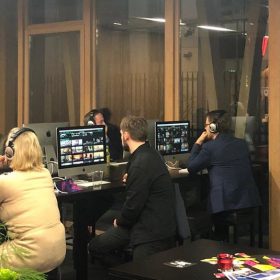
The crew: my trusted friend and DoP Lea Dähne – and me doing directing and sound. Unfortunately, you should never do directing and sound at the same time, and I painfully learned this while going through the material in the editing room. I had done a really bad job as a recordist. So I decided to synchronise and sound-design the whole film from scratch, which now created an entirely new aesthetic which I prefer even to the original sound.

Can you share the most important lessons you learned through the process of making your film?
Just always keep moving.
If you could go back in time to pre-production and give yourself one piece of advice, what would it be?
I would say “shut up” to the tiny voice in my head that was constantly doubting the “relevance” and “function” of the story. I would encourage myself to trust the unexplainable feelings I had – exactly that’s why I had to make a film about them in the end.
Take Your First Steps Into The Film Industry With The T-Port TalentBridge
Or sign up for our newsletter to be the first to find out about our upcoming workshops and more.
Submit Your Short To T-Port Today
T-Port films are only accessible to professionals, so your premiere status will not be affected.Stake your place in the next generation of filmmakers waiting to be discovered for only 15 Euros / year. Find out more on our website and get started with T-Port today.
Or sign up for our newsletter to get regular updates on the current trends and exciting innovations in the short film universe.