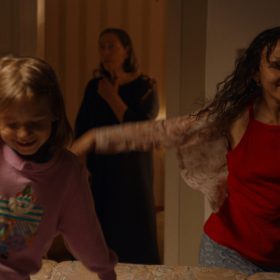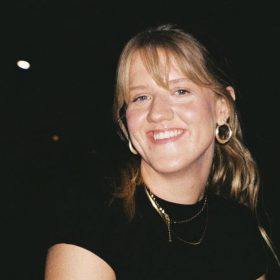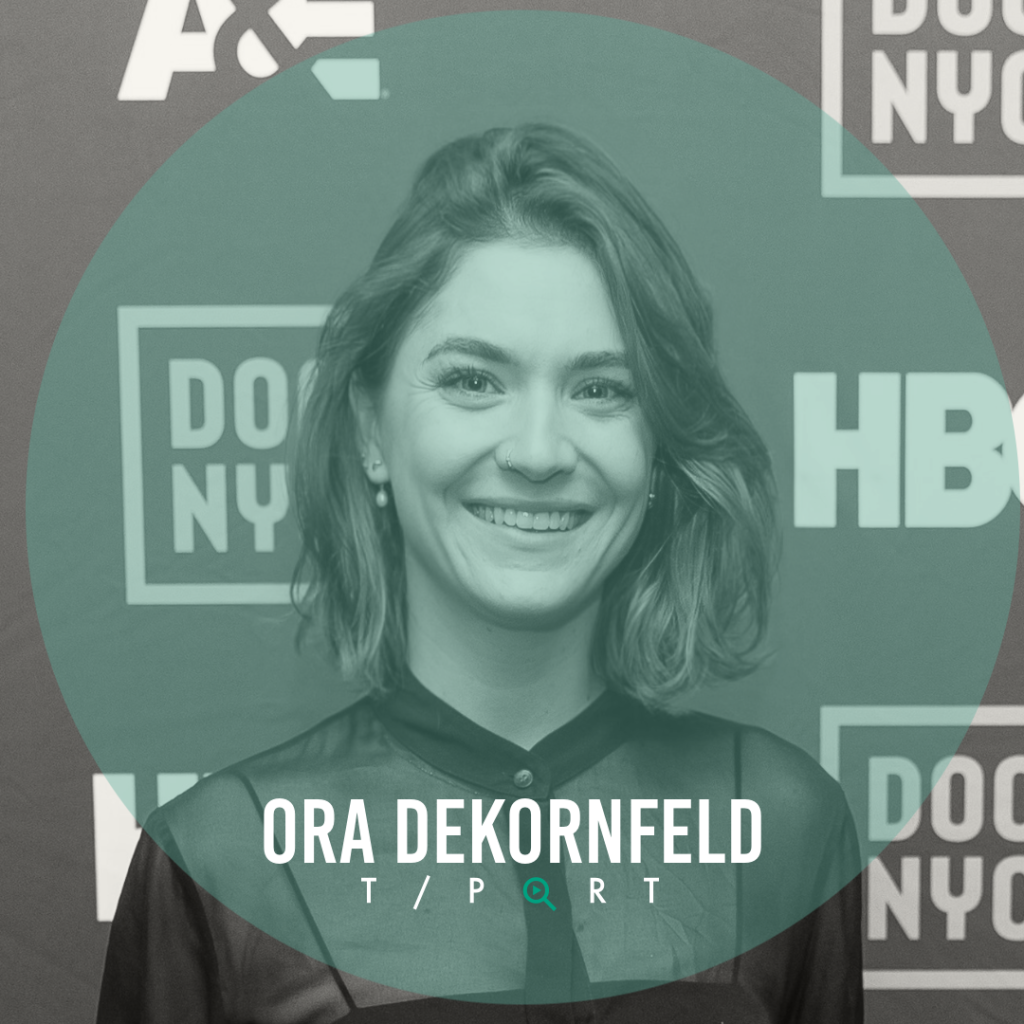
When filmmaker Ora DeKornfeld began exploring her grandfather’s past, she unearthed more than just family lore—she discovered a cinematic thread that would become THE GRANDFATHER PUZZLE, a short documentary supported by the Claims Conference Emerging Filmmaker Contest.
Raised in Annapolis, Maryland, and trained as a video journalist, DeKornfeld is no stranger to intimate storytelling, but this project hits closer to home than any before. Blending puzzle pieces, prewar photographs, and a cross-continental journey through Hungary and beyond, she constructs a layered narrative about trauma, memory, and intergenerational connection.
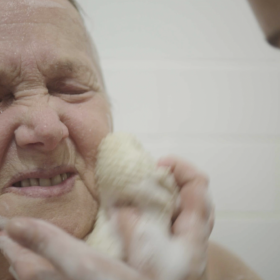
The film centers on her 100-year-old grandfather, a Hungarian Holocaust survivor whose reserved demeanor and casual remarks about the past conceal a complex history of displacement, privilege, and survival. Using jigsaw puzzles made from photographs of key locations in his life, DeKornfeld gently attempts to unlock his memories and bridge decades of silence between them. With production underway, she’s not only assembling a personal story but offering a broader meditation on identity, belonging, and the enduring impact of the Holocaust on generations to come.
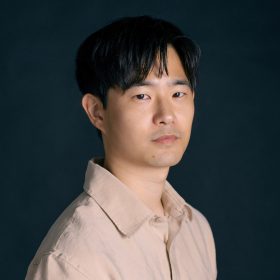
Hi Ora, would you please tell us a little about yourself?
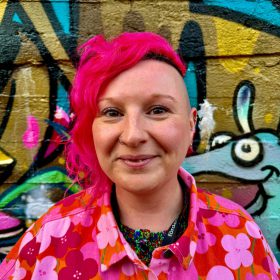
I just turned 34. I grew up in Annapolis, Maryland, and went on to study video journalism at the University of North Carolina at Chapel Hill. Out of college, I worked as a video journalist for half a decade before beginning to pivot toward longer-form narrative nonfiction.
Right now, I’m directing three projects:
- The Grandfather Puzzle – a short documentary supported by the Claims Conference Emerging Filmmaker Grant.
- Fixers – a feature documentary about local fixers hired by foreign media crews to open doors and interpret unfamiliar worlds.
- Stalin Boys – a film about four Mexican-American middle-school boys from a tiny Texas border town who are so obsessed with Joseph Stalin they create a play about him. I’m co-directing this with my friend Bianca Giaever.
What is the title of your winning film pitch? What is it about?
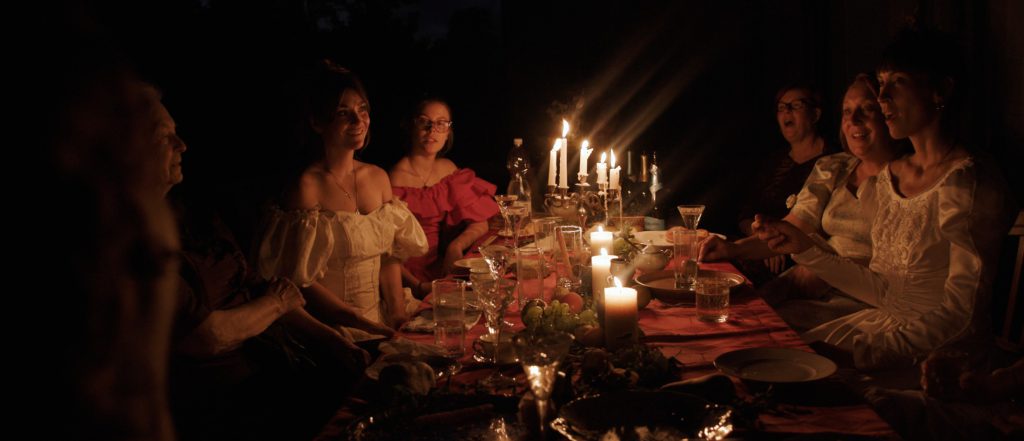
The current working title is THE GRANDFATHER PUZZLE. The film follows a filmmaker—me—as I create puzzles from key locations in my 100-year-old grandfather’s Holocaust escape story. My hope is that these images will unlock memories and bridge the silence that has long defined our relationship.
My grandfather lives in a retirement village in Baltimore. He rarely leaves his apartment—except for one thing: the communal jigsaw puzzle. But when I ask about his former life as a baron of Hungary or the family’s controversial deal with the Nazis to escape the Holocaust, his answers are troublingly casual: “The Germans were very polite,” he might say, or “I couldn’t have cared less whether I lived or died.” Like the anesthesiologist he became in America, he’s mastered the art of numbing pain.
As the world around us grows increasingly unstable, his story feels more like a mirror than a distant history. At a moment when I myself feel unmoored—single, longing to start a family, and searching for purpose—I find myself drawn to the story of how my family survived devastation and reinvented themselves. But time is running out. At 100, my grandfather is the last living witness to this history.
That’s when I have an idea: what if I photograph the five key locations from his past and turn them into puzzles? Each one becomes a portal—an attempt to unlock memory, understand trauma, and rebuild connection.
The film weaves together three layers:
- Puzzle sessions in Baltimore — These intimate, wordless exchanges offer rare moments where memory slips through.
- My journey across Europe — Visiting castles, factories, and homes tied to our past reveals how power continues to shift and stories transform.
- My family’s story of escape and reinvention — Including our controversial deal with SS Commander Heinrich Himmler, trading our industrial empire for survival.
Ultimately, some puzzles remain unsolved. But in trying to piece them together, we create something new: a bridge between his world and mine.
What was it like pitching your work to the Claims Conference?
It was an incredibly gratifying experience. I’ve always wanted to tell a story about my family’s past, but hadn’t yet defined how or when. The Claims Conference call for entries—found on the Sundance Lab’s webpage—gave me the clarity and structure I needed to develop a focused pitch.
Where were you when you found out you’d won? What was your reaction?
I was in my childhood bedroom at my parents’ house when I got the news on Zoom. It felt beautifully full-circle. I was thrilled and incredibly grateful—ready to dive into production.
Where did the initial idea come from?
I was on a hike with my (then) friend, now boyfriend, Nirvan Mullick. I told him about my grandfather’s dramatic escape story, my doubts about his sparse accounts, and the places from his life that have since transformed—like the castle that’s now a boarding school, or the train car turned into a forgotten relic by a suburban stop.
Nirvan had the brilliant idea: what if I made puzzles from those places? The puzzle would become a metaphor and a mechanism—bridging generations, places, and silence.
How are you using the winnings?
All the grant money is going straight into production and post-production. We’re still working to raise an additional $20,000 to close our budget gap—so if you know someone who’d like to support, we’d love to talk!
What’s one lesson you learned from the competition process?
The most unexpected lesson was about my own family history. I already knew the broad strokes—thanks in large part to my aunt Marianne Szegedy-Maszák’s book I Kiss Your Hands Many Times—but this process pushed me further. I found myself in archives and academic journals, examining my grandfather’s story not just as family lore, but as documented history with broader implications.
The grant application itself was also creatively clarifying. As a filmmaker, I tend to follow too many narrative threads. But the format forced me to distill everything down to its emotional and narrative core: the puzzle, and what it represents.
My advice to other filmmakers: treat the application as a development tool, not just paperwork. It will sharpen your vision.
What excites you most about this project?
What excites me most is the sensory journey—getting to physically experience the places my grandfather once inhabited. I’ll be staying in the castle where he grew up, sleeping in what was once his bedroom, smelling the same rose bushes, tasting traditional currant jam. That kind of embodied research is something no archive can offer.
My grandfather has always been a quiet, elusive presence—hunched over a puzzle, avoiding emotional conversation. This project is about finding new ways to connect, without needing to force words. It’s my last chance to build a bridge between us and to let others feel the texture of that history, not just understand it intellectually.
What’s next for you—and what are your dreams for the film industry?
I’d love to expand THE GRANDFATHER PUZZLE into a feature-length film that explores the story more fully.
And my hope for the film industry? That there’s more funding and space for artistic, nuanced storytelling. We need it—especially now.
Is there anything else you’d like to add?
Just a heartfelt thank you. I’m incredibly grateful to the Claims Conference for believing in this story.
Submit Your Short To T-Port Today
T-Port films are only accessible to professionals, so your premiere status will not be affected.
Stake your place in the next generation of filmmakers waiting to be discovered for only 15 Euros / year. Find out more on our website and get started with T-Port today.
Or sign up for our newsletter to get regular updates on the current trends and exciting innovations in the short film universe.