Lighthouse Selections 2026/7: ‘I wanted to become a film editor and hide away in a dark basement’
Anne Gaschütz On Her Road To CuratingDate: July 6, 2026
Posted by: Jess Sweetman
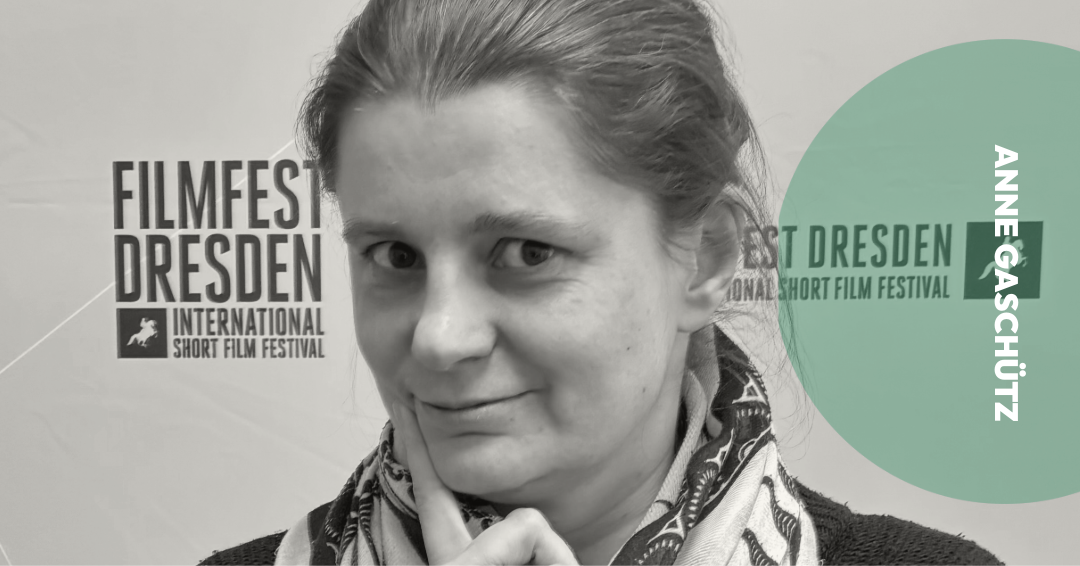
Hi Anne, could you please introduce yourself ?
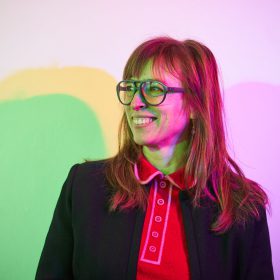
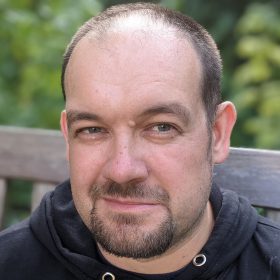
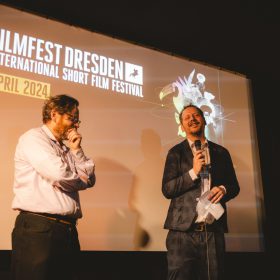
Dresden is my hometown. I went abroad after school but returned a few years later and somehow I found my place in this city. I am currently the director of FILMFEST DRESDEN, a short film festival that has been around for 38 editions already. I am also part of the Pardi di domani selection committee at Locarno Film Festival and one of the initiators of the online platform Talking Shorts. So, I guess you can say that short films dominate my life somehow.
Where do you most love to watch films?
I would say depending on the size of the screen somewhere between the first row or at least in the first quarter of rows at the cinema. For comfort I also love my bed very much. The reality is rather different, I watch most films either at my desk at home or in hotel rooms.
If you could watch one film forever on a loop – what would it be?
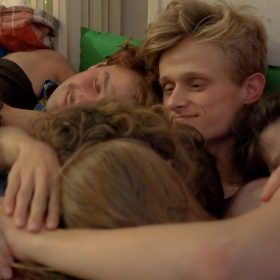
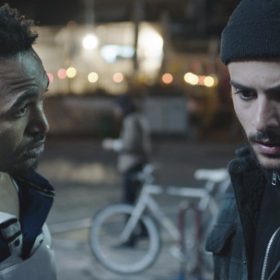
You asked me this question once before and I said “First Time” by Nicolaas Schmidt. So, I take this as an opportunity to add another film to the equation to maybe be a good companion for my loop-film-viewing. I would probably also be very fine watching “It’s Not The Brazilian Homosexuals That Are Perverse, But the Situation in Which They Live” by Paulo Menezes, Eduardo Mamede and Leandro Goddinho until I die. Two naked Brazilians by and in a lake during a pandemic talk about life, love, racism, the Germans, Berlin, Brazil and queerness. It’s like watching two friends converse and you just wanna chime in. A perfect counterbalance to “First Time” actually, in which two boys communicate without talking for 45 minutes on a Hamburg train commute.
What will you be looking for while selecting Lighthouse films?
I think I want the films to be diverse in all kinds of ways, in genre, storytelling, background, viewpoint and so on. Going back to what I said earlier, I am hoping to find some raw and honest works that challenge my way of thinking. I also love it when I just see a small detail that actually makes me feel one way or another.
Can you name a trope, convention, or other aspect that would immediately turn you off a film?
The challenge with this question is that everything that might turn me off a film may also work great for another film if done the “right” way. I have noticed an increase in films about actors and / or acting as well as films about filmmaking and whilst that doesn’t necessarily turn me off, it bores me a little. Because surely, you have more to tell me than your challenges of making a film or trying to find you next acting gig?
And on a personal level, I am super sensitive to sounds – misophonia is real, people! – so people eating and talking at the same time in films may make me skip forward a few seconds because it triggers me immensely. Which is particularly annoying when I actually love a film but hate the noise.
Could you tell us about how you became a curator? What does your career path look like?
I actually wanted to become a film editor and hide away from people in a dark basement. I never imagined myself working in festivals. But life clearly had other plans for me, so after finishing film school, I ended up back in Dresden working for a local production company that was just starting out. Here I did everything, from catering to writing dispos to location scouting to writing funding applications and so on. I only once assisted in the editing room.
This experience actually helped me a lot to understand the filmmaking process, get an insight into all the different parts that are essential in creating a film. I still use a lot of that knowledge in my job today as a festival director.
The experience of the production job helped me to become a part of the selection committee at FILMFEST DRESDEN in 2013 and I also started as the festival’s catalogue editor that same year. Coincidence also meant I was doing volunteer and cinema management during the festival week. This is pretty much how it started and over the years my roles expanded and now I am the director of that festival.
Do you have any advice for wannabe curators / programmers that you wish you’d known early in your career?
At one point, in my mid-30s, I decided not to say “no” any more when opportunities came along that I was afraid of. I was super scared of being on a stage and doing Q&As before I joined Locarno. Should that be a reason to pass on this great opportunity? No! Turns out I am doing just fine being on that stage. So maybe I should have started embracing my own fears and insecurities a bit earlier.
I travelled a lot to other festivals at the beginning just for the pure joy of going to festivals. I didn’t know anyone, I could just quietly go to the cinema and watch films all day. This was great because I learnt so much about the different ways of programming, films and so on. My taste has changed so much over the years because I did that.
I think one important thing that we may or may not be aware of, especially when starting on that path, is that we are gatekeepers and with that we carry a lot of responsibility. Because what we do is not necessarily fair. So, I am a firm believer in transparency towards filmmakers and I try to be as available as I can be (not saying I always succeed).
Stay open and curious. What you hate might be something someone else loves. I enjoy programming in a group because we all watch films differently and can challenge each other.
It’s not always pleasant but you can gain a lot from that. And never curate something just to impress other curators 😉
Stake your place in the next generation of filmmakers waiting to be discovered for only 15 Euros / year. Find out more on our website and get started with T-Port today. Check out last year’s selected films.