Wednesday, 16 September 2026 · Online via Zoom · 16:00–20:00 CET · 4 hours
Fee: 69 EUR · Certificate of training included · Places limited — first come, first served
Date: August 21, 2026
Posted by: Jess Sweetman
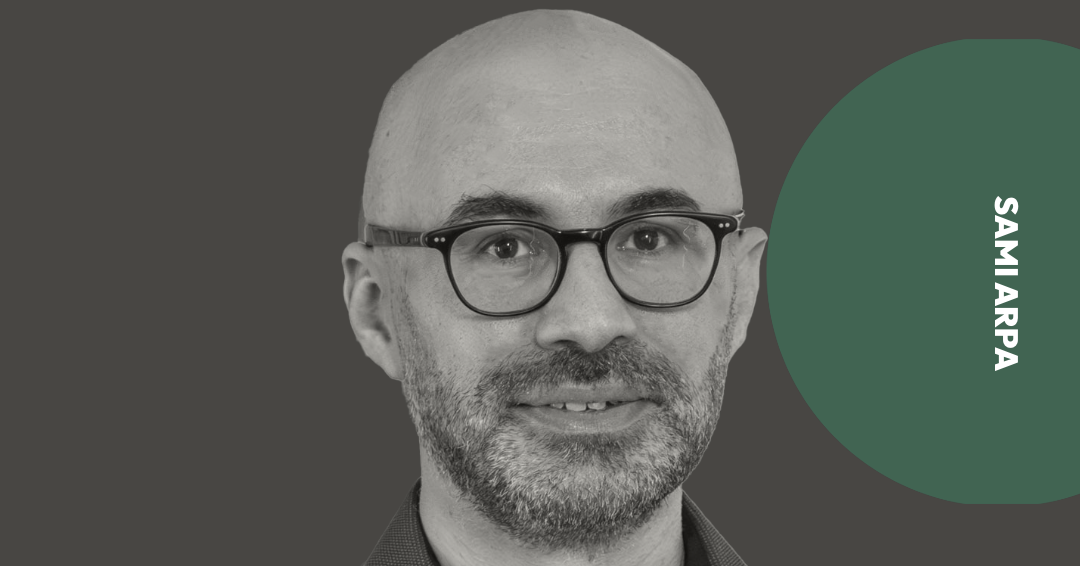
Sami Arpa is the CEO and co-founder of Largo, a startup which uses AI to help filmmakers utilise data to make their projects as successful as possible.
I am Sami Arpa, CEO and co-founder of Largo. My background comes from both computer science and filmmaking. I did my PhD in computational aesthetics, focused on understanding and generating art using algorithms and artificial intelligence, at EPFL in Switzerland, where Largo eventually became a spin-off.
At the same time, I have been involved in filmmaking since my bachelor’s degree in computer science, when I was also taking courses at film school. I had some previous entrepreneurship attempts related to the film industry, and I have also been directly involved in filmmaking, working with directors and producers on small and medium-scale projects.
We started Largo at the end of my PhD, as a spin-off from EPFL. My PhD advisor Sabine Süstrunk and I started it, leveraging our strong research background, and later Céline Udriot joined the founding team to build Largo with us.
We created Largo to predict the potential success of content at earlier stages, and for that purpose we use data and AI. By success, we don’t mean only reaching a big audience. It might also mean reaching a very specific audience, or targeting the right festivals for arthouse films.
Basically, our goal was, and still is, to provide filmmakers and producers with as many useful insights as possible. We have different tools. Some learn from past data and provide predictions about content, casting, and expected audience results.
More specifically, we also have simulated focus groups. We create digital populations, and you can show your content to these digital audiences as early as the treatment stage, or at a much later stage with a screener. You can test different versions and get both quantitative and qualitative feedback directly from these simulated audiences.
So, for example, sitting in Germany as a producer, you can see how an audience in Japan might respond to your project, including quantitative and qualitative nuances. You can even chat with these digital populations to get a better feeling for the audience.
I think the usage of AI cannot really be fully controlled. Even if you put certain rules in place, we will come to a point where it becomes very difficult to determine exactly how much AI was used in something, especially when it is used by experienced people.
Eventually, I think it will come down to how people and the industry perceive the work and how they select what they value. I think it would be wrong to simply put everything into two baskets and say, “This is an AI-used film, and this is purely human-generated.”
We still need to recognize authorship. Authorship will remain very important, and then we need to look at the eventual result and how these tools were used. I think we will see much more hybrid usage, and eventually it will be about what we appreciate. We cannot simply block something because AI was involved.
Of course, all of this should be discussed. The technology is still very new and evolving very fast, so I think it will eventually find its place. We have not taken a perfect position on all of these questions at this moment either.
I think there are more opportunities for new filmmakers today because the barriers are becoming lower. That’s one of the big advantages of AI. Production costs can be reduced significantly for new projects, and that creates many more opportunities for new talent.
At the same time, that might be disturbing for some of the traditional gatekeepers in the industry, because access to larger production capacity is becoming easier.
Of course, it also creates more content noise. But content noise eventually creates a need for higher standards. If you have too much of the same type of content, you need to go beyond that to stand out. I think that will actually challenge the limits of creativity.
I think failing fast is very important. That’s one of the principles in our company as well. We really encourage people to try new things. If you have a fear of failing, you will always be afraid to try something new.
The important thing is speed. You should try something new, but also test the outcome you want to see quickly, instead of giving all of your life to something before you see whether it works.
That’s also why it’s important not to fall in love with your project too early. Develop something and test it quickly. That’s one of the areas where AI can also be very useful, and Largo is doing something around that as well. You can test a new project already at the treatment level and see how audiences might respond before you spend so much time and resources on it.
That way, you can try different projects and then focus your energy on the ones that show the most potential.
The future of the industry is looking a bit complicated. Technology and AI are changing the traditional way of running the industry a lot. Distribution is also changing, from box office to streaming, and that’s playing a major role. We also see big studios merging, while audience behavior is changing at the same time.
There is much more competition for people’s attention today. If you go back 60 or 70 years, the main competition for movie theaters was television. Later came the internet, social media, short-form content, and many other things. There are simply many more things competing for people’s attention now.
So we cannot fight that by keeping the industry exactly the way it has always been. It needs to evolve. The perception of film is evolving, and the way we consume and look at content is evolving as well.
I think the industry is suffering in some ways because of that, but at the same time, there are people who are taking advantage of these changes, adapting to the new world, and making space for creativity within it.
One of the moments I am most proud of was at the Cannes Film Festival and its market, which is one of the biggest markets for us in the industry.
At one point, we realized that almost everybody there seemed to know Largo. That was a very proud moment for us because we first presented Largo at the same festival seven or eight years earlier. At that time, nobody knew who we were. We made a small presentation, and many people were challenging what we were doing.
Going from that moment to where we are today is a big achievement for us. As a founder of Largo, I think that has been one of the proudest moments of my career.
It’s difficult to give just one, but there is something from my university years that has been very important in many of my decisions. It actually came from one of my typography classes. I don’t remember the name of the professor anymore, but it was around the concept of negative space.
The idea was about how you can be more creative and create more balance by removing things from a design instead of always adding things.
That concept of negative space, and being creative by removing things rather than adding more, is something that I have seen bring success to me in many areas. Not only when we design or create new art, but also when you create a system, a company, or a project.
That kind of minimalism has been a very important principle for me.
Wednesday, 16 September 2026 · Online via Zoom · 16:00–20:00 CET · 4 hours
Fee: 69 EUR · Certificate of training included · Places limited — first come, first served