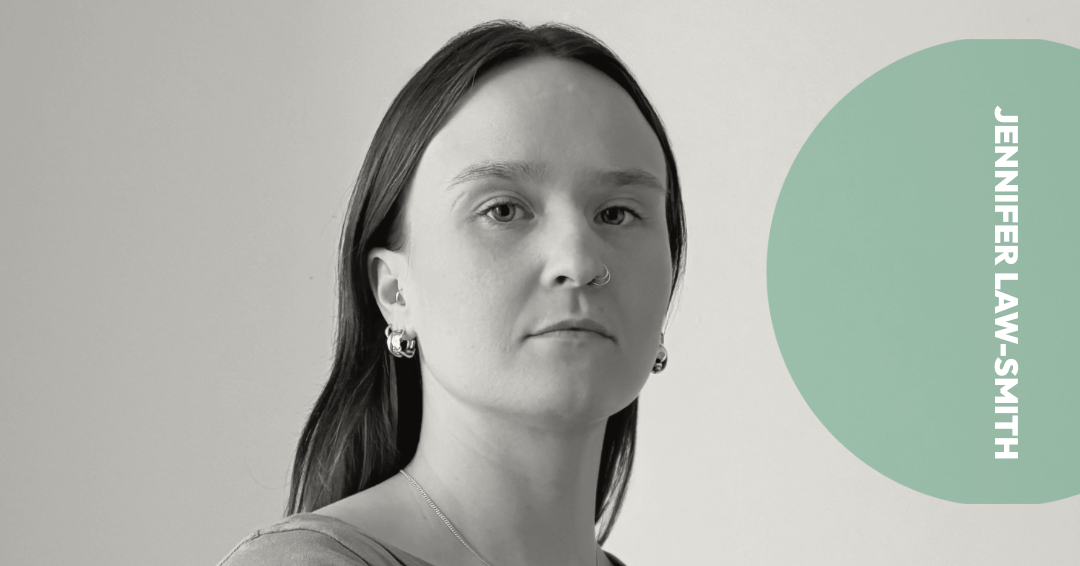
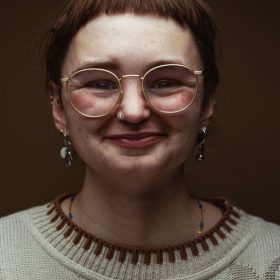
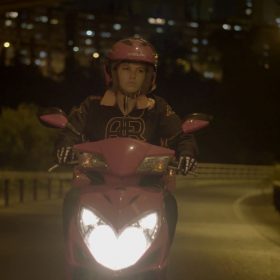
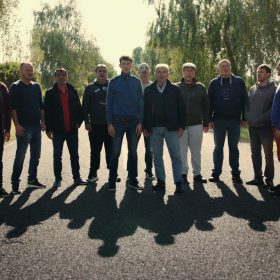
Jennifer Law-Smith (she/her) is the director of the short film DRY LAND, made during her postgraduate studies at our partners’ the Catalyst Institute for Creative Arts, Berlin.
Her short film of DRY LAND was “almost a proof of concept” to accompany a feature script she had written, based on her aunt’s stories about working with offenders in the prison while it was still open.
Stick around to hear about her views on learning as you go, working with a small crew, dealing with bureaucracy, and building an artistic sensibility.
Hi Jennifer! Would you introduce yourself in a few lines?
I’m a filmmaker from Montreal. I did my Bachelor’s degree in Toronto at TMU in film and then began working as a production manager on shorts and feature films upon graduating in 2019. At the same time as working in production on various projects, I directed a short film almost each year since graduating until I attended Catalyst Institute for my Master’s degree in 2023.
Currently, I work as a Creative Producer for a creative agency in Montreal and am in distribution with a new short and in development for my first feature film.
Why did you choose film as your medium? Is it your only artistic outlet or do you have others?
In high school, I became interested in photography and in cameras in general. I made little art videos with my friends and I quickly grew obsessed with the separation between taking a photo or shooting something and the resulting shot.
Between those two steps, there’s a magical process that transforms an action into an emotion when captured with a camera. The footage or the photograph exists on its own after it’s developed; it’s no longer yours. I think this special conversion has kept me going since high school. It’s what I love the most about filmmaking, but also what I hate the most when a planned shot doesn’t work out. At that point however, you surrender to the image and that’s the beauty of it. I paint and I write sometimes, but I’m always thinking in images.
Do you have a philosophy behind your filmmaking? Or do you feel like you belong to a particular artistic movement from the present day or past?
For a while, I’ve been most interested in the intersection between fiction and documentary and the nonexistent line that hovers in that space. The last short I made, “Aerobic Corridor”, was more of a “traditional” documentary, although it was observational, without interviews. And I think I prefer to be more experimental in the form, to write fictional stories that exist in real spaces or to be heavily influenced by true experiences.
At the end of the day, every movie is fictional, is fabricated, but I find a lot of intriguing nuances in this hybrid form. I’m consistently inspired by Iranian filmmakers Kiarostami and Panahi as well as Andrea Arnold, Cassavetes, Lou Ye, Antoine Bourges, and many others. In different ways, I think that all of these filmmakers push the boundaries of form and there’s double meaning in all of their work because of the layers of unorthodox filmmaking techniques.
Tell us about your film that’s on T-Port. What is it about? How did you choose to tell its story?
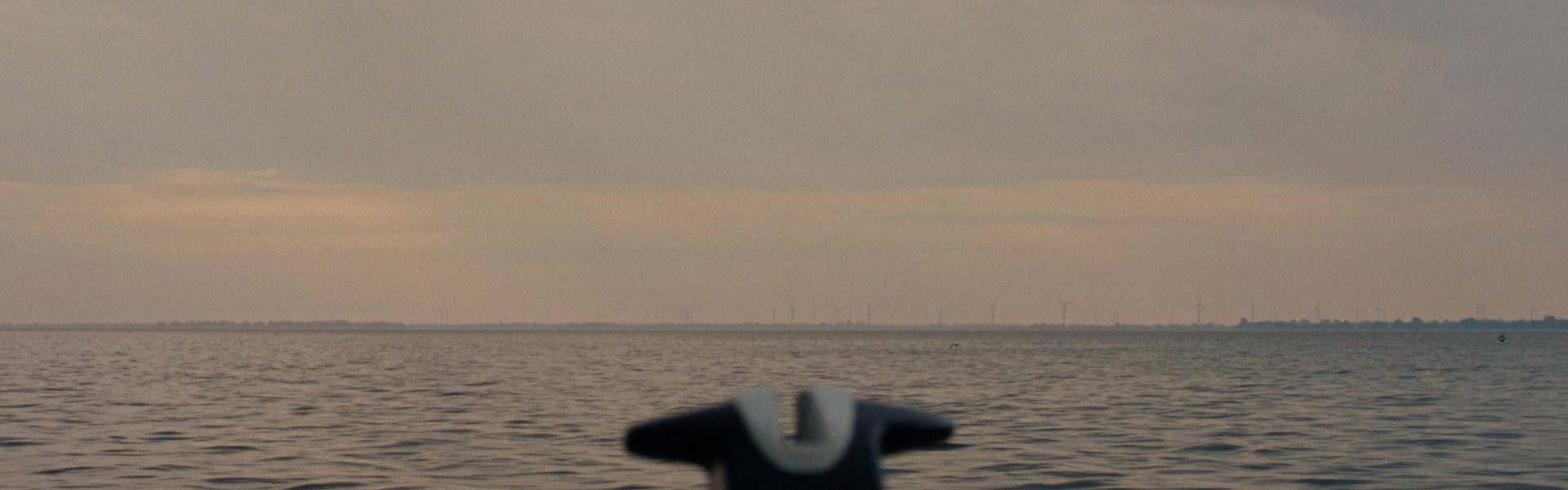
“Dry Land” is an experimental short documentary that I made during my time at Catalyst. There is no dialogue in the 12-minute short. The first half of the film takes place at dawn on a small motorboat in the Kingston (Ontario, Canada) harbour.
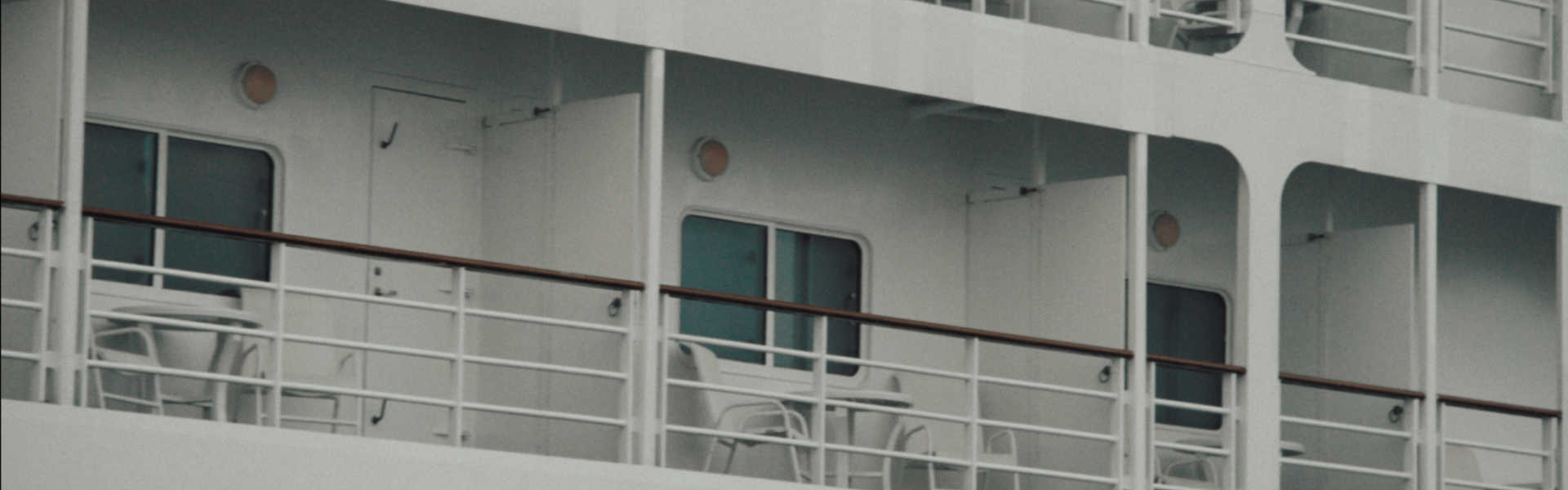
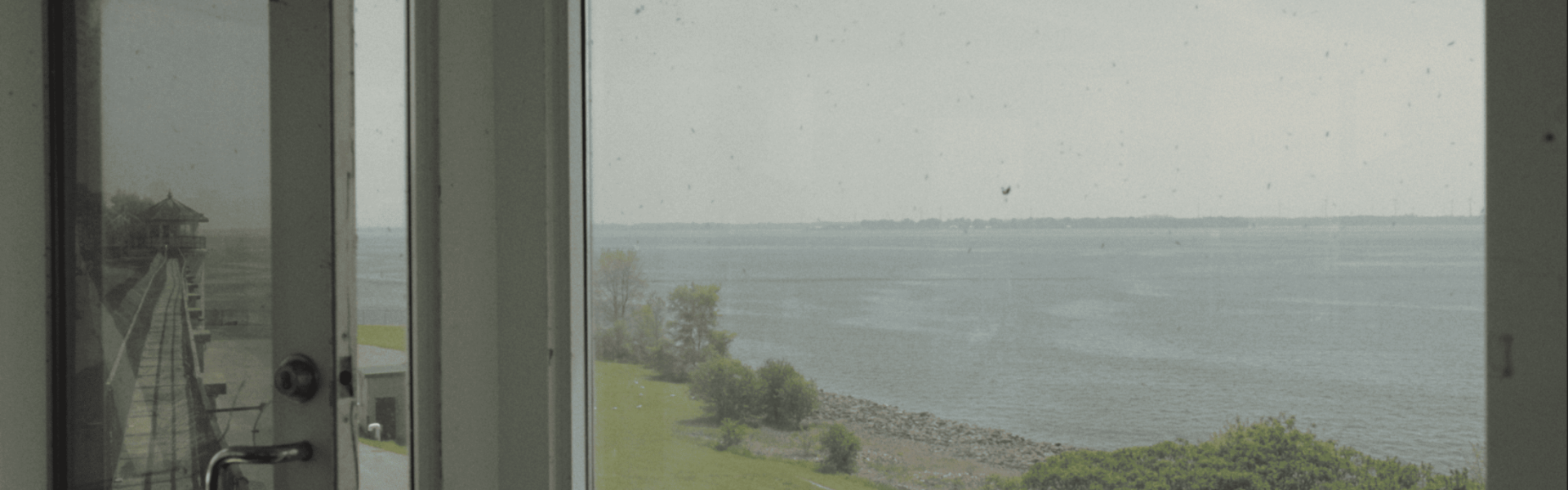
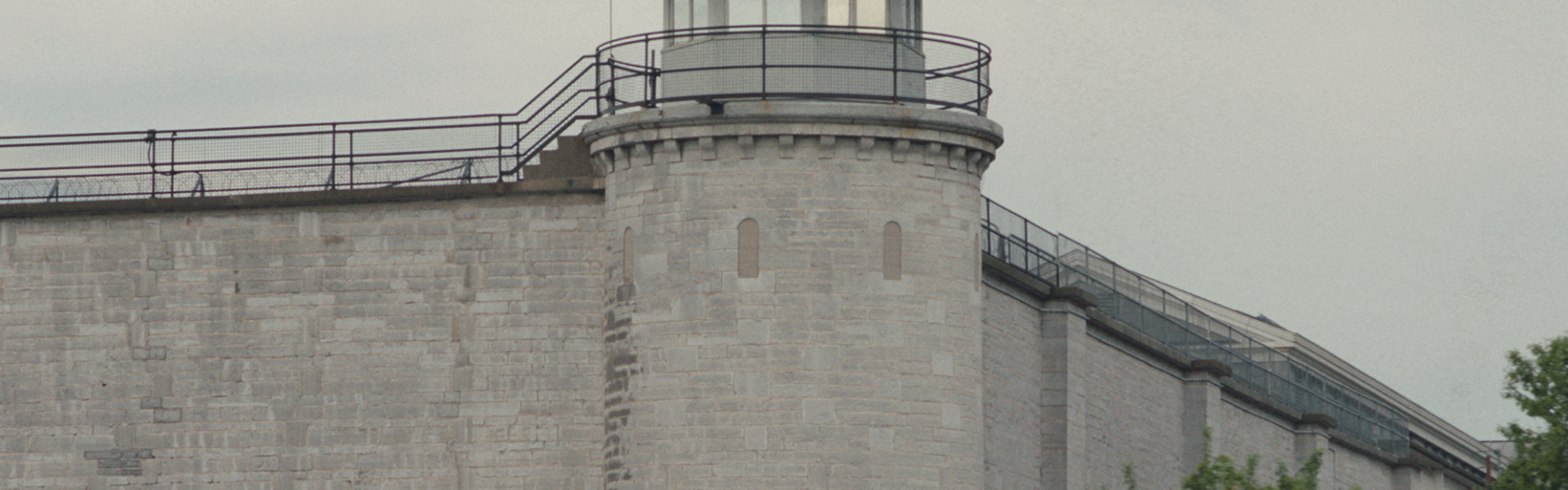
As the sun slowly rises, we spend time with the boat’s driver as he navigates the canals and surrounding nature. The lake wakes up. Men chat on the docks next to a waterfall. A sailor’s mast falls down. A cruise ship is docked in the open water. Eventually, the boat driver pulls into a small marina. Next to the marina stands a massive prison, its walls metres from the shore’s edge. The perspective shifts from the boat to inside one of the prison’s watch towers.
The second half of the film takes the audience through the rooms of an empty prison. The gym, the yard, the lunch tables, the treatment rooms. Rooms of rehabilitation. The sound of the water echoes through the thick walls. “Dry Land” documents the harbourfront landscape that backs onto Kingston Penitentiary, contrasting two lives right next to one another.
My main project in my Master’s was a feature film script, also entitled “Dry Land”, whose main locations are Kingston Penitentiary and the harbour. I decided to shoot a short film, almost a proof-of-concept, while writing the feature. I used the opportunity to spend time in the locations and bring a camera into the space. I wanted to challenge myself to tell a story without dialogue, to bring the audience into a meditation.
The film was conceptualized a few years before my time at Catalyst, in a conversation with my Aunt, who worked as a psychologist in Kingston Penitentiary’s Treatment Centre. She worked primarily with men that had committed a sexual offence. The feature centres around rehabilitation, perception, and the confliction that can exist in care. The short explores the astonishing geography of this prison and the symbiosis of opposing experiences.
What challenges have you encountered while embarking on your film project? How did you seek to overcome them?
The two biggest challenges in making this short were in pre-production and in post-production.
First, gaining access to filming inside the prison was a difficult process. The prison has been closed since 2013 and currently offers tours, but they allow a very small number of film productions to shoot there. There are many steps of approval and they are extremely selective about the type of projects they allow to be filmed there. Not to mention, it is costly. With a few amendments in the details of the project, we were granted approval. My team and I worked really hard to make it possible. This process was invaluable as I had to deal with the realities of documentary filmmaking, especially when dealing with sensitive topics and environments.
Second, the editing process was a big challenge. Because I embarked on filming without a clear narrative and the film does not have traditional characters nor dialogue, the structure was to be found in the edit. This was purposeful, to film observationally, but it made finding the core of the film a lengthy process. I learned a lot about editing, pacing, and the power of individual shots.
My editor, Mick Robertson, and I spent days rearranging the sequence of shots and events so that, at the end, we had many many versions of this short. I think what we landed on is the most clear, direct version, which I learned is not always something to shy away from. Sometimes the most direct edit can give rise to the most nuance and discussion.
Can you share the most important lessons you learned through the process of making your film?
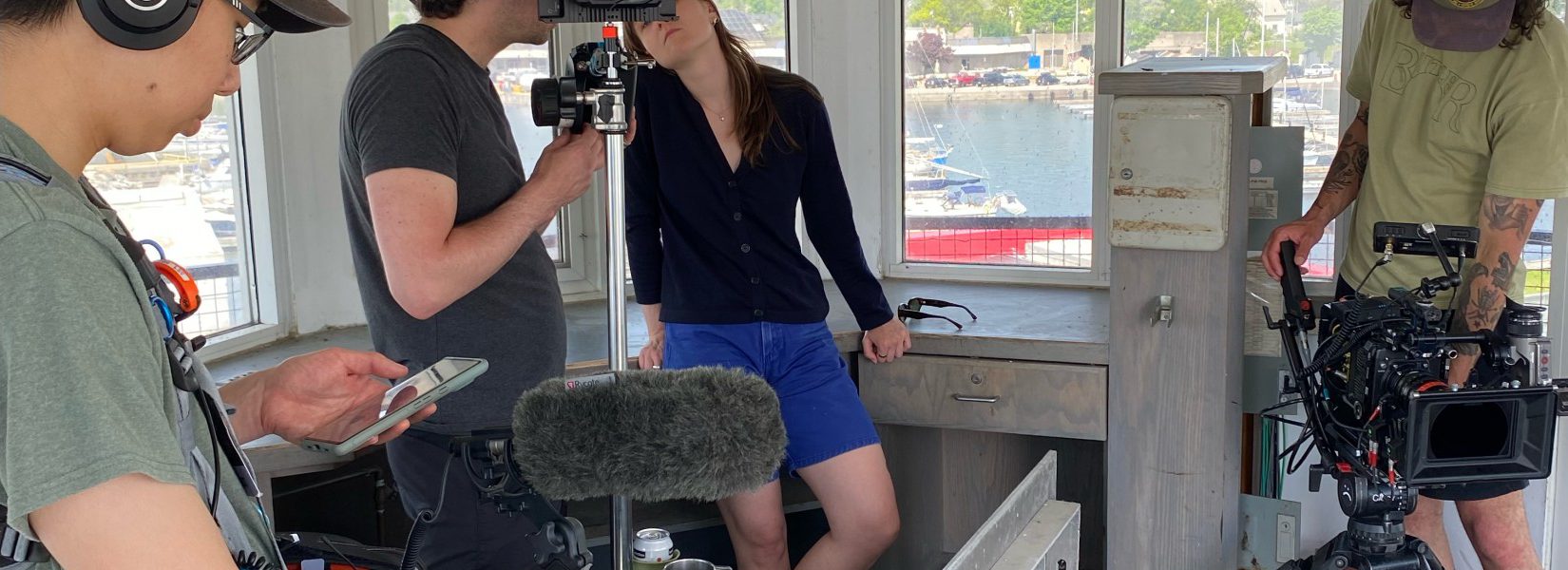
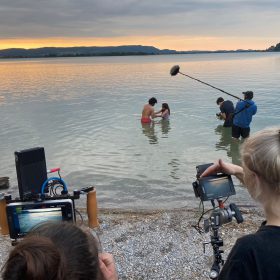
One of the most important lessons I learned in making this short is that not every project needs a big crew and the film can be affected if the size of the crew does not match the intention for the film. We were 4 people on set for this shoot and it allowed the filming process to have experimentation and for us to change our plans throughout the day. This meant I was able to capture way more than I thought I would, which was integral for this edit. The decisions in the logistics of shooting (crew numbers, who is on set, relationship with the space, etc) take shape in the story and tone of the movie.
The other important lesson I learned is to adopt the development and learning stages as a filmmaker. I used this project as an experiment and an exploration in many different ways and it might not be the most impressive work, but I learned about my practice and what I want to do/try to achieve in my future works. Letting go of the success of the final result allowed me to trust my instincts, find what I lean toward, what works and doesn’t work, and how I like to work.
If you could go back in time to pre-production and give yourself one piece of advice, what would it be?
Even though I made a point of not over-planning the shoot, I wish that I would have thought about the transition from exterior to interior better. In retrospect, this is one of the most important beats in the movie and I didn’t quite pull it off. I think that it could have been more intentional and the film would have been better as a whole.
So, to give myself a piece of advice would be that it’s okay to intentionally not have an exact plan for a scene, but to have the motivations for the important cuts already in place. The end of a singular shot can be integral to the telling of a story and inversely the beginning of the next shot only pays off if the ending of the previous is precise. What I’m talking about is an editing process, but it begins in the shot planning.
How have you found working within the film industry where you are as now? What have you found to be the biggest challenges in building your career?
The biggest challenge I see for myself and for other filmmakers in the same stage of their career as I am is exposure. Although I wish I didn’t have to think about “success” and exposure, the reality is that it helps immensely in the continuation of your craft. Success for one project (whether that be festival acclaim, public recognition, distribution, etc) pretty directly aids with the funding for the next project.
I have been fortunate to have success with federal and provincial arts funding for my shorts, but festival selection is extremely competitive and discouraging. In my work as a producer, I have come to understand the realities of the industry maybe more than I would like and in a way, I think it’s helpful for filmmakers to not have an eye into that side so that they can focus on the art and not be clouded by the pressure of the success of the outcome.
There are many amazing films being made that can’t find their place anywhere to be shown in a form that will help further the filmmaker’s career. Of course, work can always be made without a budget and for an online audience, but the majority of movies take a long time and are expensive at every level, so there’s few opportunities for an emerging filmmaker to practice and to compete.