T-Port Blog

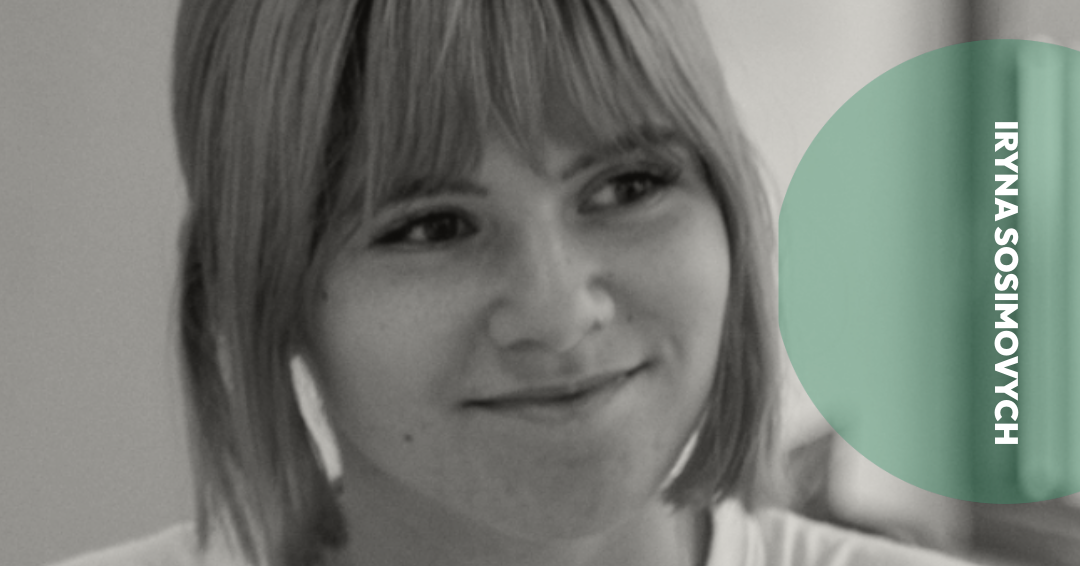
Ukrainian animator Iryna Sosimovych launched her professional debut film as a director, MISUNDERSHOOD, after learning the industry and producing six student films.

We caught up with Iryna, whose film appears on T-Port courtesy of our partners over at LINOLEUM Contemporary Animation and Media Art Festival, to find out about everything she’s learned through her work, how she has learned to use animation as therapy, and how she’s dreaming of her next great steps.

Hi Iryna, could you introduce yourself?

I’m from Kharkiv, Ukraine. I started making my first author-driven films during my studies, and filmmaking has been my focus ever since. Between 2020 and now, I’ve created six student films and one professional debut, MisundersHood.

Why did you choose film as your medium? Is it your only artistic outlet or do you have others?

I also work a lot through illustration, but animation has a kind of magic that lets me express what’s on my mind and in my heart with the greatest clarity.

Do you have a philosophy behind your filmmaking? Or do you feel like you belong to a particular artistic movement from the present day or past? Could you tell us about it?

I’m still exploring my own style, and even though I don’t always feel fully confident in every animation technique yet, I do trust my instincts in composition and timing. A big part of my filmmaking philosophy is that a frame should speak on its own, even without movement. I put a lot of meaning into how each shot is constructed, because for me, the arrangement of elements in a frame carries as much emotional weight as the animation itself.

If you could watch one film on a loop forever, what would it be?

Honestly, I already do that haha! Since childhood I could watch Disney’s Dinosaur 🦕(2000) on a loop endlessly. And who knew that one day I would find myself in the same kind of circumstances as the main character: standing still while sparks fall on my head…

Tell us about your film that’s on T-Port. What is it about? How did you choose to tell its story?

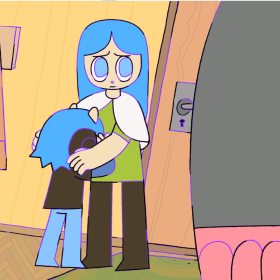
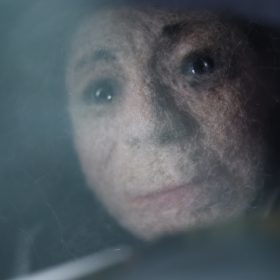
It’s a film about who I am and how the beginning of the war changed me. I felt myself collapse into a very vulnerable state and then slowly rebuild. It’s an immersive, sensory journey that invites the audience to experience the world the way highly sensitive people do.

Tell us about the production process on that film, what did you learn? Which parts did you enjoy?

It was my first directing experience with a real budget and a full team. The deadlines were strict and the workload was huge, but I’m an organized person and we handled everything really well.

What challenges have you encountered while embarking on your film project? How did you seek to overcome them?

One of the biggest challenges was my fear of being too demanding as a first-time director. At the very beginning, when one of the animators struggled to match the style in a test scene, I reacted too harshly… something I immediately regretted. But she later became one of the strongest members of the team. This experience taught me to communicate with more patience and trust, and it made our collaboration much stronger.

How was it to collaborate with your cast and crew? Do you work with “regulars”, or are you trying something new?

We worked according to my clear pipeplan. I prepared a working “kit” for each animator: their projects included a section of animation that they had to animate in full. I included all the brushes, the colour palette, references and sound. I did this as if I were doing it for myself, knowing that this preparation is the most boring part of animation.

Can you share the most important lessons you learned through the process of making your film?

There’s no need to reinvent the wheel! You need to take things step by step, rather than trying to do everything at once.

If you could go back in time to pre-production and give yourself one piece of advice, what would it be?

‘I know you’re a visual person and you find it hard to write scripts. But pull yourself together and write it. You’ll definitely see on paper where the story’s going off track.’

If you’ve been filmmaking for a while – what have you learned about yourself if you look back on your body of work? Are there any surprises from your subconscious?

It’s all down to the subconscious, really! For me, animation is a form of self-therapy. But you really shouldn’t dump your problems on the audience before you’ve sorted them out yourself.

Looking at the film industry now, if you could make one lasting change to make it better, what would you do?

I really want to bring independent indie creators together, but I want to do it fast and I don’t know exactly how… it’s all in our hands, and we’re slowly but surely moving towards our goal of becoming united, strong and beautiful.

Is there anything else you would like to mention?

MisundersHood has become the first film in the animated universe I’m developing! My ambition is to create an animated series, or rather a multi-platform IP called ‘illogical Adult World’, about three teenagers on the edge of adulthood who see the world in a new way and face internal struggles whilst having adventures in a desolate spot in a small, boring town. This April, my team and I have the opportunity to present the project at Cartoon NEXT in Marseille. Wish us luck!

 

Submit Your Short To T-Port Today

T-Port films are only accessible to professionals, so your premiere status will not be affected.Stake your place in the next generation of filmmakers waiting to be discovered for only 15 Euros / year. Find out more on our website and get started with T-Port today. 

Or sign up for our newsletter to get regular updates on the current trends and exciting innovations in the short film universe.

Back to T-Port Blog

Submit a comment

Your email address will not be published. Required fields are marked *