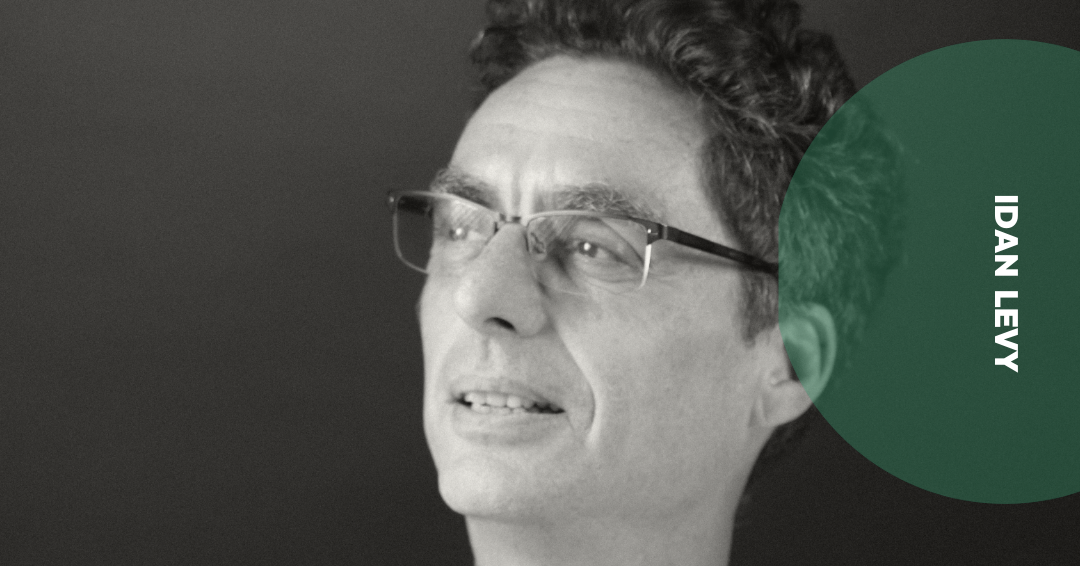
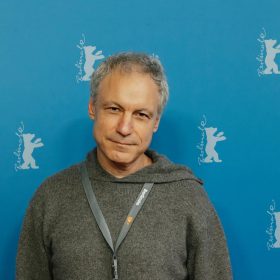
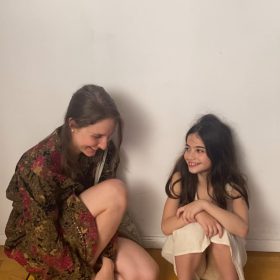
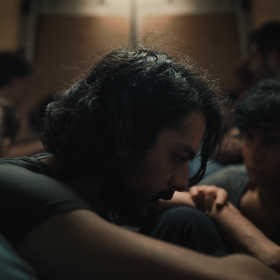
We caught up with him to find out how he and his filmmaking partner approached the sensitive subject of a Bedouin child trapped in the bureaucratic nightmare of trying to prove her own existence to the state, and why he chose the distinct animated style to bring light to her issues.
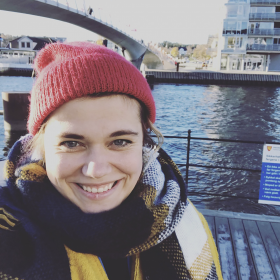
Hi Idan, would you introduce yourself in a few lines?
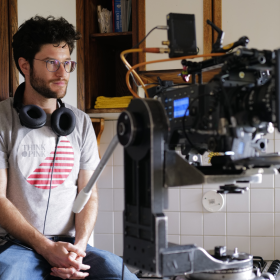
I am an Israeli-based documentary filmmaker, animator, and visual artist, and a graduate of the Bezalel Academy of Arts and Design. Over the past 20 years, I have worked extensively in the Israeli television and film industry across a wide variety of genres. I have directed and collaborated on numerous projects, ranging from music and cultural programs to culinary documentaries and more personal, character-driven films.
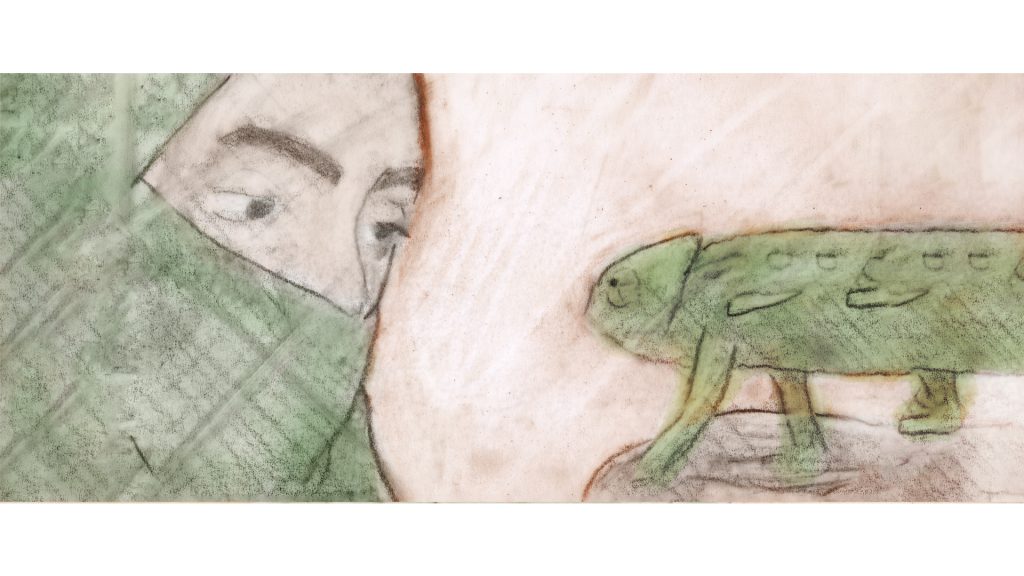
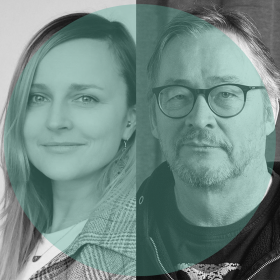
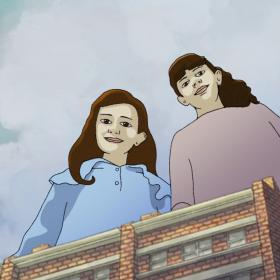
Alongside these diverse productions, my focus also includes experimental animation and XR. My most recent project, JAMILA’S LOOP, created in collaboration with Gili Tsalik, utilises docu-animation to focus on social-impact storytelling.
Why did you choose film as your medium? Is it your only artistic outlet or do you have others?
My artistic roots are actually in painting and sculpture. During my fine arts degree, I was exposed to photography, video, and animation. While photography was love at first sight, animation felt like the ultimate combination of drawing and movement. I was instantly captivated by the magic of the brain creating the illusion of life from a sequence of individual still frames.
My path into television and documentary filmmaking happened quite organically. After graduating, I co-authored a fashion column in a local Tel Aviv newspaper, “Ha’ir,” with Elimor Zilberman, which eventually led us to create highly stylized fashion segments for Israeli cable television. From there, doors opened to a wide variety of documentary work-ranging from lifestyle to social activism. I traveled the world, refining my documentary tools, and even directed some fiction, bringing a documentary sensibility to my work with actors.
For quite a few years, however, my early love for drawing and animation was put on hold. JAMILA’S LOOP gave me the incredible opportunity to return to it. The film is classical animation-drawn entirely with pencil and eraser on paper, then digitally scanned and colored.
To combine the magic of this medium with a human and social issue of such great importance to me and my co-creator, Gili, is something I do not take for granted. I am incredibly grateful we were able to bring this story to life.
Do you have a philosophy behind your filmmaking? Or do you feel like you belong to a particular artistic movement from the present day or past? Could you tell us about it?
Throughout my career, I have been influenced by various ideas, but in recent years, I find myself mostly left with questions about the actual role of art. Should an artist merely project their inner world onto a screen? How much of our creation is driven by a simple need for recognition? I don’t feel I belong to any particular artistic movement anymore; I am simply in a state of searching. Deeply unsettled by the situation around us, I am just trying to understand it, without looking to affiliate myself with any grand titles.
JAMILA’S LOOP is very much a part of this ongoing search. If I am completely honest, the project initially stemmed from a standard, perhaps even selfish, urge to simply make another film. But as my co-creator Gili and I dug deeper and were confronted with the harsh existential reality of the stateless community living right next to us, my mindset began to shift. It wasn’t about adopting a rigid agenda. It became a simpler, human process: I am just a human being, trying to observe, trying to see what I can learn about myself through the people in front of me. It turned into a quiet hope that I could somehow channel my experience to help make sense of this reality, and offer whatever modest help my skills might allow.
Living through the endless, tragic war of the past three years, where the dehumanization of the people around us has become so severe, my doubts about the role of art have only deepened. I don’t have absolute answers. I just find myself wondering whether, in times like these, the only tentative justification for creating art is the attempt to resist that dehumanization. Not through grand declarations, but by simply trying to look at one another and gently search for our shared humanity.