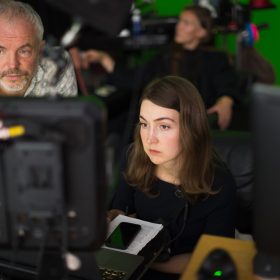
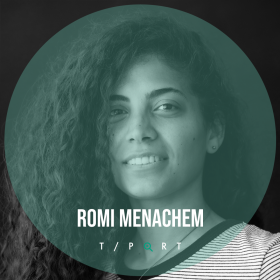
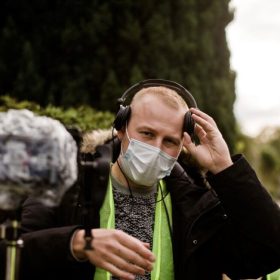
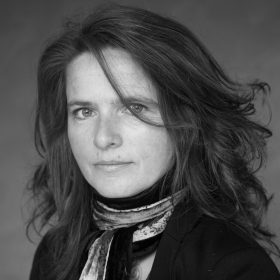
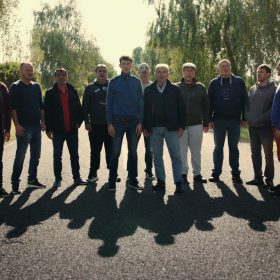
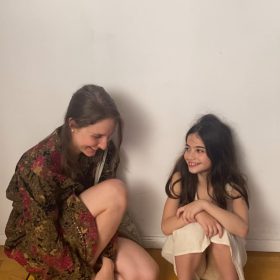
In this interview, Alison reflects on her experience pitching the project for the Claims Conference Emerging Filmmaker Contest, the rare access she was granted to film inside Auschwitz’s infamous Block 10, and the emotional challenges of bringing Fofo’s story to life. She also shares candid advice for fellow filmmakers and her thoughts on the future of short-form documentaries in today’s film industry.
Applications for this year’s Claims Conference Emerging Filmmaker Contest are now open!
This is a global contest for emerging filmmakers focused on short films about the Holocaust. It is open to filmmakers worldwide and one winner will receive $60,000 to fully fund a short documentary or narrative film. Entries will be judged by a panel of film industry professionals.
If you’d like more info – you can check out last year’s informational webinar for filmmakers to find out about the contest. Apply before the deadline of June 16th, 2025.
Hi Alison, would you please introduct yourself?
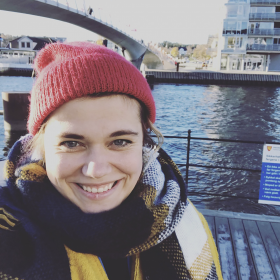
Previously, I worked in Communications in the NFP sector and crossed over to documentary in 2017.
Tell us about the film pitch you made to the Claims Conference Filmmaker Contest
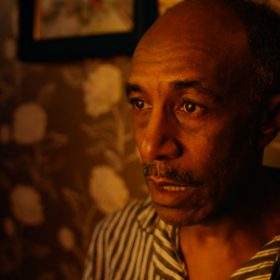
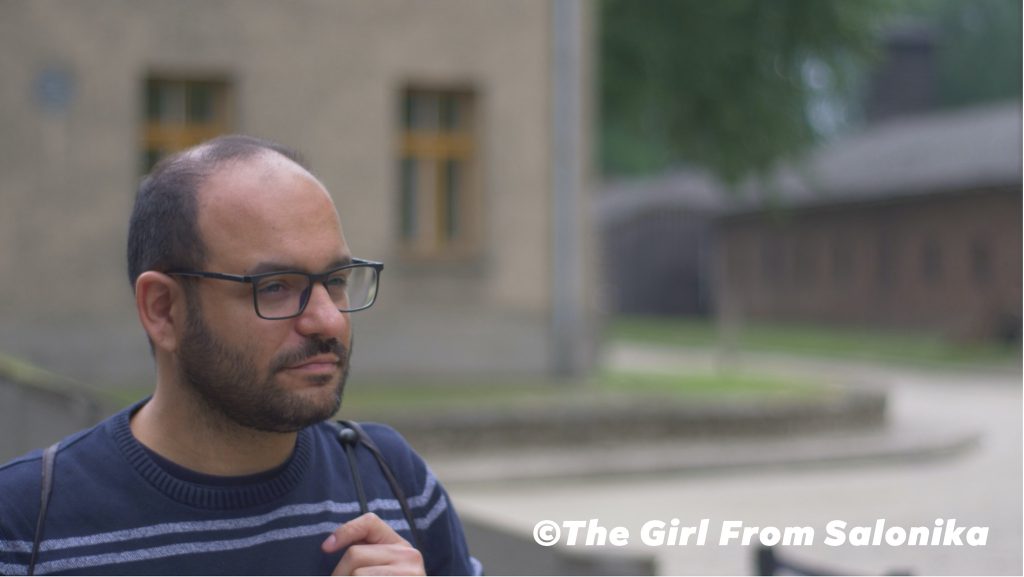
“The Girl from Salonika” tells the story of Fofo Mordoh, a Greek Jewish teenager and Ladino speaker who survived Nazi sterilisation experiments in Auschwitz. Her Spanish still carried traces of Ladino. The film is available in both Spanish and English—I wanted it to have crossover appeal. I pitched it as a way to preserve her testimony and to capture unprecedented footage inside Block 10, where the experiments were conducted.
For your Claims Conference film pitch –
-
What did the process of developing your pitch look like for you?
-
How did you feel about your idea at the beginning and the end of the process?
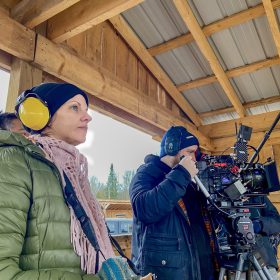
It’s devastating to reflect on what Fofo went through: as a teenager, she was brutalised and used as a human ‘guinea pig’ in Nazi sterilisation experiments. I approached this film much like I did with EXIT, my previous documentary on survivors of human trafficking—asking questions gently, and allowing the interviewees to speak at their own pace, in their own way.
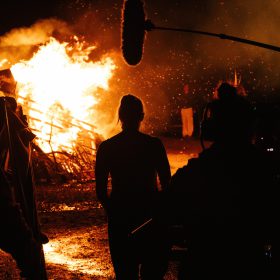
We also knew we needed to visit Block 10, where Nazi doctor Dr Horst Schumann and others carried out those experiments. That was a deeply difficult experience. However, I was granted unprecedented access to film inside Block 10—something rarely, if ever, permitted.
How did it feel to know that your pitch got to the finals of the contest?
It was a great feeling. I was really happy to be able to honour Fofo’s story and bring it to audiences.
How did the Claims Conference filmmaker contest help you get through the production phase of your film?
They supplied the seed funding and have been very friendly and supportive throughout. I am very grateful to have participated in the contest and would encourage others to do so.
Tell us one lesson you learned while going through the pitch / competition process that you’d like to share with other filmmakers?
I had little time to put the proposal together, if you have the chance let it breather for a few days and then revisit your pitch.
Which stage are you now at with your film? Where’s next for it?
It’s the second year, I still have regular educational screenings and it is distributed by 7th Art Releasing in the US and I look after the remaining territories myself.
What was the most difficult part of film production for you? What did it teach you?`
Not having the budget to do exactly what I wanted with the film. Because it was a short there was less interest from funders. Foreign language too, so I think there is less interest which makes zero sense to me as the audience is larger than a ‘mono’ lingual film.
What would you like the audience to take away from your film?
What every filmmaker wants, for everyone to talk about their film afterwards!
What are you going to do after this and what are your dreams for the future of the film industry?
I think “The Girl From Salonika” is an important and valuable educational tool. However, I am continuing with features as that is where the interest and funding is available. I think there is a movement to support shorts but they don’t have the same visibility or support as full length films.
Submit Your Short To T-Port Today
T-Port films are only accessible to professionals, so your premiere status will not be affected.
Stake your place in the next generation of filmmakers waiting to be discovered for only 15 Euros / year. Find out more on our website and get started with T-Port today.
Or sign up for our newsletter to get regular updates on the current trends and exciting innovations in the short film universe.