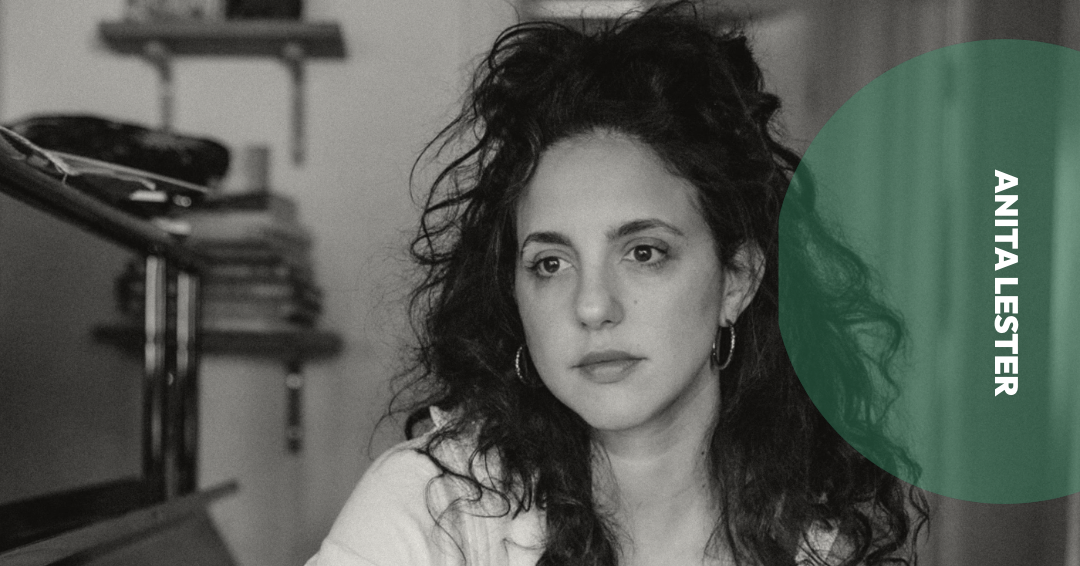
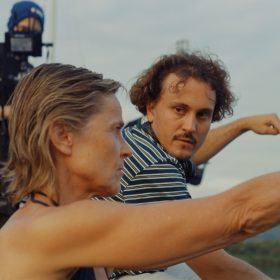
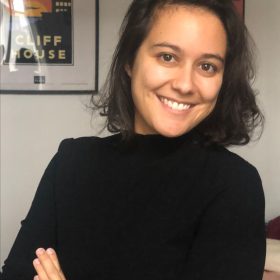
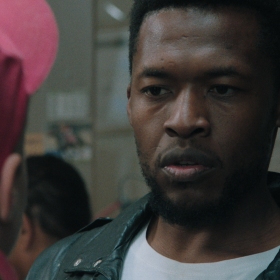
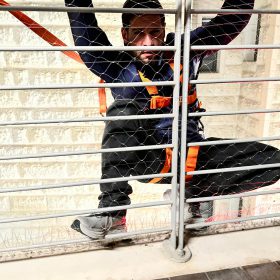
Anita Lester is the filmmaker behind the short Australian film CRUMBS, which appears on T-Port Courtesy of our partners at Jump Street Films. We caught up with Anita to find out more about her background spanning animation and music, her filmmaking family, and what she learned in the process of her last film shoot.

Hi Anita, could you introduce yourself in a few lines?
My name is Anita Lester. I’m a multidisciplinary artist- film, painting, music, writing-everything tends to bleed into everything else.
I studied film and majored in animation, which is where I spent a lot of my early years, working independently and with a few larger platforms. Alongside that, I made short films and a lot of narrative music videos – mostly instinctively, following story wherever it wanted to go, but rooted in mythology.
During COVID, I shifted into screenwriting, and that’s where something opened up. Since then, I’ve been moving into live action in a more intentional way. CRUMBS sits right in that space – an experiment, really, a way of testing the language and seeing how it holds.
Why did you choose film as your medium? Is it your only artistic outlet or do you have others?
I think I chose film because it gathers everything I love about storytelling into one place. It’s not my only outlet, but it’s the most complete one- an accumulative space where different languages can sit side by side.
There’s the musical landscape, the visual one, the narrative arc, and the broader sonic world that holds it all together. At the centre of it for me is storytelling – often circling some variation of the hero’s journey, and film just offers a natural, expansive container for that to unfold.
Do you have a philosophy behind your filmmaking? Or do you feel like you belong to a particular artistic movement from the present day or past?
I don’t think I have a locked-in philosophy yet, especially when it comes to film. I’m still finding my voice there. But instinctively, I feel like something of the poetry of the world has been lost.
So if I had to locate what sits underneath what I do, it would be that – a pull back toward poetry… making and giving space to each part of the process and the people within it, really valuing what they bring.
At the same time, I think it’s about holding a very clear sense of the feeling you’re trying to create, while staying open enough to let things change along the way. That’s how I work in everything else, and I suspect film will follow a similar path.
If you could watch one film on a loop forever, what would it be?
THE PRINCESS BRIDE
Tell us about your film that’s on T-Port. What is it about? How did you choose to tell its story?
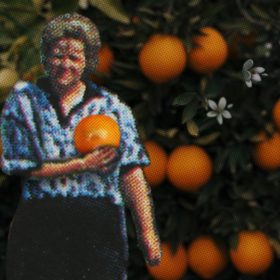
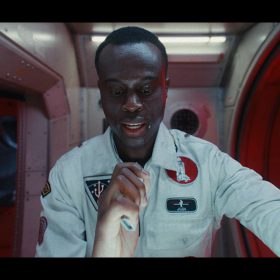
The film I’m sharing here is called CRUMBS . It’s loosely based on a collection of stories by Sholem Aleichem, translated as ‘Railway Stories’- which are essentially snapshots of Jewish life on a train in pre-Holocaust Eastern Europe.
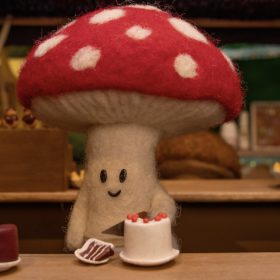
It wasn’t my intention to directly recreate that world, but more to find a contemporary version of that kind of transient, in-between space that felt honest to the world we live in now. And for me, there was nothing more perfect than a bakery.
Tell us about the production process on that film, what did you learn? Which parts did you enjoy?
Being the perfectionist that I am, I found the short turnaround – about three months from idea to execution- pretty challenging. I think, in some ways, a lot was lost in not being able to properly sit with things and let them unfold.
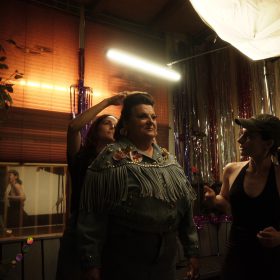
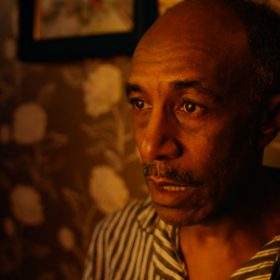
But the process itself was incredibly collaborative. There are around fifteen characters in the film, and the cast is a mix of people I know – actors and non-actors – and others who came through auditions.
The world sits somewhere slightly heightened, almost cartoonish, but still quite soulful. It was important to me that it held onto a sense of realism, because I was also trying to capture something of a moment in time.
I learnt a lot through making it – about my visual language, my literary instincts, what felt true, what didn’t, and what was missing. But one thing that became really clear is how drawn I am to realism, to unexpected and authentic casting, and to characters that feel like they’ve emerged directly from the spaces they inhabit.

What challenges have you encountered while embarking on your film project? How did you seek to overcome them?
The obvious challenges were the usual ones; budget, time, and not having access to everything you might want or need.
But the real challenge was more internal. I think I felt a strong need to be completely understood by the audience. It’s a hard thing to articulate, but I do think that what makes us interesting as artists is our voice, and early on, it’s very easy to lose parts of that in service of an imagined audience watching in.
I feel like that’s quite a pervasive quality in Australian art generally, and definitely in film here. And instinctively, I think I knew I should have trusted my more idiosyncratic instincts, leaned into the things that felt slightly off or unusual.
That was a big learning for me. I’m very proud of the work, but I would do things quite differently now.
How was it to collaborate with your cast and crew? Do you work with “regulars”, or are you trying something new?
Like any collaborative experience, you start to understand what works and what doesn’t. On this project, I was very lucky- most of the cast and crew were deeply aligned with the vision, and brought both generosity and strong personal instinct to the process.
From that, some really meaningful relationships developed, especially with certain cast members and a few of the HODs. If I’m fortunate enough to move into another project, I’d absolutely want to carry those collaborations forward.
Can you share the most important lessons you learned through the process of making your film?
Going back to instinct, that was probably the biggest lesson for me. And more specifically, it was about pushing the boundaries within the form.
I think you have to let things go a bit too far sometimes; push the boat out and then decide if you need to pull it back. But avoiding that altogether, out of fear of failure or things not landing, is a much bigger loss.
And I do think I held back at times. The film feels like a kind of microcosm of the worlds I’m interested in, but it also makes clear where I could have pushed things further.
If you could go back in time to pre-production and give yourself one piece of advice, what would it be?
I have a tendency to rush the last part of a process, and I think the finishing is often where my work lets me down a little.
Looking back, I would have spent more time on the grade and the sound design- those final layers that really shape the feeling of the piece. Especially the grade. As someone who thinks very visually, I can see now that it would have been worth redistributing my time and budget there.
If you’ve been filmmaking for a while – what have you learned about yourself if you look back on your body of work? Are there any surprises from your subconscious?
I’ve been interested in film for a long time. My brother, who is an exceptional filmmaker, kind of walked that path ahead of me. I think I shared a lot of the same instincts, but I didn’t fully follow it myself until much later.
Looking back now, especially at my early university work, where I was experimenting with live action and different forms of animation, I can see that I had a clearer sense of what I was doing than I realised at the time. It’s actually been surprising to recognise how much of that early work points directly to where I’m going now.
I also came up as a musician during the era when DIY music videos really became their own art form. Artists like Chris Cunningham, Michel Gondry, and Spike Jonze were hugely influential for me, alongside a lifelong love of Jim Henson.
All of that, something a bit handmade, a bit playful, sometimes slightly strange, has always been sitting there in my visual language. And now, moving into longer-form work, it’s been really satisfying to see how those threads carry through.
I think we tend to dismiss our early work, or feel embarrassed by it, but there are actually clues in there. I’ve been enjoying going back and finding them.
Where do you think film graduates or beginner filmmakers have gaps in their knowledge or barriers to the industry?
Honestly, I think film graduates and early filmmakers are some of the brightest lights. There’s something very pure about that stage – you’re just hungry to make things and share what you’ve discovered.
The shift comes when you start to realise how many hurdles there are, and how much patience and tenacity the process demands. That can be a hard adjustment.
I think the best way forward is to stay grounded in your own practice – be resourceful, work within your means, start small, and keep making. Be prolific, but also patient.
And I do believe that if the work is truly good, it will eventually be found by the right people.
Looking at the film industry now, if you could make one lasting change to make it better, what would you do?
It’s a big question. I do feel like something has been lost in the creative landscape, partly now with AI, but also just with the speed and ease of access to ideas. There’s less of a sense of discovery, less risk and originality.
The industry, more often than not, plays it safe. It leans toward what’s proven to work commercially, rather than what might be new or unfamiliar. There are exceptions- A24 is a good example of an English speaking company that really backs distinct voices – but alongside that, you see a constant recycling of ideas. Remakes, reworkings, and formats that we already know will land. It becomes a kind of self-perpetuating cycle.
In Australia, I think there’s an added layer of conservatism – drawing from a relatively small pool of people and stories. And that feels like a real loss, because Australia holds such a wide, multicultural landscape within it.
There’s so much potential for something more expansive to come through that- something that could really break the surface. And it would be incredible to see that given more space without obsessing over minority quotas, which has its own pitfalls. Art first- then the rest.
Submit Your Short To T-Port Today
T-Port films are only accessible to professionals, so your premiere status will not be affected.Stake your place in the next generation of filmmakers waiting to be discovered for only 15 Euros / year. Find out more on our website and get started with T-Port today.
Or sign up for our newsletter to get regular updates on the current trends and exciting innovations in the short film universe.