Fresh from our inaugural TalentBridge online filmmaker workshop, producer and 1st AD Atilla Salih Yücer stuck around to answer our questions about his journey into the film industry and his advice for upcoming industry types.
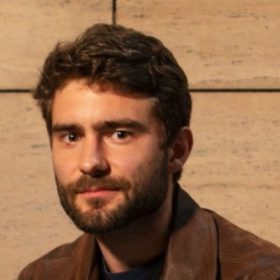
Atilla Salih Yücer is a film producer who has been working in independent cinema since the early 2000s. He studied English Literature and Film in Paris and New York and is currently based between Istanbul and Stockholm. Atilla worked as First Assistant Director on films by visionary directors including Steve McQueen (Shame), Wes Anderson (Asteroid City), Jim Jarmusch (The Dead Don’t Die), Yorgos Lanthimos (The Favourite), and Mira Nair (Queen of Katwe) among others. He transitioned into producing through his company Alaz Film. Recent producer credits include “Exorcist” for Blumhouse, Jim Jarmusch’s “Father Mother Sister Brother” (Golden Lion Venice 2025) and Joachim Trier’s “Sentimental Value” (Grand Prix Cannes 2025 and winner of the Academy Award for Best Foreign Film, plus 9 Academy Award nominations). Atilla is currently shooting Sara Driver’s “Enchantment of Madam P” in Portugal and preparing new films by Arnaud Desplechin, Todd Solondz, Tawfeek Barhom and Jim Jarmusch, all aiming to shoot in 2026 and 2027.
Hi Atilla! You have worked as a Producer and First AD on some incredible films. Could you tell us how you took your first steps into the film industry? How long did it take? And how was that for you?
Fresh out of university, I started my career in Istanbul working as a production assistant on big-budget Turkish comedy films and commercials for a couple of years before venturing into producing. I started a production company with Kerem Altug (a friend from film school) and our first project was a Bulgarian / Macedonian / Turkish co-production called “Stolen Eyes” directed by Radoslav Spassov in 2005. We received funding from Eurimages and the various ministries, which was my first experience with a typical European co-production journey.
Overall, it was a successful process, but because I was young, impatient and broke, spending 3 years making one movie without an adequate income did not seem like a smart career path. Plus I didn’t have enough connections or network to engage with more co-productions at that time so I quickly decided to put producing on ice and start working as a crew member to earn a wage and see firsthand how films are prepared and shot.
I moved to New York where a friend of mine had a garden landscaping company. I worked with him to get by and started assisting on some random films such as Michel Gondry’s “Be Kind Rewind,” Julian Schnabel’s concert film “Berlin,” and the New York unit of “Darjeeling Limited.”. After these experiences I decided that I wanted to be a first assistant director so I started finding non-union, micro-budgeted films on CraigsList or word of mouth that were looking for crew. My first film as assistant director was called “Ashes,” directed by Ajay Naidu, a successful character actor making his feature directorial debut, with a total budget of $40k.
My first 5 films as an assistant director in New York had budgets under half a million dollars.
I made a name for myself in the non union world of New York, eventually got an interview with Todd Solondz and Ted Hope for the film “Dark Horse” in 2010 and they took a chance on me.
You pivoted in your career to include working as a producer as well as a First AD. What prompted you to add this skill to your resume? And what did that look like for you practically? How did you gain the skills to move into production?
While first assistant directors in Europe and Turkiye usually follow a path to becoming directors themselves, I come from the American system where the logical next step for first assistant directors is to become a producer or production manager.
As an assistant director you are involved with every single aspect of the filmmaking process and logistics related to a film’s preparation and shooting, more so than most producers because they simply don’t have the bandwidth for all the nuts and bolts.
I have been lucky enough to work with great producers and line producers over the years that have inspired me and given me the appetite to take on more responsibility. Over time I started working more closely with the producers on the stages before a film is greenlit and after principal photography wraps. I wanted to be a part of making the bigger decisions often made before an assistant director is hired. I wanted to participate in the casting, packaging, and financing processes to learn best practices and avoid pitfalls, enabling me to confidently produce my own projects eventually.
I still love ADing and being in the eye of the storm, balancing both the creative and fiscal parameters we set for ourselves. There is something very romantic about managing a production hour by hour; it is thrilling, stressful, and magical (when it works!)
Your collaborator Jim Jarmusch he has spoken a lot about the pure effort it takes to piece together the costs to make and distribute an independent film. What about his production style do you think makes it possible for him to still make films with regularity that still gets them into cinemas, and recognised at festivals?
As Jim would say; it is often a matter of ensuring the budget serves the script rather than the script serving the budget!
That being said, he is an artist who is very aware of the limitations we face when financing a film so we are always finding creative ways to solve the puzzle. Jim hasn’t veered far from his roots in terms of size and scope; it’s just that production costs have increased, and fewer people pay to watch films in the cinema unless they are horror, sci-fi, animation or action-related.
I assume festivals continue to embrace Jim’s films because they are unique and constantly experimenting in some way, but of course financing these types of films is getting harder and harder.
What is one thing that you think upcoming filmmakers could do to make their path into the film industry easier for themselves?
In addition to contemporary Iranian films, I get very inspired by recent filmmakers who create expressive and original works with micro budgets and don’t have to answer to anyone but themselves.
New filmmakers such as Pete Ohs, Murat Firatoglu, and Mike Cheslik are proving that with literally a handful of crew members and no money you can make films that cut above the noise. I think upcoming filmmakers should avoid spending years putting together soft money financing plans, grovelling to agents of famous actors, or waiting endlessly for private equity. Instead, they should write or conceive films that can be made immediately and then focus on creative, grassroots marketing strategies.
You have worked with some really big names in the industry, with studios like Blumhouse, as well as US and European auteurs during a difficult and very changeable time for cinema. What keeps you going when things get really difficult? And what personality traits and / or skills does a person need to keep going?
Knowing that every filmmaker whose work I admire (past and present) has suffered the same hardships keeps me going! I think accepting that things will never go as you wish is an important outlook, patience is another.
It is comforting to know that whatever changes to cinema that are coming our way, we are facing them together, as a film community, not as individuals.
What kinds of challenges do you face day-to-day on the job as a producer? How do you overcome them?
Being a producer means being an alchemist in a way; you need to put the right cast and crew together that are best suited for that particular director and script and circumstances.
Building that team and preparing the film is often the most significant part of the process.
Different producers have different skill sets, this is why several producers work on any given project. Of course in the co-production scheme you have some producers that contribute a great deal of help to the financing and logistical support remotely. The day-to-day challenges for on-set producers differ from those of off-site producers but overall the producer’s roles is a matter of supporting and encouraging all the key people during the turbulence of the shooting phase and making sure there is a healthy and timely flow of communication between everyone involved.
What are you proudest of from your career so far?
I feel such a great sense of accomplishment on all the films that I have worked on: each and every one of them took a few miracles to get made so I am proud of all of them equally. They are all precious tattoos in my memory.
What would you like to see change about the film industry right now? What’s your dream of how it could be run?
I day dream of a world where we don’t need famous actors to get a film financed or seen. I day dream that all film festivals only feature first- and second-time filmmakers in competition and all government soft monies are given to those who are unknown and unseen. All the hot shots can find private equity to get their films made and can use the big festivals for premieres/red carpets, but they should leave the competition to the newcomers.
Submit Your Short To T-Port Today
T-Port films are only accessible to professionals, so your premiere status will not be affected.
Stake your place in the next generation of filmmakers waiting to be discovered for only 15 Euros / year. Find out more on our website and get started with T-Port today.
Or sign up for our newsletter to get regular updates on the current trends and exciting innovations in the short film universe.