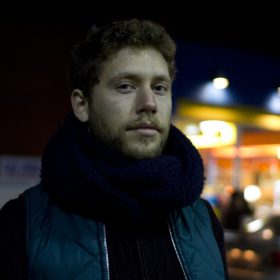
We are excited to share this interview with Jamie Bialkower with you.
Jamie Bialkower is an Australian producer and distributor. After starting his career with the Village Roadshow Group, he launched Jump Street Films in 2004 as a boutique distribution company dedicated to releasing quality cinema in the Australian and New Zealand markets. Recent acquisitions include FREUD’S LAST SESSION, starring Academy Award winner Anthony Hopkins, in partnership with Sharmill Films.
We caught up with Jamie to talk about his path into the industry, how he moved from working solely in distribution to adding production to his skillset, and his best advice for upcoming producers and distributors.
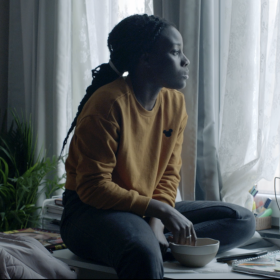
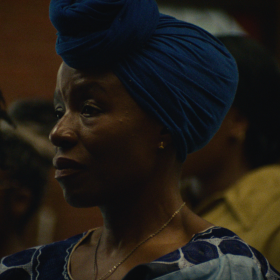
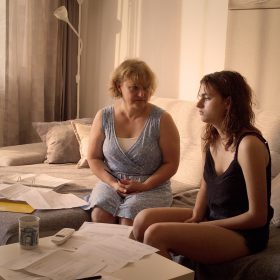
Professional Subscribers can access Jump Street’s catalogue of short films here on T-Port.
Hi Jamie! Thank you so much for spending a moment with us!
You launched Jump Street Films in 2004 as a boutique distribution company dedicated to releasing quality cinema in the Australian and New Zealand markets.
Could you tell me a bit more about your career path before starting Jump Street, where did you learn about film distribution, why did it appeal to you, and what was the impetus for starting your own company?
I’ve always been interested in the behind-the-scenes aspect of the film industry – how cinemas run, who supplies the films, and why audiences choose what to see. I took a crash course in all of this while working at Village Roadshow in programming, marketing and ops and it opened my eyes to an ecosystem I was curious to explore.
Understanding the exhibition landscape was key to my decision to move into distribution. It’s a great challenge to acquire a film, and then you need to access or create the right materials, get the best cinemas booked, secure favourable media coverage and ultimately translate all of that into ticket sales. Australia has a healthy arthouse cinema market, so launching Jump Street felt like it could be achievable.
Jump Street has gone on to be a successful distributor of feature films, what does it take to build this kind of success? And what are the most important characteristics a good distributor needs to be successful in the industry?
Distribution is inherently risky, especially if you’re coming onto a film prior to production. Although there is always competition for good titles, the landscape now is incredibly dynamic and it’s easy to overpay.
For me, it ultimately comes down to aligning personal taste with commercial potential. I find it difficult to work on projects I don’t feel passionately about. If I’m going to try to convince other people to see a film, it needs to be something I’d want to see myself.
The industry is relationship-driven, but ultimately the product needs to be strong. A huge part of my work is knowing the market, tracking what performs and what doesn’t, digging into demographic trends and which talent packages are meaningful. More than ever, films need to have a compelling hook to work in cinemas.
You moved into production, first co-producing and then fully developing feature films. Was it a natural move for you to go from distribution into production?
Exhibition, distribution and production are all connected, and intrinsically rely on each other. Any producer who knows how distribution and exhibition work will be a better producer, and a producer can only be fully successful with the right partners at the other end of a production. For distributors who want to have more control over the lifespan of a film, producing is also a natural evolution.
What would you say are the most important lessons for a budding producer / distributor to learn for career success?
Get as much practical experience as possible. Build your network with substantial relationships. Find material that you are passionate about. Be wary of those who are looking to take advantage. There are too many people in the industry who talk a big game but don’t have what it takes to back it up.
Is there a moment you can look back on in your career which is an important lesson learned, or turning point that led to a new direction? Could you share the story?
The biggest lesson I have learned is to trust my gut. I’m the sort of person who has gained much more perspective from failures than successes. There has not been a grand plan to the shape of my career and it continues to take me in unexpected directions. I think of each connection I have made since starting work at 15 years old and how my career may have played out differently had those connections not been developed. The one consistency is that even after nearly 30 years of watching films and 25 years of working on films, my passion is still there.
What is your absolute favourite piece of advice for upcoming filmmakers?
Learn from the masters and find your stylistic influences, but contribute something original at the same time. There are thousands of films competing for attention and you need to have a point of difference. I am always looking to support filmmakers with a distinct point of view, because there are too many generic films being made. Why you, and why this story?
In 2024 you launched the Jewish Australian Film Fund. Could you tell me about why this cause was important to you and what the aims of the fund are?
It’s a cause close to my heart. Seeing the way that both Jewish Australian stories and creatives have been left out of the cultural conversation over the last few years led me to the conclusion that something had to be done about it. Although there are notable Jewish Australians working in the screen industry, there is no history of Jewish Australian screen storytelling. The fund aims to correct this by developing new work and creating financial opportunities for career progression, as well as to counter antisemitism through representation, with emphasis on authenticity and visibility.
Could you tell me why you think short films are important?
In today’s world, everyone’s a filmmaker – but while the technical nature of the filmmaking process has become more democratic, it doesn’t mean that everyone has a story worth telling. The space for short films needs to be nurtured and protected to allow filmmakers to develop their craft and gain practical experience. While the commercial opportunities for short films are extremely limited, they offer both producers and distributors an invaluable insight into who the filmmaker is – and in Australia, both festival and government platforms have reinstated direct support for shorts over the last 6 months which is a key component in identifying new talent.
And finally: There are good films, but, in your personal opinion, what makes a great film and how do you separate the two?
It has to be the marriage between story and craft. I often see films that may have a compelling story but where the execution has been generic. Similarly, I can be struck by a singular filmmaking style that’s at the service of an underwhelming narrative. Writing and directing are such distinct mediums, but whether or not the writer and director is the same person, a great film is the complete realisation of the two along with every other component that contributes to the ultimate outcome. So many things need to go right that it feels like a miracle when a great film makes itself known.
Submit Your Short To T-Port Today
T-Port films are only accessible to professionals, so your premiere status will not be affected.
Stake your place in the next generation of filmmakers waiting to be discovered for only 15 Euros / year. Find out more on our website and get started with T-Port today.
Or sign up for our newsletter to get regular updates on the current trends and exciting innovations in the short film universe.