

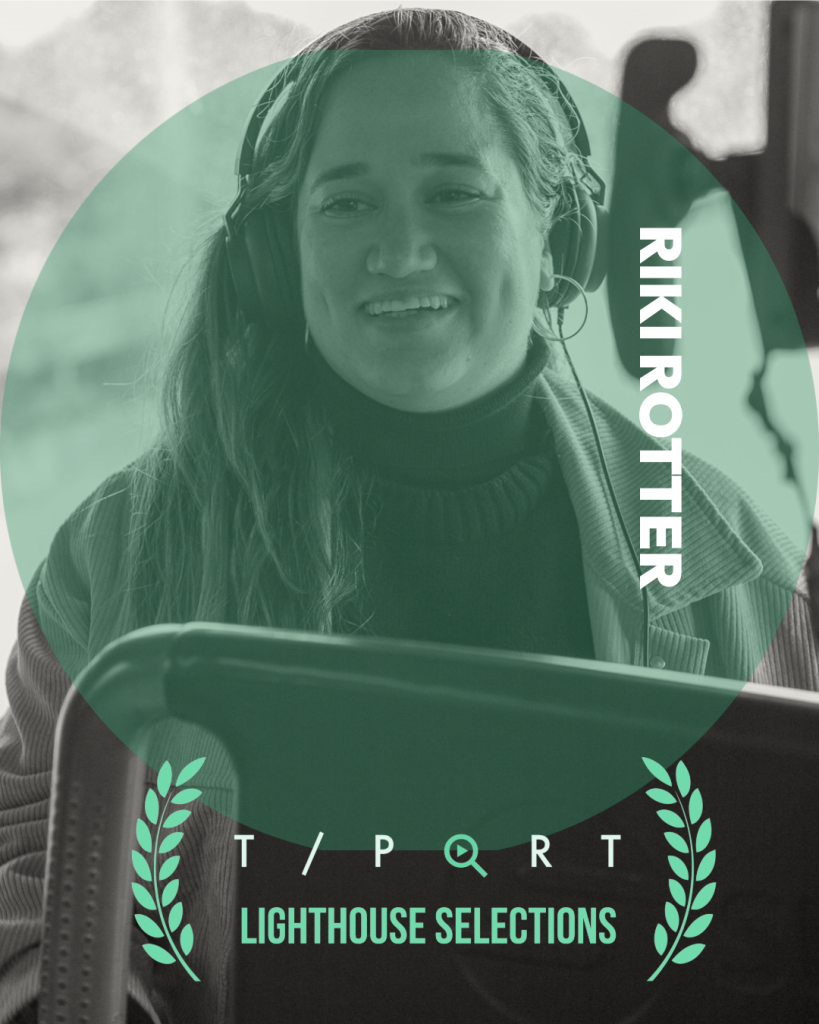
Israeli filmmaker Riki Rotter didn’t watch any films or TV as a child, growing up in an ultra-orthodox community until the age of 18 meant that she discovered cinema as an adult, as enthralling. We talked to the filmmaker, whose film KOSHER TEST was part of the 2025 Lighthouse Selections, about what it means to move forward, exploring your once-silent voice through film.
Riki’s film, KOSHER TEST, appears on T-Port courtesy of our partners over at Minshar School.
Hi Riki, could you introduce yourself?
My name is Riki Rotter, I’m a filmmaker and screenwriter based in Bat Yam, Israel.
I grew up in an ultra – Orthodox community and left that world at eighteen, stepping into a completely new reality where I could finally choose, speak, and create. Since then, I’ve been deeply passionate about telling stories that live in the space between silence and rebellion.
I was a co-writer on the TV drama “Border Patrol,” later sold to Netflix, and have directed for both television and digital platforms.
My short film KOSHER TEST, based on my own experience has screened at festivals worldwide, and I’m now finishing post production on a new independent short while writing my first feature film.
For me, cinema isn’t just storytelling – it’s reclaiming voice, body, and freedom. Every frame is an act of emotion, courage, and truth.
If you could watch one film forever on a loop – what would it be?
I grew up without cinema or television. I saw my first film in a movie theater only at eighteen. Since then, I’ve been trying to catch up on a whole world I never knew. So I can’t really say there’s one film I’d watch over and over, because I haven’t finished my first loop yet.
Right now, I’m just devouring every piece of cinema I can find, hungry to understand how images can move people the way they moved me the first time.
How many films have you made before this one, and what did each new film teach you?
Alongside KOSHER TEST, I’ve created several short films and worked as a co-writer on the TV drama “Border Patrol,” later sold to Netflix.
The main female character in that series was inspired by my own story by the sexual assault I experienced during my military service, and the silence that followed. Writing it was the first time I allowed that story to exist outside of me, and it changed everything I thought I knew about storytelling and healing.
My first short, KERA, tells of an ultra-Orthodox girl who secretly steals a secular newspaper from the trash and discovers herself through its pages. It was nominated for the TikTok Short Film Competition at the Cannes Film Festival, and taught me how curiosity can be a form of rebellion.
BAD SISTER is a personal documentary about being invited to my sister’s wedding after years of estrangement. Today, I’m no longer invited to my siblings’ weddings at all. It taught me how close love and distance can live together.
Another short, BEFORE HIM WE STAND, follows a father meeting his secular daughter after years apart, and taught me that forgiveness through a lens is never simple.
Each film has brought me closer to my voice and to understanding how cinema can turn silence into strength.
Do you affiliate yourself with any cinematic or artistic movements, or see yourself as fitting in with any?
As a woman who creates films with female protagonists and stories rooted in truth and pain, I can’t separate myself from feminism, it’s the lens through which I see the world.
I make films that speak without fear: films that question faith, power, and the way men shape women’s lives. My work isn’t about anger, it’s about clarity.
I believe that telling uncomfortable truths is an act of love, and that cinema can be both a weapon and a hand reaching out.
How did you first start working on this film? What was the process like and what first sparked the idea to make it?
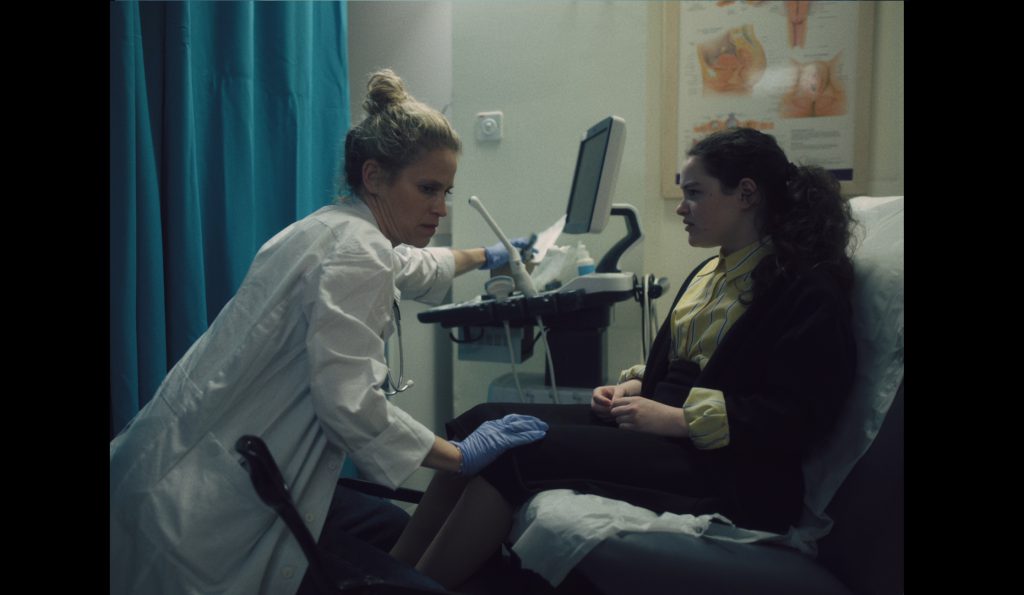
The first spark for KOSHER TEST came during my studies at Minshar School of Art. My late teacher, Orna Levy, gave us an exercise to make a film that happens ten minutes after something big has occurred. But in KOSHER TEST, the “thing” never actually happens. The girl is accused, not guilty, yet everyone around her, including her religious father, treats her as if she was guilty.
That idea haunted me. I went back in time and realized how important it was to tell this story about how shame can exist even without sin. I started speaking with women who had gone through the same experience, and discovered that the obsession with virginity is not just a religious issue, it’s a global, violent one, controlled by men and institutions.
I wanted to make a film that exposes that violence, but also gives strength to the girls who survived it — and to the women who now stand guard for them.
Once you had the idea – how did you go about the production process?
The production process was one of the most moving and enjoyable experiences I’ve had.
KOSHER TEST was made while I was studying at Minshar School of Art, where I was lucky to gather an amazing team that gave everything to this film.
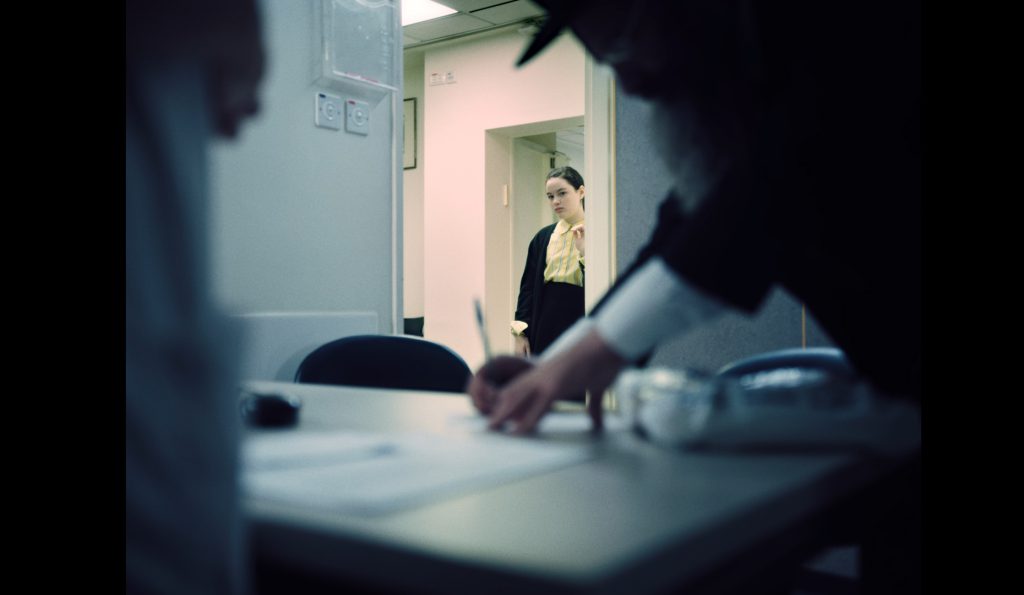
Our producer, Mika Russo, was incredible, she held the project together with so much care and passion. Our cinematographer, Ram Shweky, brought his whole heart and a unique visual language that gave the film its quiet power. The main actress was only thirteen, and her parents supported her beautifully throughout the shoot. The set was small but full of warmth, we laughed, cried, and worked as one.
It was a reminder that filmmaking isn’t just about telling stories, it’s about the people who help you tell them.
What were the biggest challenges you encountered during making your film?
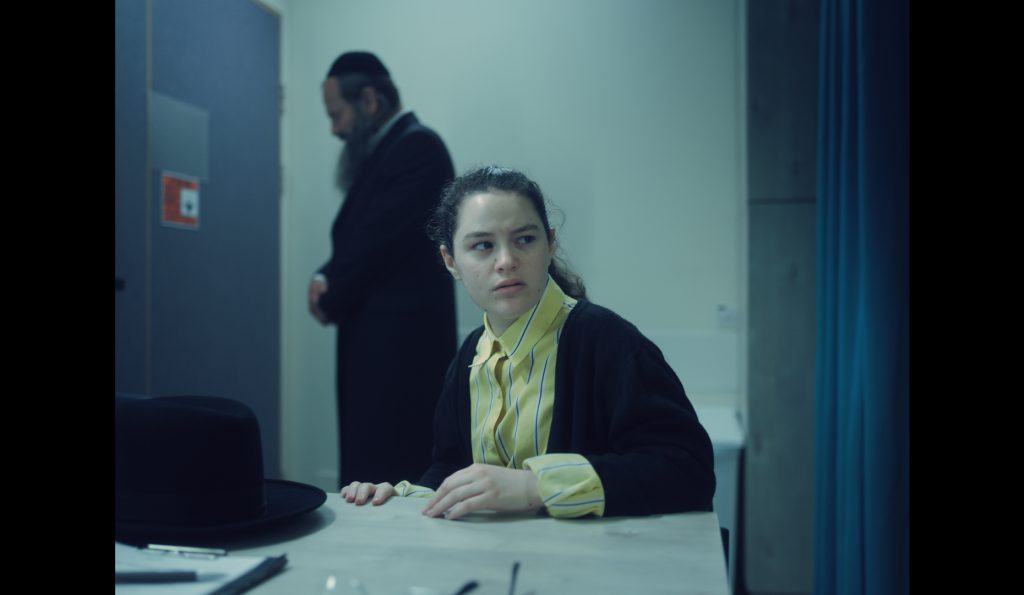
The biggest challenge was telling a story almost entirely without words. The main character hardly speaks, so everything had to be carried by her eyes, her silence, her breathing. It takes a lot of patience and trust to get there, but because the story came from something real, the emotions were already in the air.
Our young actress was just thirteen, and she approached the role with incredible sensitivity. Her parents were on set, supporting her every step of the way.
The actor playing the father, Yigal Zacks, took his role so seriously he even learned the ultra-Orthodox accent. We spent hours talking, singing childhood songs, and building the character together.
All the children in the film were from a real family that had left the ultra-Orthodox community. Maybe that’s why every frame felt so true.
And then there was the beard. As someone who grew up religious, I just couldn’t handle a fake beard. I stopped takes again and again until it looked real. Later, at a festival in Vermont, a man came up to me and asked, “How did you get a real Haredi father to act in your film?” That’s when I knew all the effort was worth it.
Tell us about the sound choices in your film – what type of score did you use and why?
The opening song in the film is a Shabbat song, the one I used to sing with my father every week as a child. I wanted the sound to carry that same feeling of warmth, faith, and something lost. I called my father after years of no contact and asked him to sing it for me, just as a reference, so I could remember the melody and the emotion behind it. He agreed, and it was a very emotional moment for both of us.
Right after that, he asked me to return to religion, and the distance between us came back but for a moment, through that song, it felt like we were back in the same room.
What did you find (or still find) as especially lacking in the process of distributing and promoting your film? What was especially challenging?
I think the biggest challenge is simply not knowing how to reach the right festivals, the ones that really matter for your film. There’s no clear path, no map that tells you where your story belongs. You can have a strong film, but without guidance or connections, it can easily get lost between submission platforms and deadlines.
I’ve learned that distribution is almost like making another film, it demands the same creativity, patience, and intuition. What’s missing, especially for independent filmmakers, is mentorship, someone to help navigate this invisible world of curation, strategy, and timing.
I’m still learning it step by step, trying to figure out how to make sure a film like Kosher Test finds its way to the right audience.
Submit Your Short To T-Port Today
T-Port films are only accessible to professionals, so your premiere status will not be affected.Stake your place in the next generation of filmmakers waiting to be discovered for only 15 Euros / year.
Find out more on our website and get started with T-Port today.
Or sign up for our newsletter to get regular updates on the current trends and exciting innovations in the short film universe.