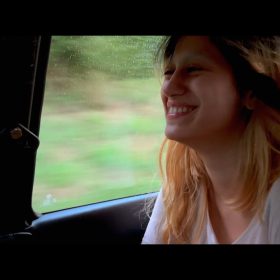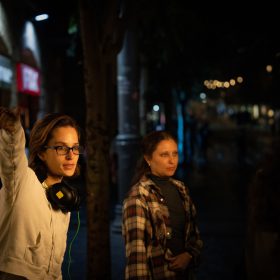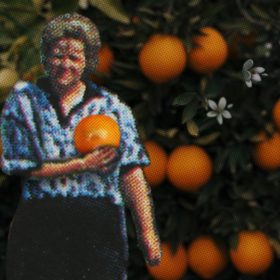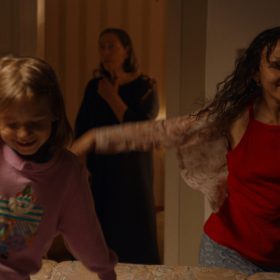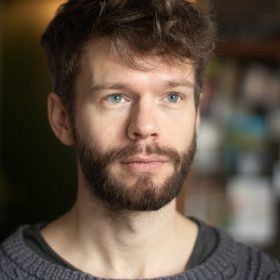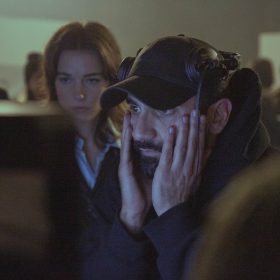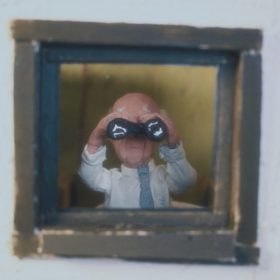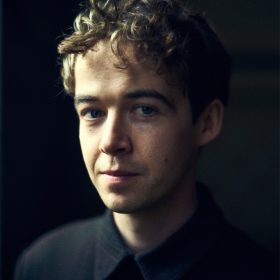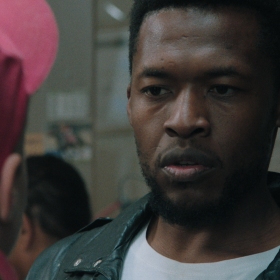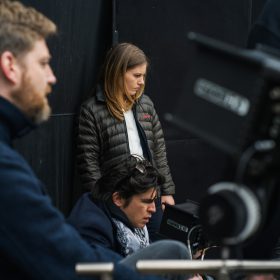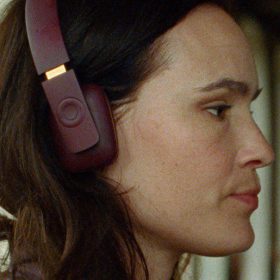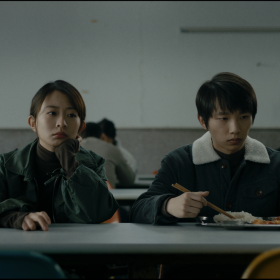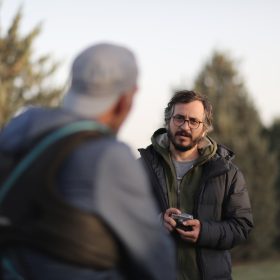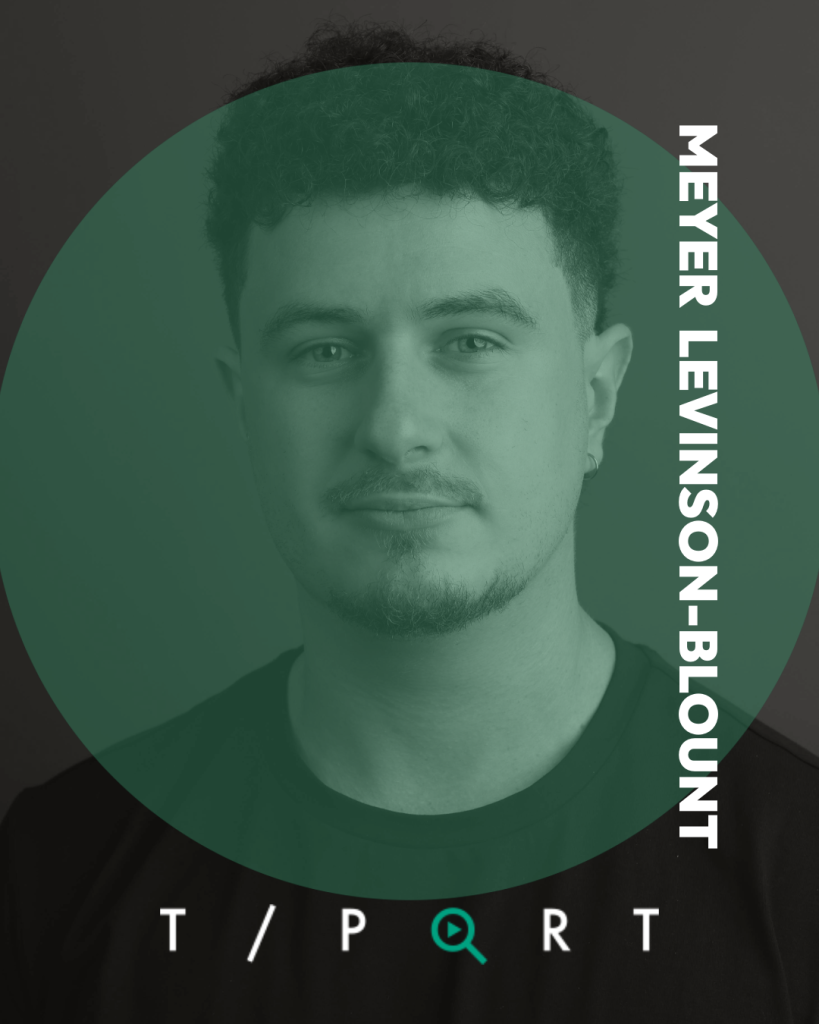
When this year’s Oscar Shortlist was announced, director Meyer Levinson-Blount was in the middle of moving house, only to receive the best housewarming gift imaginable – a place on the list.
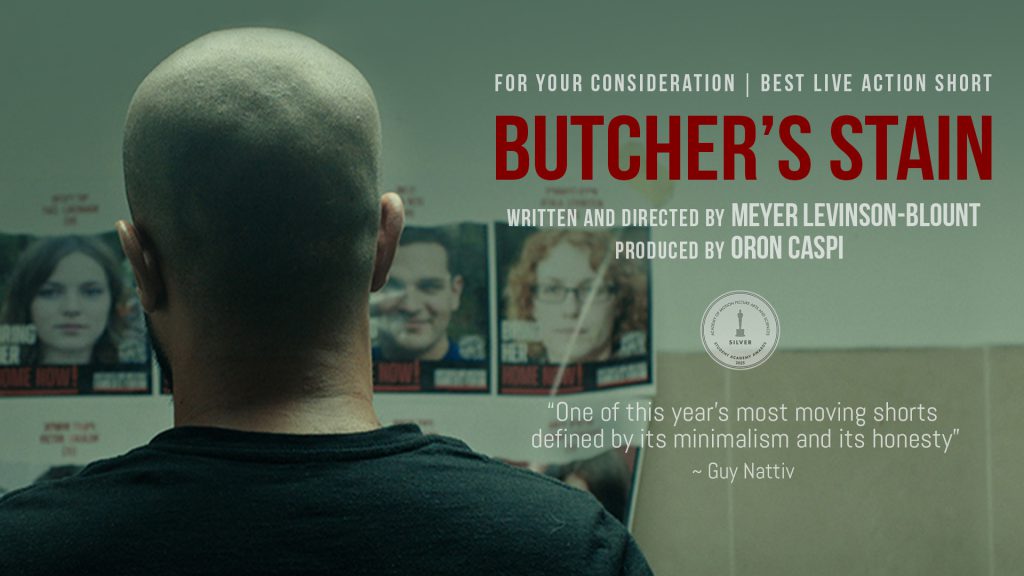
We chatted to the director, who made BUTCHER’S STAIN as part of his studies at the Steve Tisch Film and TV School in Tel Aviv, about the film’s exploration of racism in Israel post- October 7th, his love of Paul Thomas Anderson, and how this professional nod could shape his film career.
BUTCHER’S STAIN is on T-Port courtesy of our partners at Premium Films and TAU.
Hi Meyer! Could you introduce yourself?
My name is Meyer Levinson-Blount. I am a film student at Tel Aviv University in my fourth year of studies, originally from the United States. BUTCHER’S STAIN, my short film that was Oscar Shortlisted, was my intermediate film from my second year. This is my debut film, and it is so exciting to receive so much recognition for it!
How did you realise that you wanted to become a filmmaker?
I originally studied music in high school, and when I listened to music, I always imagined stories, actors, and visuals. I think I have always wanted to write stories and create films, but it took me some time to develop the courage to actually pursue my dream.
Do you have a philosophy behind your filmmaking? Or do you feel like you belong to a particular artistic movement?
My favorite style of filmmaking is realism that is larger than life. Directors like Paul Thomas Anderson have inspired me to make films with characters who are marginalized, the kind of people you pass by in life and don’t pay too much attention to. Then, by putting them on the screen, you create a sort of authenticity and raw realism that is special to this genre of filmmaking.
I strive to create cinema that puts people who are overlooked in society on the center stage. I believe that characters that are ordinary, marginalized people are the most interesting, charismatic, and cinematic characters there are, and they very much deserve the spotlight.
If you could watch one film on a loop forever, what would it be?
THE MASTER by Paul Thomas Anderson. It is by far my favorite film of all time. The main character, a troubled WW2 veteran who suffers from PTSD (played by Joaquin Phoenix), is exactly the character I strive to create when writing a script. He is tragically mentally ill and marginalized by society, but is also desperate for love and acceptance from others, which really resonates with me.
What was the inspiration behind BUTCHER’S STAIN?
I had been working at the supermarket after the 7th of October, and I witnessed the immediate reaction to an ongoing national crisis and to the collective trauma of the tragic events on that day. What I was struck by was the racism and discrimination pointed against the Palestinians within Israel who worked at the supermarket at that time. My film tries to tell the story of a national crisis and trauma that creates a reaction of racism and discrimination against individuals who are just trying to live normal lives, just like everyone else.
It does so by instead of trying to provoke or enrage, creating a human story and a dialogue surrounding controversial issues, to create a respectful conversation about the subject.
What were the biggest challenges you encountered during making your film?
I think that the biggest challenge was creating a high-production-value film with a small budget. Oron Caspi, the producer, was working with a very small budget, and we had to make it work. We needed a supermarket, actors, extras, a professional crew, and so many more things that we had to find ways to get for free or for a low price. Oron, of course, is a master at this, and he did such a good job that people who watch the film sometimes don’t even know that it’s a student film.
Can you share the most important lessons you learned through the process of making the film?
We are still learning a lot of important lessons as this is all happening so fast. I think the most important thing that I’ve learned is that hard work pays off, but definitely not right away. It pays off when you least expect it, and in ways you can rarely predict, especially within the film industry.
I was denied by festivals I was sure I would get into, and I won a Student Academy Award and was shortlisted for the Oscars, which is something I thought I could only fantasize about.
If you could go back in time to pre-production and give yourself one piece of advice, what would it be?
I would probably tell myself that the fact that everything will be so challenging and time-consuming is a sign that you’re doing the right thing. This film was going to be challenging to create no matter what, but with my film crew, who also happen to be my best friends, with a passion to create films, and five cups of coffee a day, anything is possible.
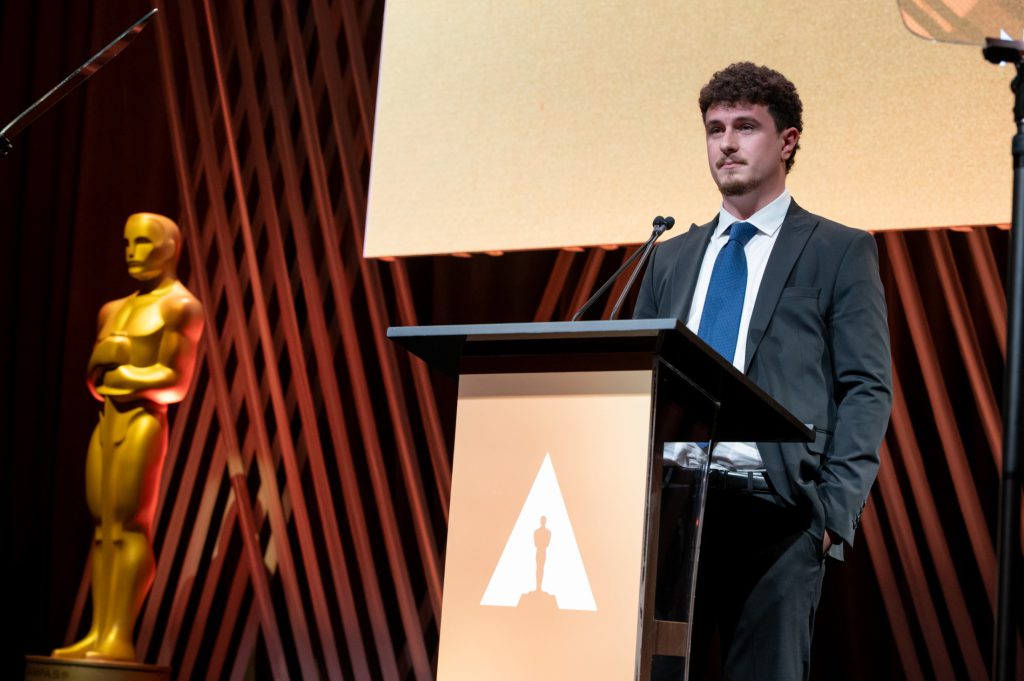
What would you like people to take away from your film?
The thing that I would want people to take away from my film wouldn’t be a specific message. After watching my film, I would want people to reevaluate preconceived notions about other ethnicities and groups of people. I would want people to think about how to respect others even at times of national crisis, and to be able to have a respectful conversation about controversial issues, no matter how challenging it is.
Where were you when you found out about making it to the Oscar shortlist? How did you react?
When I received answers about the Oscar Shortlist, I was actually moving apartments. The entire day, I was opening boxes and checking my email. Suddenly, I saw the name of my film on the list, and I was shocked. I immediately video called my family, who didn’t believe me for the first 5 minutes of the call; they were sure I was joking. Then, when I sent them the list, they were extremely joyful; they were so excited, and tears of joy rolled down my face. It was one of the most amazing moments I have ever experienced.
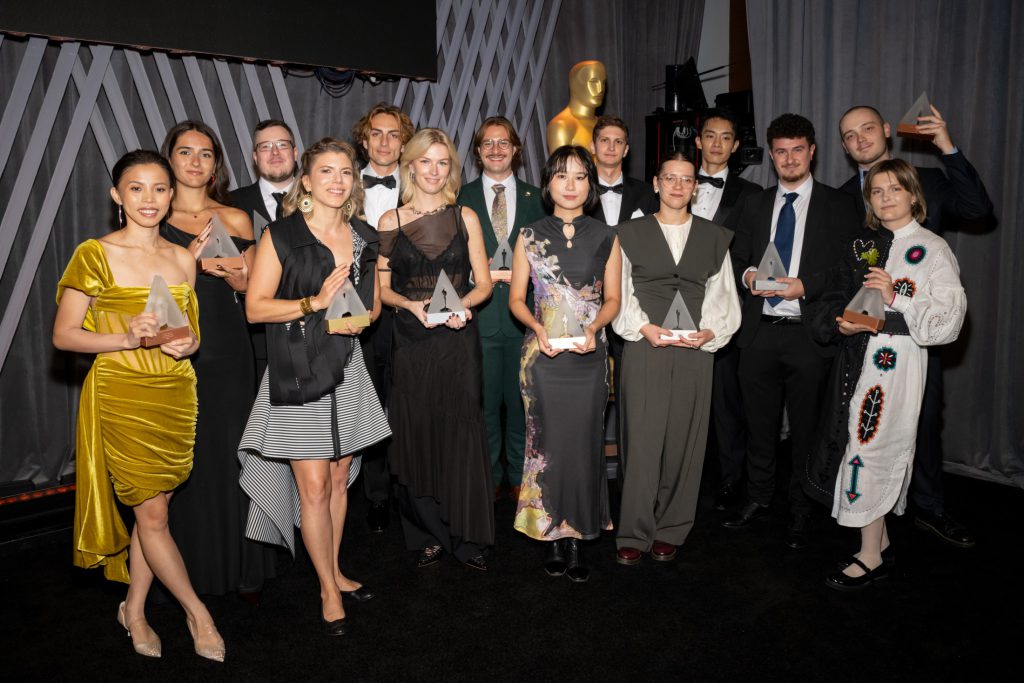
How has the Oscar nod impacted you as a filmmaker so far?
I think that the most prominent way the Oscar nod has impacted me as a filmmaker is the recognition and confidence you finally feel in your work. It is amazing when your colleagues, friends, and family enjoy your film, but when it is recognized internationally as an impactful piece of art, it gives me the confidence that I can make a career out of my passion. It gives me the confidence that I can become a writer-director full-time and pursue my dream.
What’s next for you on the filmmaking front?
The next step for me, God willing, is to receive support for a feature-length film. I am incredibly intrigued by Israeli society and the conflicts that define it, and I believe that my next film will concentrate on the different aspects of Israeli society on a larger scale than my short film.
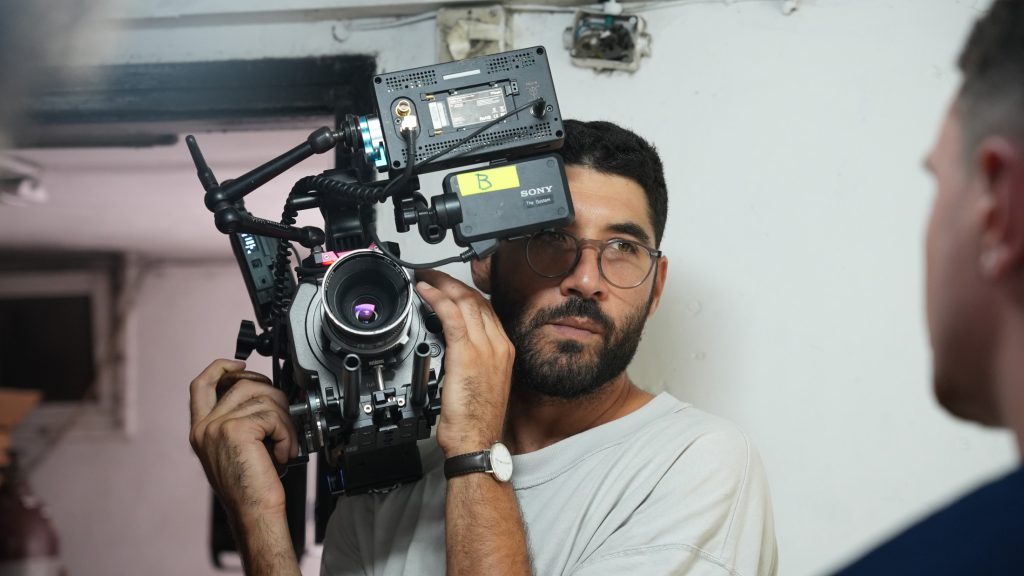
Is there anything else you would like to mention?
I’d like to thank everyone who was involved in this project. I couldn’t have gotten this far without you! I want to thank my producer, Oron Caspi, the main actor, Omar Sameer, my film school, The Steve Tisch School of Film and Television, The Academy, for this amazing opportunity, and, of course, my parents and my girlfriend, who have supported me so much throughout both my life and my career. I am so grateful to know such amazing and generous people, and I feel so privileged to have them in my life!
Submit Your Short To T-Port Today
T-Port films are only accessible to professionals, so your premiere status will not be affected.Stake your place in the next generation of filmmakers waiting to be discovered for only 15 Euros / year. Find out more on our website and get started with T-Port today.
Or sign up for our newsletter to get regular updates on the current trends and exciting innovations in the short film universe.