Fresh from running a fun and fantastic class on pitching at our inaugural T-Port TalentBridge online workshop, Marjorie Bendeck shares some more of her industry expertise in our Professional Interview.
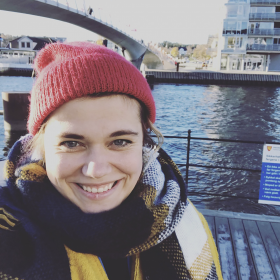
Originally from Honduras, Marjorie Bendeck holds a BA in communications and marketing, and an MA in organisational psychology, besides film production studies in Mexico and the EICTV in Cuba. Based in Germany since 2003, she headed the selection committee of Berlinale Talents until 2012, while also working for funds and training initiatives in Europe and Latin America. Her areas of expertise include evaluation of feature film projects as well as workshops for pitch, script and project development. She is project manager for the Locarno Open Doors Projects Hub, co-head of studies at the production department of the Filmakademie Baden-Württemberg and director of Connecting Cottbus, an East-West co-production market.

Hi Marjorie! It looks like you arrived at the film industry by way of marketing and organisational psychology, could you tell us about how you made your way into the film world, what your first steps into the industry looked like?
My first steps took me a while. I actually studied film production before I studied psychology. And I wanted to study film from the start, but there are no film schools in Honduras, and I was too young to enter the film school I dreamed about (EICTV in Cuba). I did make it to Cuba later on, and I could afford my studies there thanks to the savings from my marketing job I had after university. And during this whole time, I feel I spent most of my free time watching films or reading about them, which has come to be one of my main assets to date.
How do you think your background in marketing and psychology helps you in your work now?
A lot and every day! Understanding audiovisual projects as “products” (even if many filmmakers hate this idea), or the basic principles of economics and statistics help to understand the market per se. And the film industry is a people business, and organizational psychology is a lot about behavior, teams and communication. I get to use these tools and concepts all the time.
What is one thing that you wish upcoming filmmakers wouldn’t do when they are pitching their projects?
Don’t treat a pitch like a school presentation (nor a “stiff” business presentation).
What is one thing that you think upcoming filmmakers could do to make their path into the film industry easier for themselves?
Don’t go into it alone, find some people to connect with from the start and share the road with them. AND: take it all with a bit of good humor.
The film industry is in a process of huge change right now, how do you stay positive and forward moving in difficult times?
With lots of curiosity and a big smile.
What are you proudest of from your career so far?
To feel that my feet are on the ground and to be able to appreciate the colleagues I’ve met wherever they might be (and I don’t mean geographically).
What would you like to see change about the film industry right now?
I would love for more tolerance and understanding between professional “bubbles”. There is no “one way”, there are no formulas, in my opinion. And peeking into what others are doing (call it games, AI, traditional films, arthouse, soaps, verticals, documentaries, shorts, reality shows, series, commercials, whatever) can be absolutely fascinating and open new worlds or collaborations. Or not. And it’s also fine. Live and let live.
Submit Your Short To T-Port Today
T-Port films are only accessible to professionals, so your premiere status will not be affected.
Stake your place in the next generation of filmmakers waiting to be discovered for only 15 Euros / year. Find out more on our website and get started with T-Port today.
Or sign up for our newsletter to get regular updates on the current trends and exciting innovations in the short film universe.